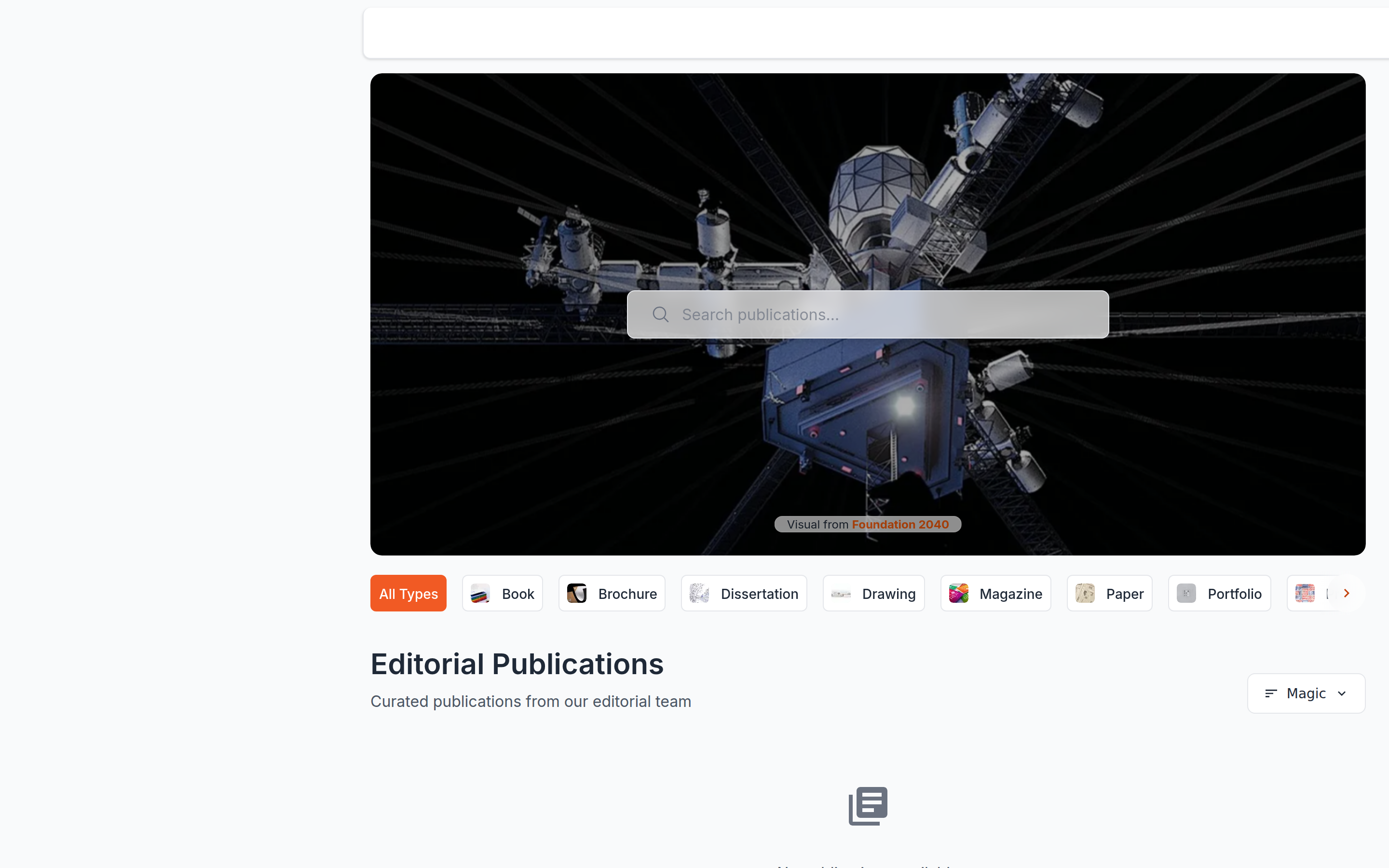
The publications feed opens on Editorial with the sort set to Magic, and Magic is not a ranking. It picks one of the first ten pages of the editorial list at random and starts you there, then carries on downward from that point. That is why the feed looks different every time you open it, and why the newest publication is usually not the first thing you see.
Underneath Magic, the order is by date
Strip the randomness away and the list is ordered by publication date, newest first. That date is the Publication Date the author sets on the publication, not the moment the file was uploaded, so an author who backdates their work sends it down the list. See the date on a publication.
Magic can start you a long way down the list
Pages hold 20 publications, and Magic chooses among the first ten of them, so it can begin as far as 180 publications in. Everything above that starting point is skipped for that visit. If the page it lands on turns out to be empty, it falls back to the first page.
The other sorts do exactly what they say
Recent, Oldest, Most Liked, Title A-Z and Title Z-A all turn the randomness off and start at the top of the list. Pick any of them and the feed becomes stable and predictable.
The three tabs hold different sets
- Editorial shows only publications the UNI team has marked as editorial.
- All shows every published publication, editorial or not.
- Trending is ordered by likes, most liked first.
Type pages never use Magic
Open a publication type, such as the thesis or portfolio page, and the sort starts on Recent. Magic is not offered there at all, so those pages are always newest first unless you change the sort yourself.
A reload can hand you the identical page
The feed is cached for five minutes. Within that window, asking for the same page returns the same publications, so a refresh will not always reshuffle.
To find one again, do not scroll for it
A publication you saw once is quicker to reach through search or through its author's profile than by hunting the feed, which will have moved.