

Escape the Chaos of the World in Style with The Voxel: Your Own Personal Quarantine Cabin!
Experience Comfort, Privacy, and Serenity with this Innovative Cabin Design - Perfect for Your Next Getaway or Quarantine Stay!


Nestled within the dense forests of Collserola near Barcelona, the Voxel stands as a testament to the resilience of architectural ingenuity. Born out of a need for quarantine space during the ongoing pandemic, this cross-laminated timber cabin is a testament to the power of hyper-local building materials and circular metabolism.
Designed and built during the Master in Advanced Ecological Buildings and Biocities (MAEBB) program at the Institute for Advanced Architecture of Catalonia (IAAC), the Voxel is a 12-square-meter structure crafted from locally harvested Aleppo Pine. The wood was milled, processed, and pressed on-site at the Valldaura Labs campus, located just a stone's throw away. The cabin took a mere five months to build, transforming the forest into a haven of ecological architecture.
One of the most impressive aspects of the Voxel is its use of cross-laminated timber (CLT). Using 40 pine trees harvested within a 1-kilometre radius of the construction site, the team cut the wood into 3cm boards, which were then stacked and dried for three months. Once at the proper humidity level, each board was processed into hundreds of pine lamellas, which were then encoded and pressed into more than 30 CLT panels. The panels were held together without any metal, using lap joints and wooden dowels instead. The Voxel is a testament to the beauty and versatility of CLT, which is fast becoming the future of building materials.

But the Voxel is more than just a beautiful example of CLT construction. It also showcases the power of circular metabolism, something that has long been a focus of the Valldaura Labs campus. The Voxel is self-contained, with a comprehensively designed water-energy-waste scheme. The cabin is powered by three solar panels and independent battery storage, and the water system incorporates both rainwater collection and grey-water recycling. The black-water treatment system also generates usable cooking or heating fuel and sanitary fertilizer as by-products, making it a completely self-sufficient living space.

Another striking feature of the Voxel is its burnt wooden skin, which was created using the Japanese Shou Sugi Ban technique. This protects the building from the rain and showcases the organic complexity of the tree that is usually hidden in most wooden constructions. The off-cuts from the CLT production process were also repurposed into a facade that serves as an extension of the circular metabolism concept. Each off-cut was parametrically organized into a gradient that corresponds to functions within the cabin, with certain sections of the skin extruding away from the cabin to correspond with metabolic components like water tanks and an outdoor shower. The roof of the cabin features a series of garden boxes that hold a variety of local plants and funnel rainwater into a collection tank below.

The Voxel is not just a beautiful structure; it's a call to arms for the architecture community. It showcases the power of using hyper-local building materials and industrialized techniques to create beautiful, functional, and eco-friendly structures. The cabin is a visceral example of a forthcoming advanced and ecological architectural paradigm, one that is focused on circular metabolism and self-sufficiency.
The Voxel was designed and built entirely under quarantine conditions, and as such, it represents the resilience and creativity of the architectural community during a time of crisis. As we look to the future, we can only hope that more projects like the Voxel will emerge, showcasing the power of ecological design to create a better world.

Photos by Adrià Goula


Popular Articles
Popular articles from the community

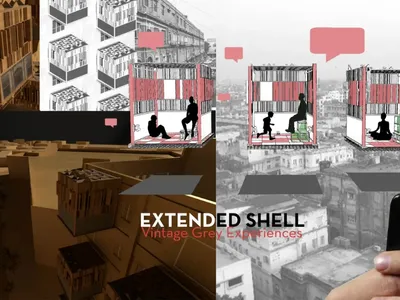
Extended Shell: Retrofitting Kolkata's Balconies as Living Urban Thresholds
A modular retrofit system recovers the social and environmental intelligence of Kolkata's historic verandas for contemporary Park Street residents.

Singing Woman: An Opera House That Performs Before the Curtain Rises
Ovidiu Cristian Pavel's conceptual opera house translates Estonia's choral identity into a sculpted waterfront landmark facing the Baltic Sea.
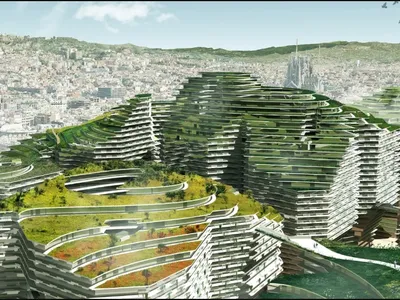
Manzana Morphosis: Stretching Barcelona's Grid into a Living Landscape for 2050
A radical reworking of the Eixample manzana turns density into a tool for generous public space, vertical ecology, and environmental performance.
Cloaked Colonization: A Mobile Underwater Habitat That Moves Like a Fish
Micah Abaya's shortlisted EHC Pacific entry reimagines ocean settlement as a dispersed network of self-sustaining architectural organisms.

Similar Reads
You might also enjoy these articles
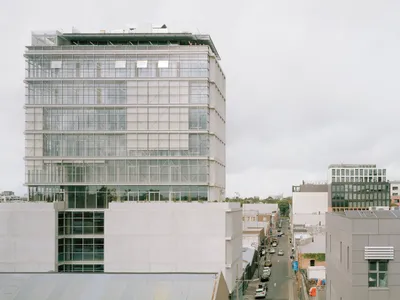
116 Rokeby Building, Collingwood
Sustainable Collingwood office building featuring double-skin façade, natural ventilation, rooftop amenities, and carbon-neutral design focused on wellbeing and longevity.
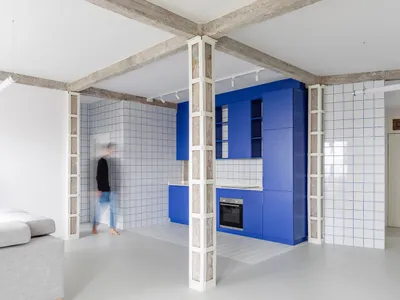
Contemporary Apartment Renovation in Spain: RV House by BIAN Opens Up to the Sea
A minimalist 1930s apartment in Santander is transformed into a flexible, sea-facing home through contemporary Spanish renovation.
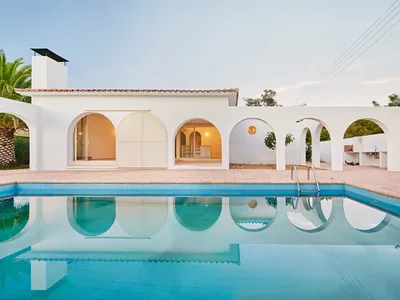
3 Marías House: A Contemporary Mediterranean Courtyard Retreat by Bajet Giramé + Burckhardt
Mediterranean courtyard home blending traditional architecture with modern design, terracotta flooring, flexible interiors, sustainable climate strategies, and garden integration.
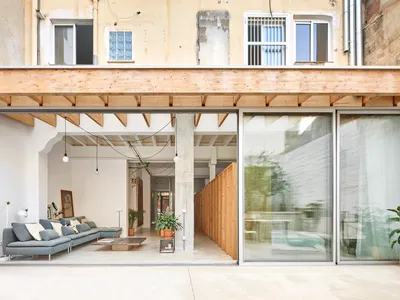
NZ10 Apartment by auba studio: Adaptive Reuse in Palma de Mallorca
Adaptive reuse apartment transforms bakery into light-filled home with patios, privacy layers, and wood interiors enhancing urban living experience.

Explore Architecture Competitions
Discover active competitions in this discipline


Challenge to reimagine the Iron Throne

Photograph architecture without architects

Illustrate the lost glory of Angkor Wat - Render Challenge

Design challenge to reuse E-waste
Comments (0)
Please login or sign up to add comments
No comments yet. Be the first to comment!