

AI Box
Challenge to design a convention center for artificial intelligence
Overview
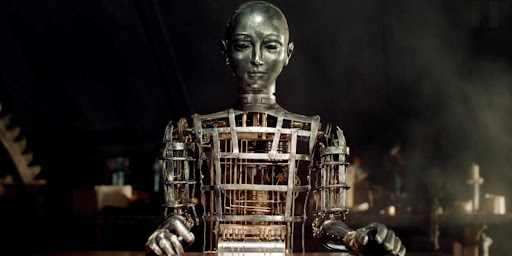 Fig: 1 – Automata-The earliest form of automation/robot that would write or play a piano (Credits-Hugo 2011)
PREMISE
The idea of inanimate objects coming to life as intelligent beings have been around for a long time. The Chinese and Egyptian engineers built ancient androids (automata), and the Greeks had myths about robots.
Though, the beginnings of modern AI can be traced to classical philosophers' attempts to describe human thinking as a symbolic system. But the field of AI wasn't formally founded until 1956, at a conference at Dartmouth College, where the term "artificial intelligence" was coined.
When artificial intelligence was realized, the aim was to teach a computer system to perform certain operations that were similar to human thinking.
Fast forward to today and artificial intelligence is shaping algorithms, our demands and needs. It shows and suggests to us what to listen to, see and read based on our clicks. We are already undergoing unconscious cultural changes because of AI and these applications have enormous potential for transforming our futures.
 Fig: 2 – From entrainment, learning to surveillance AI is an omnipotent part of our lives (Credits-CAIS)
IMPACT
Machine learning is already changing the fabric of our society. Still, the people as a whole have almost no knowledge about how AI algorithms work. There is the tech community that ensures fairer and safer interfaces for AI through numerous guidelines and codes. Although we are still unequipped and slow to handle large scale adoption of safety principles to prevent unsafe activities.
While the technology evolves every year there are still new facets of it to understand. This raises basic questions of how can the public be vocal about technology which many believe they won’t understand, is of little interest, or is simply not for them? And how can a layman have an opinion on how AI should work when many experts profess not to know how it works in many cases?
These questions are the need for tomorrow and yet there is no specific mechanism in place to empower people to advocate for themselves directly.
Can we start by creating a physical space that can impart this knowledge? By doing so, how can we make it more open and accessible to the general public? Can design thinking and architecture play a part?
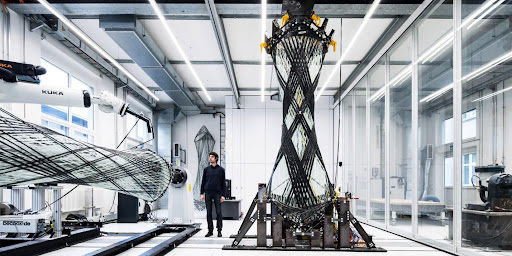 Fig: 3 – AI and Robotic interaction (Credits- ICD/ITKE University of Stuttgart)
BRIEF OF THE COMPETITION
As machines have learned to design and do mundane tasks, we too should work with AI to enrich daily lives and have a better understanding of what the future holds. We can rethink the way we live, and in turn, how to shape the environment around us in collaboration with technology.
However, to start with this there is still no dedicated space. Can we design something where individuals and groups gather to explain, promote and share common interests?
Can this space also encompass workshops for people who are new to this but eager to learn?
Design a convention centre for the cyclic display of the latest trends and technologies in the artificial intelligence industry.
The focus is on sharing, learning and building dialogue through architecture plus new interactive technologies.
OBJECTIVES
- Technology: How will your convention and centre look when architecture and AI merge?
- Form and accessibility: Intent to experiment with form and create a structure that acts as a landmark and is open for all.
- Multi-Use: Space can be used for events other than AI convention for the rest of the year
- Community: Interaction between AI enthusiasts and locals at the macro and micro level.
The objectives can be a point of beginning to conceive this design. Participants can assume their contexts and users before initiating their design process. The aim is to create a platform that could expand and bring an understanding of artificial intelligence on a global level.
SITE
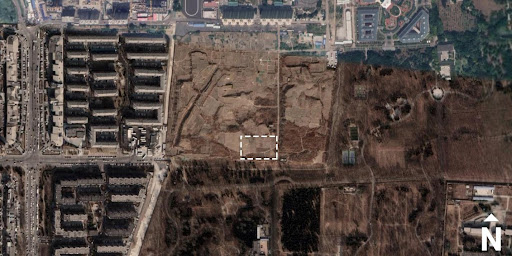
Beijing, China
The artificial intelligence industry in China is a rapidly developing multi-billion dollar industry. Under their leaders, China has made tremendous strides in many fields, but especially in A.I. businesses. Today, China is poised to become its undisputed global leader, and that will affect every business. There are plans to make China the world's primary A.I. innovation centre by 2030.
The site is located in the main city in China, Beijing. It is surrounded by industrial and residential areas and makes it an apt site to host an artificial intelligence convention. Design can be programmed anywhere within the extent of the site.
- Coordinates: 39°56'59.1"N 116°33'30.1"E
- Area: 5916 sq.m
- Height Restrictions: 15 meters
- Maximum FAR: 1
- Ground Coverage: 50%
Setbacks (as per CAD plan)
Ground Coverage refers to the ratio of the maximum allowed solid/permanent footprint on the site to balance the built and unbuilt spaces. You can utilize the other 50% of the site for any temporary intervention/recreation.
PROGRAMMATIC OUTLINE
Convention Center 60%
Exhibition/Display Space, Auditoriums, Workshops, Multi-Purpose Room, Retail
Gathering Space 30%
Restaurants and Cafe, Lounge, Open Meeting Rooms
Service 10%
Entrance Lobby, Main Reception, Organizer Office, Public Washrooms
The programme must include the spaces schematically. The participants are free to add other programmatic facilities and change the percentile depending on their design.




