

Aid
Mental therapy and rehabilitation center design challenge
Overview
 Fig: 1 - Due to fast-paced lifestyle mental issues in most people are increasing day by day
NEEDS FOR MENTAL HEALTH AND CARE
A significant proportion of the population is affected by some mental or intellectual disorder.
The disorders are characterised by abnormal thoughts, emotions, perceptions, behaviour and relationship with other people.
Widespread recognition of these intellectual disorders has led to the development of safe spaces for accommodation, therapy and treatment of this affected populace.
People with mental illness require care and shelter, along with support in education and employment, so that they can become a part of society.
Can we create a safe and nurturing environment for these populations?
 Fig: 2 Nature helps deal with pain/traumas or issues in an effective way, how can we induce this element in existing rehab institutes?
NATURE AS A MEDIUM FOR BETTER HEALING
Institutes that are built for psychiatric patients are built with a high level of amenity and forethought. Spending time in nature is one of the most effective ways of helping with common mental disorders. Outdoor activities have the potential to contribute to the physical, emotional and psychological well-being of humans. Biomimetic architecture works on the principle of imitating the systems operating in nature, not just in aesthetics but in the construction of the structure.
It is an effective way of creating sustainable environments that contribute positively to people. Nature has always been able to create a nurturing environment for all its inhabitants, the same way institutes intend to work for their patients. Can imitation of natural habitats ensure the creation of a calm, stress-free environment that is free of manmade interventions and judgement?
Through architecture, can we provide a clean slate for people to start their journey towards recovery and a normalised way of living?
 Fig: 3 - How can we use human touch and architecture to improve spatial qualities in a rehabilitation centre?
CAN BIOMIMETIC SPACES ACT AS HEALING AGENTS DURING REHABILITATION?
Intellectually disabled people are at their core, humans, and have similar social needs that can be fulfilled by creating a supportive environment for all people going through similar experiences.
Brief: The challenge is to design a mental therapy and psychosocial rehabilitation centre that caters to people affected by mental disorders, not requiring hospitalisation.
The design of the centre must be inspired by biomimetic architecture principles. Natural systems must be used in the healing spaces part of the centre. The layout of spaces must enable easy wayfinding and navigation in and around the centre.
The centre will be an independent institute that will not include elaborate hospital amenities. It will act as a safe space for inhabiting patients and treating people with temporary intellectual disabilities. Safety, security and visibility over the institute will be a design priority.
OBJECTIVES
- Access: The layout must be barrier-free so that it is accessible to every type of user.
- Safe: A safe and secure environment must be created for the occupants at the centre.
- Balance: Privacy and interaction must be guided in the layout as per the nature of the activity. The balance between aesthetics and functionality, as well as open, semi-open and closed spaces.
- Context: The design must respond to the (existing) site conditions. The wider socio-cultural, economic and environmental settings are to be considered in the design approach.
SITE
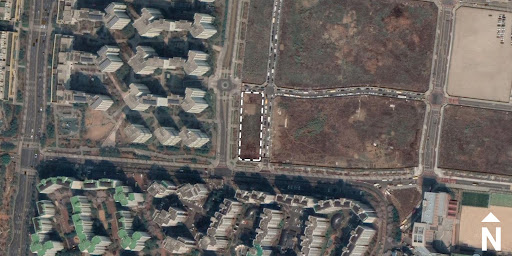
Seoul, South Korea
While South Korea has a successful and progressive economy, the society is plagued with social issues, of which, mental health is a concern. The infrastructure for mental health care is underfunded and the social stigma in society has rendered the remaining institutes underutilised.
The site is located in Seoul, South Korea. The city has many institutions that offer assistance to distressed individuals. The promotion of safe ways to deal with psychological disorders is actively being done by the authorities and this typology will flourish in the city.
The site is on open land in the neighbourhood of Name Balsan-dong in Gangseo-gu, Seoul. It is surrounded by educational institutes and residential settlements creating a supportive and sustaining community.
- Site area = 3157 sq.m
- Height restriction = 12 metres
- Ground coverage = 30%
- Maximum FAR = 0.9
- Setbacks (as per CAD plan)
- Coordinates = 37°33'21.2"N 126°49'47.4"E
AREA PROGRAMME
The centre must be able to accommodate 100 patients. The following programmatic outline is the point to begin your design at. You can add more functions and activities in relevance or modify the below design programme.
Living quarters ~ 45% of built area
Care and medical services, Material supply and storage ~ 20% of built area
Catering facilities ~ 5% of built area
Entrance, reception and waiting spaces ~ 5% of built area
Administration offices ~ 10% of built area
Open green areas with play equipment, fitness facilities, and a gaming zone ~ 15% of built area
Similar Competitions
Discover competitions you might be interested in




Challenge to design an Ayurvedic Treatment Center


The Global Benchmark for Architecture Dissertation Awards
