Blurring Boundaries
Anonymous spaces design challenge
Overview
 Fig: 1 - The imbalance between human made and natural elements in the environment has affected the well-being of all living beings.
NATURE AND HUMAN
The term ‘architecture’ has a quaint way of associating with impressive ornamental structures ranging from modern skyscrapers to historic monuments, in human minds. These structures are made to stand out and grab a person's attention stating both its story and the architect's vision.
Environmentally these spaces are also often a methodical attempt to express dominion over the prevailing natural conditions.
Human habitation has taken over all elements from the natural world to build over almost every terrain. The spaces we inhabit and the massive infrastructure to support living often clear and erase existing elements to make place for human life, intended to dwell within it.
In a world that is fraught with nature and anthropocentric conflict, it may be valuable to take a step back and attempt to reimagine our spaces, as places that blend into nature and become a symbiotic part of nature, instead of controlling and changing it.
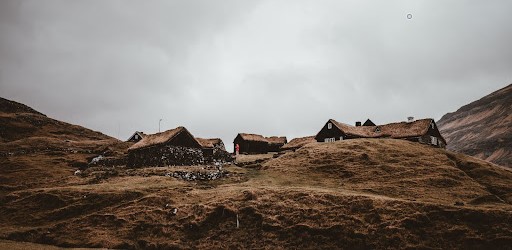 Fig: 2 - In many regions, local techniques and materials have been used to construct places that are in harmony with surroundings.
DESIGNING ANONYMITY INTO THE ENVIRONMENT
Creating structures that camouflage into their environments is certainly not a novel practice. In fact, designers have made various attempts to retrofit structures into their environments. This attempt often manifests in the usage of material, the layout of a design and even the usage of colours and forms.
As a consequence, a structure blends into its surroundings to create a cohesive spatial relationship between the inside and outside despite being artificially created.
While this allows humans to adopt a less boisterous stake on the land, for nature this anonymity means that natural elements, particularly fauna are not displaced by a sudden artificial imposition.
Human life has the opportunity to blend in with the life of other living creatures when we attempt to design to camouflage. How can this be achieved without compromising on the comfort and convenience that people are accustomed to, now?
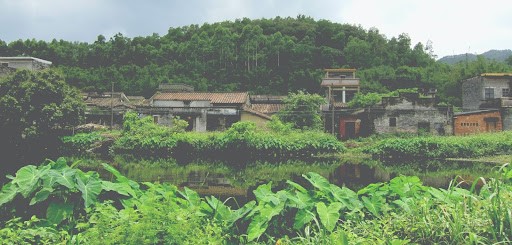 Fig: 3 - Sustainable practices used to design minimal yet effective spaces can help create a low impact practice benefiting all.
BIOMIMICRY IN PLAY
Brief: The architecture competition brief calls for a design of a single housing unit that blends into its natural environment.
The aim of the competition is to push participants’ design abilities and attempt to imagine spaces that are able to camouflage into its surroundings. While you may employ materials and technologies that are artificial to support your design, the primary focus should ideally be on using materials that are native to the context and are sustainable.
Inhabitants of this hypothetical space are imagined to be people who are already aware and sensitised to prevailing environmental challenges and concerns and thus, approach their space of inhabitation with similar sensitivity.
You may feel free to employ materials, techniques of biomimicry and manipulate architectural form as you see fit in order to create structures that are truly anonymous in their chosen environment. The design must attempt to not interrupt natural fauna that may dwell in the space already.
OBJECTIVES
Form: Experiment with form and design to arrive at a space that exhibits your novel approach
Functional: How does the space effectively function for the daily lives of its inhabitants?
Anonymous: How do the design and its materials blend into its natural environment?
Sustainable: How does the design tap into other elements of sustainability (energy efficiency for example)?
SITE
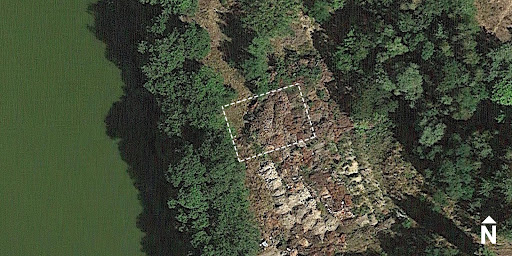
The site for this project is located in Sieraków, Poland, a town in Western Poland with about 8000 inhabitants. The town is known as a tourist destination and has large ecological conservation parks.
The site is located a short distance away from the main residential concentration and is close to natural tree groves, thereby allowing both privacy and the comfort of residential spaces.
- Site Area: 293 sq.m
- Height Restriction: 6 meters
- Maximum Built-Up Area: 219 sq.m
- Ground Coverage: 50%
- Coordinates: 52°39'31.3"N 16°04'34.5"E
USER PROFILE
The following details are based on a hypothetical family in Sieraków, Poland. Use this information to inform your design outcome.
1. A couple aged between 40-45 years (you are free to choose the hypothetical genders of this couple).
- Work: Both Individuals are working, however, one works from home and therefore spends more time in the house throughout the day.
- Needs: The couple is looking for a home for their family. They are nature enthusiasts and thus would prefer that their home is designed sustainably, and surrounded by a natural setting. They would like their home to blend into the natural environment by both design and materiality. Interactions between the inside and the outside must be seamless and seem to flow into each other.
- Concerns: The primary concerns of the couple are that they would like their home to not disrupt the natural environment around them but still be able to support the considerable comforts of modern life.
2. Child 1 age 8 (male)
- Student: The child spends his day at the local school.
- Needs: The child is fairly active and would like to have various opportunities to play in his home. Apart from playing, the child would need a place to study and rest and he hopes he doesn't have to share it with his sibling.
- Concerns: He hopes to have plenty of spaces that aren't boring and where he can imagine great adventures. He would like not to get yelled at often if he breaks something expensive while on one of these adventures.
3. Child 2 aged 12 (female)
- Student: Like her brother she spends most of her day at the local school.
- Needs: When she's not spending her time with her friends, she prefers her privacy and tends to stay in her room. She likes playing, reading and music. She likes playing with her younger sibling but she enjoys teasing him a lot more.
- Concerns: She likes playing her music and reading quietly and she hopes that her home allows her this solitude. She also loves nature and hopes that her home can give her plenty of natural inspiration.
Similar Competitions
Discover competitions you might be interested in