Breaking Work - Singularity
Rethinking work
OVERVIEW
Nature of work

Img 1: When digital and physical merge - A concept.
The 21st century has seen the most rapid shifts in how we live - what we do, and we are just getting started. It’s obvious, technologies drive the way we live – work and will continue to steer at a similar pace no matter where we belong from. From a time when humans were doing most of the work by hand, innovation led to the formation of tools. Making our work quickly, the tools eventually made us work efficiently.
The same tools were used to build machines that made work even more effortless for us. Robots are now the next big thing happening where machines could do almost everything; even build themselves. And beyond this, a steady transition has been seen from manual to digital where how we work has changed with these shifts. Humankind's push to develop more and more in this race to stay ahead, the ways we work has transformed tremendously as well.
A world more connected via digital merging with physical – is now the only norm that is constant.
Shift
The topic of job displacement by automation has ignited frustration throughout the world over technological advances and their tendency to make traditional jobs obsolete. By 2030, as many as 800 million jobs could be lost worldwide to automation. The study, compiled by the McKinsey Global Institute, says that advances in AI and robotics will have a drastic effect on everyday working lives, comparable to the shift away from agricultural societies during the Industrial Revolution.
In the US alone, around 73 million jobs stand to be automated — making up around a third of the total workforce, which extends to the world as well. On the contrary, it states new jobs will be created; existing roles will be redefined and workers will have the opportunity to switch careers.
The challenge particular to this generation will be to manage the transition. But individuals who need to retrain for new careers won’t be the young, but middle-aged professionals.
Issue

Img2: How will the future workspaces would be?
While machines evolve at a tremendous speed, it will be humans who will have to keep up by bringing more value to survive. With growing automation, this race to survival will get only tougher. Humans today have to work more hours with the changing trends of the world - is a precursor yet significant indicator of this phenomenon today.
Eventually, this takes a toll on the human body to which makes things even worse. If we refer to the ability of the human brain’s ability to change vs. the amount of effort it’s needed to adapt to them, it’s no surprise that the middle-aged professionals will be the worst hit by this shift. The most likely cause will be our future generation.
How can humankind thrive on such a downhill when technology is always learning things and automating them? Will this battle against machines go on forever?
Jack Ma states “I personally think that being able to work 996 is a huge blessing”. The “996″ schedule refers to working 9 a.m. to 9 p.m., six days a week. In times when long working hours are appearing to become a blessing, how can we enable mankind to move from more working hours to more valuable hours?
Office design

Img 4: How will the future workspaces be?
As the future of work and the role of humans in it look very uncertain, a designer’s part becomes significant in finding new spaces that enable humans to work better.
‘Breaking Work’ is an annual challenge focussed on finding the finest workspace concepts of the future. The design theme for this year’s challenge is to find how technology and humans can work together in singularity in the times to come.
Design Questions:
-
In a future when most mundane works can be automated, how humans can view this as an opportunity to do more?
-
How can technology, instead of fighting against humans for livelihood, can be seen as an enabler to make better use of their times?
-
How will humans can complement each other’s skill set in a time when collaboration is the only way to thrive?
-
How workspaces can be ready for faster company setups and even faster hiring of people?
-
In times when corporations want to make their employees work more, how can health and happiness follow in terms of design, with this growing component of work?
Objectives
Design challenge: The design challenge is to visualize work in 2050 and create a model workspace design that aims at enabling working more predicting 2050.
The following objectives can be a point of beginning to conceive this design. Participants can assume their own contexts and users before initiating their design process.

Seoul
Seoul, the capital city of South Korea, officially named in 1945 was a historic town that had its initial development due to its trade ties with foreign countries like America and France.
After the war, Seoul began to focus on rapid modernization which gave a boost to South Korea’s economy, starting from the 1960s. It is now considered a global city, ranking fourth in order of largest metropolitan economy. After becoming a global city, Seoul became popular for many things around the world - and one of them was the long working hours slowly introduced by employers. The government had to step in to regulate this hefty demand of man-hours, but this move didn’t resonate positively with the employers. In future, this move might change the preference to hire a human workforce altogether or at least brings a question to various choices.
Does this ignite the question as to how the work will be in 2050 for Seoul or the entire world, in a time when every task stands a risk to get automated? How can humans create more value together to survive in such a future?
 Site
Site
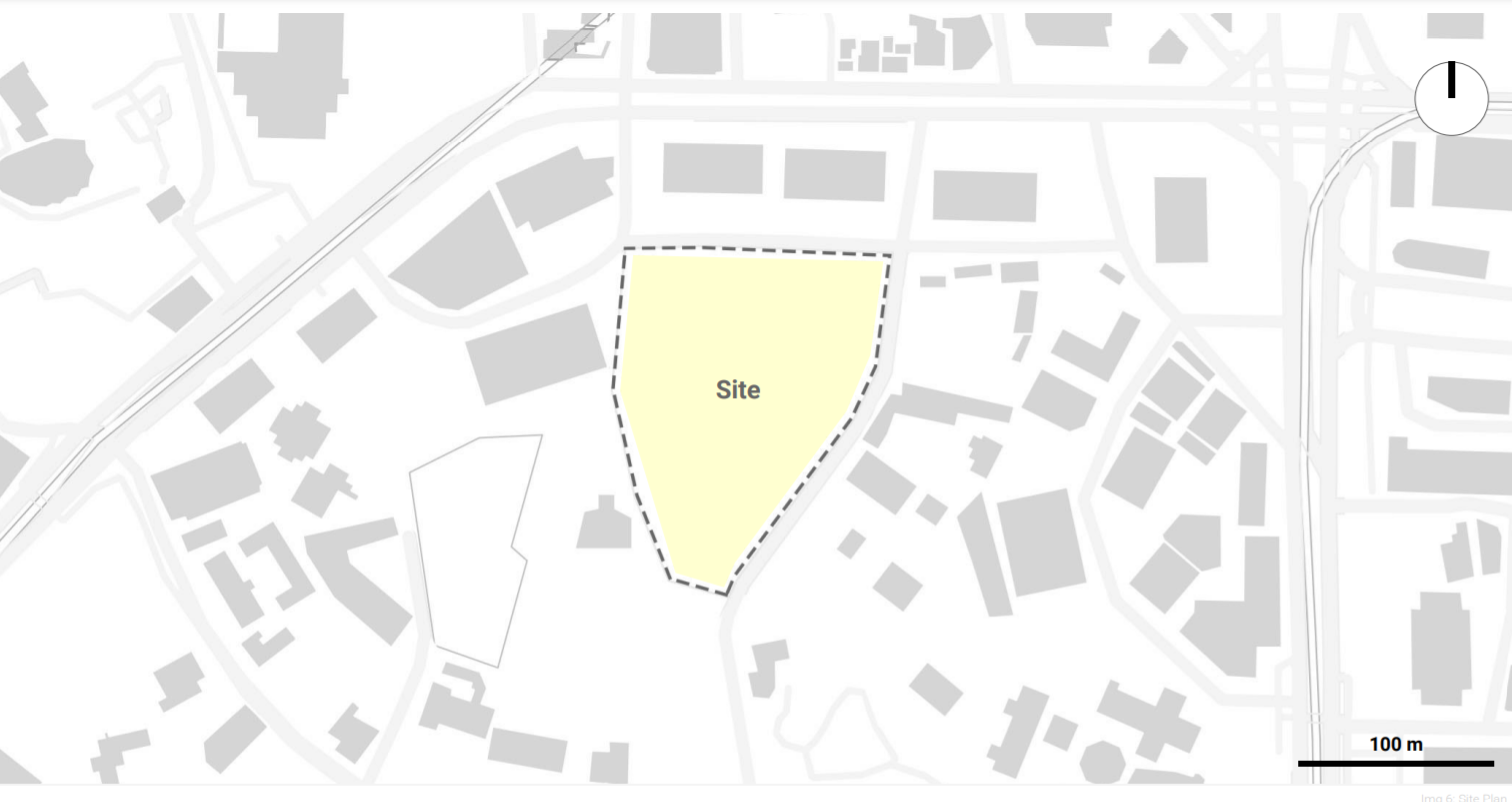
- Area: 15527.17 m2
- Height limit: No limit.
- Site coordinates: 37°34'08.2"N 126°58'23.4"E
- Ground Coverage : 65%
Currently, Seoul is a densely globalized city that hosts technology hubs and is home to the headquarters of the world’s leading companies like LG and Samsung. The site finds itself at the end of the Cheonggyecheon culture belt, representing Seoul’s potential urban context in the year 2050.
The place is adjoined by densely developed commercial buildings, residential towers and offices. This district is expected to grow even faster and is stated to be one of the most commercially active CBDs of the world. Participants have to visualize this place in the global context of Seoul and generate this model workspace of the future here.
Similar Competitions
Discover competitions you might be interested in



Design challenge to reuse E-waste

Illustrate the lost glory of Angkor Wat - Render Challenge

Photograph architecture without architects


Challenge to reimagine the Iron Throne