
Breaking Work
Workplace will never be the same again
OVERVIEW
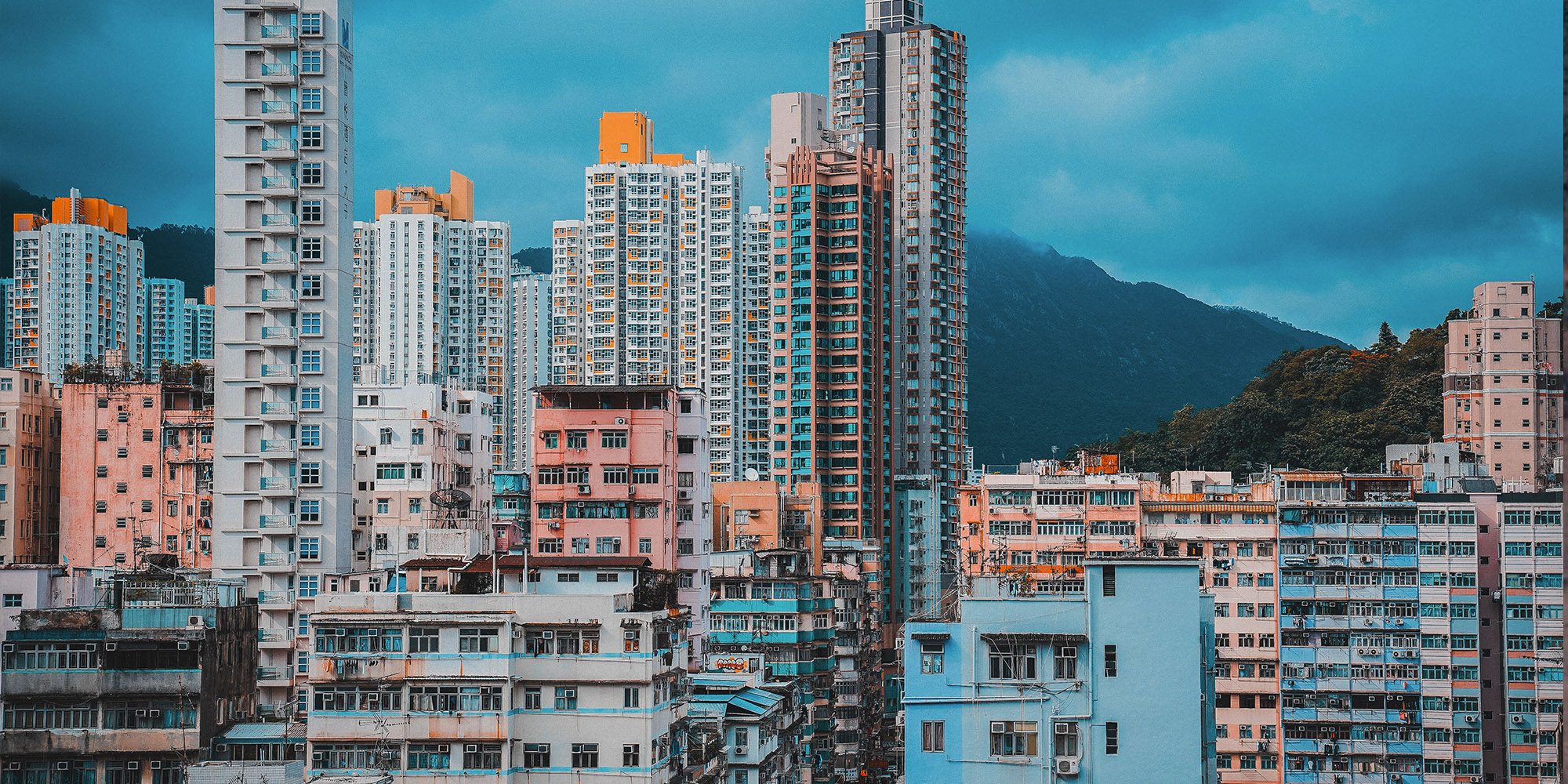 Fig: 1 – Cities have developed and advancement rapidly
Development of mankind
As time progresses – civilization advancement is synonymous. The 21st century has seen the most rapid shifts in how we live - what we do, and we are just getting started. It’s obvious, technologies drive the way we live – work and will continue to steer it at a similar pace no matter where we belong from. From a time when humans were doing most of the work by hand, innovation led to the formation of tools. Making our work quick, the tools eventually made us work efficiently.
The same tools were used to build machines that made work even more effortless for us. Robots are now the next big thing happening where machines could do almost everything; even build themselves. And beyond this, a steady transition has been seen from manual to digital where how we work has changed with these shifts.
The mankind’s push to develop more and more in this race to stay ahead, the ways we work has transformed tremendously as well. Leaving analog behind – to PC’s – to PDA (Personal Digital Assistant)’s – and now augmented reality – followed by Assisted Intelligence – to Artificial Intelligence. A world more connected via digital space merging with physical space – is now the only norm that is constant.
But how did we find ourselves here, where are we heading to?
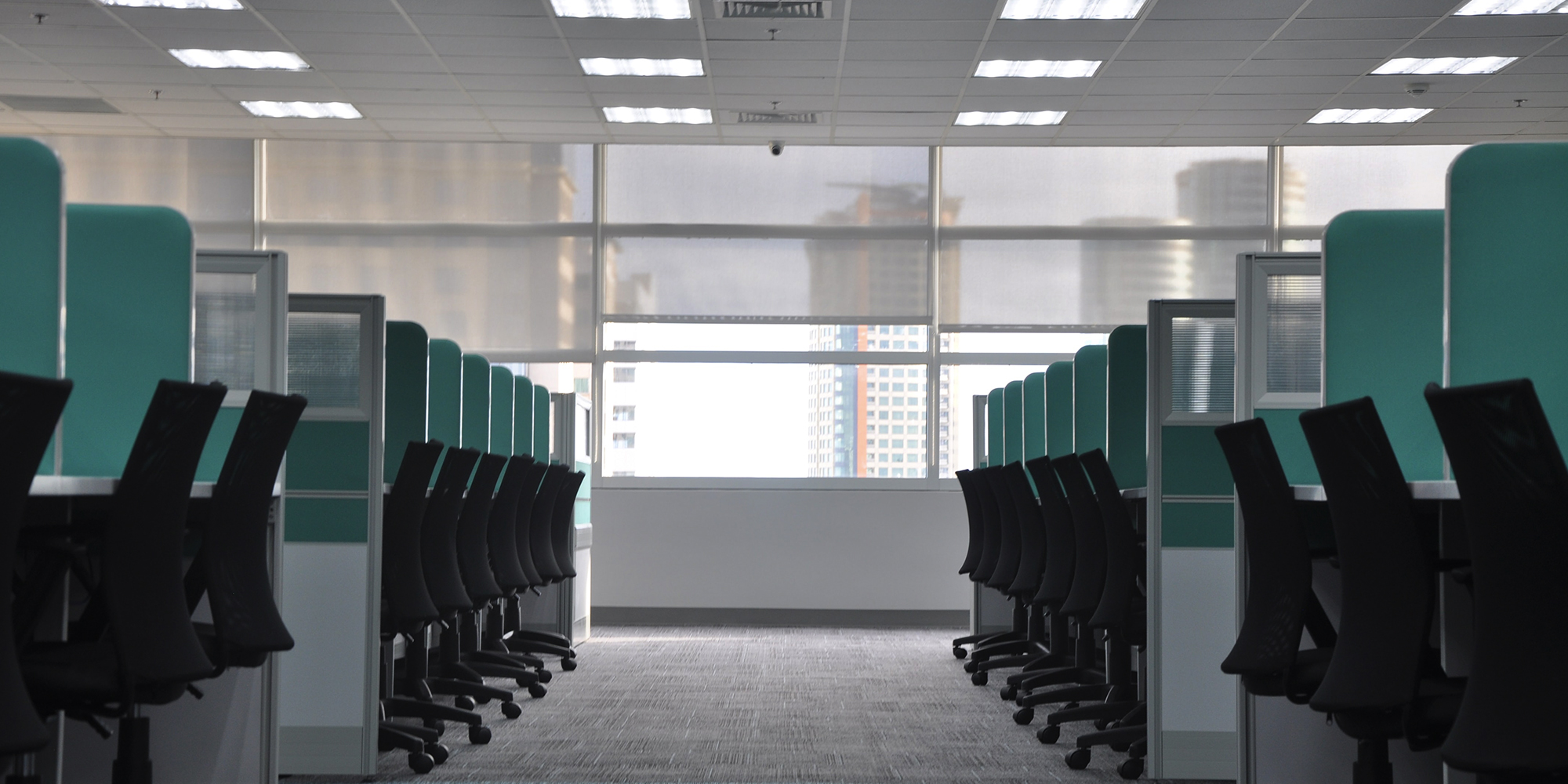 Fig: 2 – Technology changed the face of work
Evolution of work
Industrial Age
During industrialization, a formal work sector started taking shape in the form of large open plan halls. People used to sit in linear arrangements, between a number of paper and file shelves – linked by a central corridor or an atrium. They were predominantly rectilinear workspace designs with a strong sense of office-level hierarchy.
This hierarchy also drove the way offices were physically planned. Higher positions in the hierarchy occupied better locations and had spaciously planned work blocks. On the other hand, large and central visual cabins were reserved for the remaining employees.
Power and status not only affected the societal structures, office relations and the layout of building workplace interiors but also influenced the building fabric, its envelope and construction height, which eventually developed into tower blocks.
Generation X Age
In this age, work started shifting to computers slowly but the partial form of the work environment was still on paper. In this work environment, occupants were located in the space in such a way to have a more liberal connection with the office. The feeling of being members of a wider working population rather than a crowd scattered in space (as in previous design strategies) existed. As a result of the sense of a collective working scale, the workplace layout slowly became personalized. Eg. Occupants would bring pictures of their children or furniture from their homes to the office.
They would be provided with a sense of ownership of their office space. A feature developed here & still continuing in the modern-day office is the presence of cubicles. To solve privacy and paucity of space, cubicles are considered one-stop solutions even today, however, the complaints of the same being cramped always existed, making the office environment static.
Generation Z Age
This age is still taking shape, but to really understand where it began – the key concept here was the flexibility to do your work from anywhere. Workstations got lighter, and thus portable. Connectivity boosted mobility and many subsequent changes occurred.
The underlying idea of ‘your work is where you are’ started coming into the limelight. Not just the employees but also the mobile services made offices more cost-effective due to more openness and less maintenance cost.
As the job market gets more and more competitive, the companies exert more support to ensure employees’ health and satisfaction, beyond just insurance and medicare. This is where the informal elements appeared, of creating fun office spaces with multi-level slides/swings / indoor sports, etc. within the workplace.
Generation Alpha?
As we have barely managed to shape work for Gen Z, this generation of individuals will be much more unpredictable and dynamic than witnessed ever before. How will the work be defined here?
 Fig: 3 - Working trends have shifted from factories to cubicles to homes in just a few centuries
Emerging trends
Corporate Cities
Big companies like Facebook, Amazon and Google are laying foundations for modern-day company towns and campuses. Jobs defining where you live - company quarters, or government built cooperative housing has been around for ages.
What’s new here is a fundamental integration of what you do beyond work, preferred to be done within the work environment under a loose monitoring form.
Corporates plan to co-locate their workers in centralized workplace locations, building houses and mixed-use developments, where they can live and spend time outside work, but still remain a part of the system. It is not home vs. works anymore, because your work directly or indirectly decides your stay, friends, leisure, well-being, associations and pretty much everything.
Venture Boom
Work by anyone from anywhere This is where things changed. With the desire of being the next agent of change, individuals are now building their own organizations faster than ever. Almost every individual today desires to build their own company, running things on their terms. What does this imply? In 2016, around 2 million tech startups have taken birth, transformed, adapted, and perished.
On the other side, this boom is pushing boundaries of innovation and filling all the unrealised gaps in human life in unimaginable ways. Small is powerful - has never been as true as this before.
For a market as fickle as this, what will the work be for groups of individuals that change their form as instantaneously as these?
Work by anyone from anywhere
Many emerging work environments are now letting tasks happen from anywhere. Thanks to technologies and the new age where freelancers are gaining a lot of exposure in upcoming work cultures.
This reduces the physical burden to set up and maintaining a full-blown office. This implies that workspaces are only needed by the management and support staff, whereas the rest can be sourced by the task to task coordination.
This leads to a more open – dynamic – changing civilization. As this model is battling scalability, who knows if this is how things appear to everyone in the upcoming decades? And if not, where will these lead to in the future?
What are the forces that are reshaping work?
The trends worldwide imply that the existing buildings will be outdated rapidly in the coming decades with the transformations in the volatile job market. This will result in rapid transformation in the work structure with the changing scenario. A few of the key factors that are reshaping work and workspaces internationally are given below.
- Advancing Technology
It is no secret that we are leaving manual modes of work behind, and moving towards digital forms of work – the reasons are many. Workstations have covered a long journey from mere calculators to devices that handle most of our jobs and communications. This idea of constantly growing dependence will pave the way to how workplace in the future will look like.
- Data clouds
Data clouds enable us to seamlessly access our personal, email address, video call interactions and work-related information securely. With changing time, their reliability and robustness have grown considerably, making cloud syncing a very common need for basic elements of work.
- Artificial Intelligence
Machine learning + Intelligence is the deal sealer of these aspects which involve things as simple as remembering your password for you, to making purchases on your behalf. When this happens whatever you do gets compounded to Artificial Intelligence that fundamentally grows wiser with you.
- Static culture dread
Working for a few months is the present norm, but in the pace-focussed future where you have expertise in hours/days, it will be a sole guide to what your profile is. While stability/statics may soon be dreaded as culture, chances are that a myriad of job roles may be actually desired by both employees (for refreshing experiences) and employers (for dynamic individuals)
- Blockchain usage
Blockchain is like a public database that cannot be edited by anyone and is non -transferable. The context here is set by a genuine public resume that is totally built on the kind of experience you have verified by the people with whom you have worked. More transparency will bring a faster switchability, and enable employers to get people on board faster with greater efficiency.
Automation: next big shift
The topic of job displacement by automation has, throughout the world, ignited frustration over technological advances and their tendency to make traditional jobs obsolete; artisans protested textile mills in the early 19th century. A new report predicts that by 2030, as many as 800 million jobs could be lost worldwide to automation.
The study, compiled by the McKinsey Global Institute, says that advances in AI and robotics will have a drastic effect on everyday working lives, comparable to the shift away from agricultural societies during the Industrial Revolution. In the US alone, between 39 and 73 million jobs stand to be automated — making up around a third of the total workforce and has a direct relation to the population of the world as well. But the report also states that as in the past, technology will not be a purely destructive force. New jobs will be created; existing roles will be redefined, and workers will have the opportunity to switch careers.
The challenge particular to this generation, say the authors, is managing the transition. Income inequality is likely to grow, possibly leading to political instability; and the individuals who need to retrain for new careers won’t be the young, but middle-aged professionals.
In recent years, start-ups and the high-tech industry have become the focus of this discussion. A recent Pew Research Center study found that technology experts are almost evenly split on whether robots and artificial intelligence will displace a significant number of jobs over the next decade.
A shift as big as industrialisation has already set its foundation with data clouds, seamless video calls interactions and other work trends, there is a good amount of setup for how a workplace would be in 2040 when robots actually have emerged as an alternative to the human workforce?
Sources: 1. https://www.mckinsey.com/global-themes/employment-and-growth/automation-jobs-and-the-future-of-work 2.https://www.mckinsey.com/global-themes/future-of-organizations-and-work/what-the-future-of-work-will-mean-for-jobs-skills-andwages
Predicting: future forces of work
INO - In a cult driven by innovation where micro-organizations and individuals compete to yield better products for consumers, individualism co-exists with fragmentation. Individuals with better ideas flourish and specialization is the key to survival. INO cult is cutting edge, volatile and always evolving.
HMN - In this cult, humans are given ethical and moral preference over machines for societal benefit. In HMN, the cult is highly valued. A business with heart and care succeeds. HMN cult cares and values humanity, avoiding machines.
SST – Sustainability cult is dominated by social responsibility and trust factors. This in all aspects becomes a key development concern. SST cult cares for its counterparts beyond its office environment.
COR - In a world of integrated individualism, corporate decisions are driven by consumer choice. Companies flourish due to the quest of individuals to bring out their best. COR companies rise to power by armies of employees led by one goal.
Sources: 1. https://www.pwc.com/gx/en/services/people-organisation/publications/workforce-ofthe-future.html
Why redefine the workplace?
A COR corporate entity can still build an entire campus of its own by acquiring a land parcel by the year 2040 (a time when land as a resource will become a luxury compared to the present). But what happens to the rest here? When we say rest, considering that most of the large office spaces that exist today have been incremental or are designed for compatibility with a client, nearly resembling a COR entity, what will be the design that could serve all four of these tomorrow?
In an age where the service sector loses popularity because of rising automation, INO cult entrepreneurship/grass-root innovation demands spaces that foster innovative thoughts, build quick associations and enable them to grow swiftly.
A workplace that can be leased by COR corporate entities for operation of the subsidiary offices instead of setting up a whole new campus in a different region for a short duration. A group of HMN sector work guilds that settled here for a few months aims to execute a project that involves community or expansion in this location.
An SST enterprise sets an office that gives equal physical weightage to both green use and the society. There can be a tremendous number of interrelated possibilities which can arise from the following cults.
Can there be a work environment / workplace that is prepared for all workforces of the future as stated above?
The design problem
When a designer has the power to control how work is for a user, the stakes are much more complex than we could imagine. A very strong possibility is that whatever form it takes will guide how the coming generation around the world sees/perceives/live, as work still constitutes a considerably large chunk of time in our lives – and will continue to be.
Brief: The architecture challenge here is to design a work environment / workplace for 5000 employees for a demographic and age as speculated above.
Will they Work? Or Play? Or live as well? 5000 individuals – Shall be getting all the diverse features, can gain collective perks – there may be classes in features, but should have an ability to work in a variety of permutations and combinations. While designing for such diversity, newer challenges like individual data privacy or workspace policy per se should also be thought of.
Outcomes
What we expect from this workplace architecture competition are two components in the final product.
Expectations: The first part of the submission would be ‘how the idea of work is conceptualized, and how it is portrayed in 2040’. This will involve your ability to speculate current and emerging technology/economics/culture trends, which will translate into your architectural output.
The second part of the submission is the manifestation of the core idea you establish in the first part of the project. You may use the trends stated above or create a new type altogether differently. Your rationale is the key player here.
The idea is the crux of design and holds primary relevance in the whole proposal. We are looking forward to radical ideas which could create a new direction of how a work hub could be in the coming decades. We expect a design outcome that will be seamlessly connected to other hubs that serve a similar purpose around the world and may surpass the need of owning an office totally by any of the workforces of the future. What could be avoided: Too far fetched ideas – Without reasoning. Ideas that extend to the present – And are unable to connect to the global workforce of 2040.
Good Design + Good Pitch:
Breaking work competition gives due importance to a good architectural outcome along with a great idea of how this work hub/ workplace would be because what you create here is a lifestyle that people should want to adopt.
You are free to devise/conceptualize technology or use building automation, however, we advise you to avoid a very complex pitch. Remember- Simpler the pitch, the better it is.
The task here is much more than an office building. It’s focused more on creating an environment that can be a benchmark of how work could be in the coming years.
The design can be purely architectural / or lean more towards how the office system works / or how the 24 hours in this facility is envisioned, and there can be many more ways to look at this design problem.
Site
The site for breaking work architecture competition is located in the Changi Business Park, Singapore in the year 2040 – A city known for the best conditions for upcoming and existing ventures around the world. This is one of the cities that echoes with a globe when we see a place that has sustainably scaled to the future as a trade | creative | tech capital to the world.
The Changi business park today shows a lot of potentials to grow into a workplace as we speculate due to its active context.
The site area is approximately 29,880m2 and flanked by Changi Airport – Singapore Expo and corporate companies that are growing rapidly. To delimit creativity there are no specific bylaws, except no part of construction shall be going beyond the site boundary.
- Area: 29,880sq.m
- Site coordinates: 1.339261N, 103.966283E
Similar Competitions
Discover competitions you might be interested in



Design challenge to reuse E-waste

Illustrate the lost glory of Angkor Wat - Render Challenge

Photograph architecture without architects


Challenge to reimagine the Iron Throne

