
Carved
Play space for children design challenge
Overview
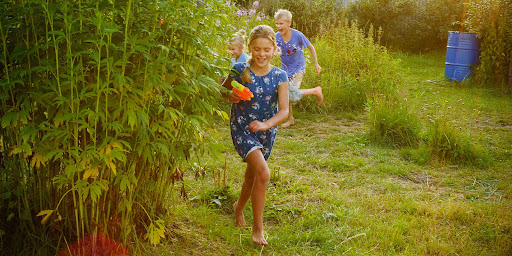 Fig: 1 - Playing was a natural part of lives before technology, now the world has evolved but the play hasn’t (Credits-Vitolda Klein)
PREMISE
Although 71% of parents played outside as a child, only 21% of their children play outside today. Technology is everywhere, and kids spend a lot of time on their cell phones, tablets and other electronic devices. This sedentary lifestyle at such a young age contributes to obesity and other health problems. It is estimated that 40% of children aged five to eight years old have at least one risk factor for heart disease later in life if a sedentary lifestyle continues. Moreover, city life is now an increasing demand and has become a supply engine for homes for people. With the observed increase in urban migration and the ever-increasing need for housing, public recreational and engagement spaces are curtailed across the world. Rising urbanisation has led to a subsequent decrease in play spaces.
At the playground, children can develop gross motor skills, interact socially, problem solve, share and resolve conflicts and use their imagination. Can we bring this important part of childhood back? But in today’s times how can this issue be tackled effectively?
 Fig: 2 - Kids these days are more attached to technology than ever (Credits- Daily News-Turkey)
CHILDREN'S WELFARE
There are various tangible and intangible factors through which the city's framework affects children. Alabama, Kentucky, Mississippi, and Tennessee are the USA’s states which have the lowest number of sports facilities in the nation. Majorly due to extreme weather conditions that make these spaces inaccessible for the children. The total percentage of recreational and play areas demonstrate a direct connection with the level of health of the children. Apart from educational spaces, play spaces perform an important role in the overall health and wellbeing of children. Reduction in such spaces or lack of recreational spaces shows its reflection in the disease percentage and increased obesity rate of children in the state. Better recreational and sports facilities guarantee a better children's health ratio.
Reduced children spaces not only hampers the child's development but also aids children's healthcare and educational issues.
How can architecture address this issue?
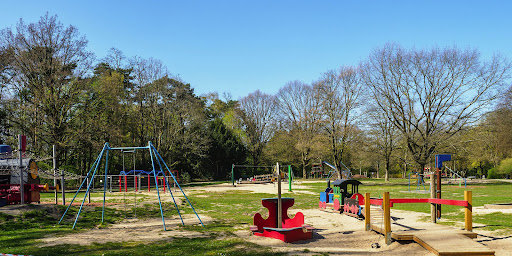 Fig: 3 - What would your playground design look like? (Credits-Alexander Chim)
BRIEF OF THE COMPETITION
How can architecture create play spaces that are able to carve themselves into the urban fabric?
How can architecture make space for the children's welfare effectively?
What strategies are needed to integrate small pocket playgrounds in today's urbanised cities?
Brief: The aim of this challenge is to design children's play space in an urban city context, which occupies less urban space but provides creative space for children.
Introduction of indoor play space, open play spaces and interactive space typologies, the challenge is to comprise all the recreational play with today's urban children needs.
OBJECTIVES
Openness/flexibility: To design a space that is easy to access and use for a kid.
Climate: Considering the usability in different seasons
Empathy: Understanding the design from a child's perspective.
Activity: To think of activities that the child might perform in space.
SITE
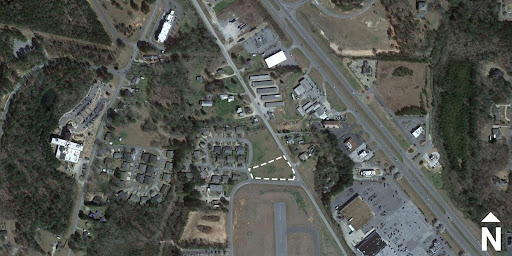
Alexander City, AL, USA
The site for this challenge is located in the United States. The USA is known for its great variety. Its physical environment ranges from the Arctic to the subtropical, from the moist rainforest to the arid desert, from the rugged mountain peak to the flat prairie. The total population of the United States is large by world standards, its overall population density is relatively low. The country embraces some of the world’s largest urban concentrations as well as some of the most extensive areas that are almost devoid of habitation.
The site is located in an urban neighbourhood majorly housed by residential clusters of housing. The site is surrounded by green and open patches of grounds. It has direct access from the main road.
- Coordinates: 32°55'22.9"N 85°57'49.0"W
- Area: 5,197 sqm
- Height limit: 6m
- FAR (Floor Area Ratio): 1
- Ground coverage: 50%
AREA PROGRAMME
The programmatic outline is intended for a batch capacity of 40 people. This is recommended for this challenge.
The space ideas are as follows:
- Indoor play spaces: 30 per cent
- Outdoor Engagement spaces: 20 per cent
- Services and ancillary spaces: 10 per cent
- Open Playspace: 40 per cent.
Other additional spaces can be added by the participants as per their design needs.
Similar Competitions
Discover competitions you might be interested in




Design challenge to reuse E-waste


Illustrate the lost glory of Angkor Wat - Render Challenge

Photograph architecture without architects


Challenge to reimagine the Iron Throne
