

Chord
Challenge to design a cultural center to promote folk music
Overview
 Fig: 1 - Terms of music such as rhythm, harmony and dynamics are used in architecture as well.
PREMISE
Vision may be our foremost sense, but the sound is what helps us centre our thoughts. Music, in a technical sense, does not exist. It has no tangible form to it. Yet, it is capable of inducing a human’s innermost feeling and cognisance through its form.
The individual benefits of music are innumerable from enhancing brain function to reducing stress and uplifting moods. It also has a powerful therapeutic effect on the human psyche. On a social level, music has the ability to bring people together and generate a strong sense of community among people.
While music helps focus our sensational side, architecture is a form that helps us make sense of our place in space and time. Architecture, as ‘frozen music’, is a physical form of expression employing rhythm, proportion and harmony in its design.
How can the connection between music, society and architecture be enhanced?
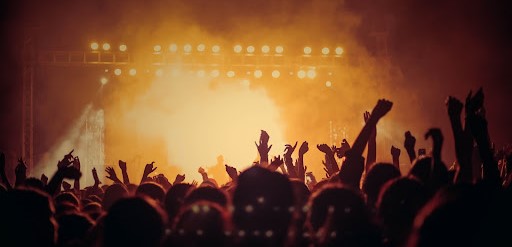 Fig: 2 - Music is capable of filling up a three dimensional place and changing the ambiance of a venue.
ISSUE
Music is a universal language, capable of communicating through sentiments. Making this a group activity can strengthen the connection, as people identify with similar feelings and feel closeness. Participation in music activities enhances social inclusion, for the well-being of people.
This is an effective strategy for the vulnerable populations living in any community. The communal activity of listening to music is not only helpful in fostering social cohesion, it is a remedy for loneliness, which might be affecting old people, orphans or disabled persons.
Every region has its own music culture and folk music is a popular form to commemorate events in history and time. They are passed on for generations and every rendition is a modified version representing the community sentiment at that time.
This type of music is non-traditional but extremely endemic, and its survival in society is through its practice and representation.
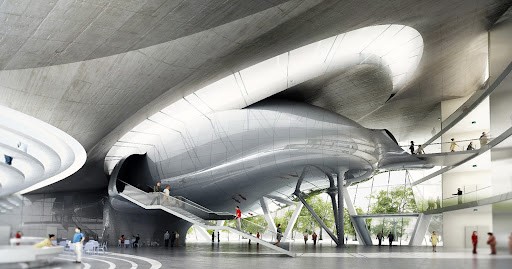 Fig: 3 - Architecture is often inspired by music and the translation of this art form into a physical space. (Credits: Morphtopia)
BRIEF OF THE COMPETITION
The challenge is to design a local music center that will help the vulnerable populations of society to come together for therapy, rejuvenation and enjoyment.
The design of the form of the centre must be inspired by the relationship of architecture with music. The music arena is designed to become the social centre of the city. Social integration must be induced through the design of space and form.
The aim is to create a local centre that focuses on increasing communal activity in the area. The design must establish harmony or connection with the surroundings while having outstanding features.
In current times, the fast-paced world is caught on by most people, but a disconnect is formed with persons in society who are unable to align themselves with trends. Their loneliness is often due to inactivity and meeting new people in a musically charged, positive environment can benefit their well-being.
OBJECTIVES
- Landmark: The structure will be a landmark that is a cultural centre for the city.
- Balance: The aesthetic, social and functional aspects must be balanced.
- Layout: The accessibility and zoning of spaces must be done with respect to levels of privacy
- Community: The values and culture of the community must be reflected in the design.
- Context: The design must respond to the (existing) site conditions. The wider socio-cultural, economic and environmental settings are to be considered in the design approach.
SITE
Sofia, Bulgaria
Sofia is the largest city in Bulgaria and has been in existence since 7000 BC. It is a popular cultural destination as well as a business centre. Its cultural significance extends over art, architecture and theatre.
The musicscape of Bulgaria is rich with classical, popular and folk music. The tradition of signing has been an important part of the community throughout history. Bulgarian folk music is known for its asymmetrical rhythms, and this feature makes the music beats unique.
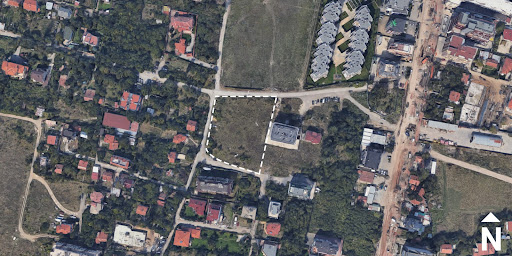
The site is in the neighbourhood of Hladilnika accessed by Filip Kutev Road. It is surrounded by commercial outlets, educational institutions, green areas and cultural landmarks attracting a lot of visitors to the area. Consider the site empty before designing
- Coordinates = Maps
- Site area = 3896.98 sq.m
- Height restriction = 12 metres
- Maximum FAR: 1
- Ground coverage = 30%
Setbacks (as per CAD plan)
Ground Coverage refers to the ratio of maximum allowed solid/permanent footprint on the site to balance the built and unbuilt spaces. You can utilize the other 70% of the site for any temporary intervention/recreation.
AREA PROGRAMME
The programmatic outline is the point to begin your design at. You can add more functions and activities in relevance or modify the below design programme.
- Outdoor performance area ~ 200 sq.m
- Auditorium/Amphitheatre, Multimedia room ~ 200 sq.m
- Music rooms for learning, studios ~ 200 sq.m
- Museum for folk music ~ 100 sq.m
- Recording studio for local artists ~ 100 sq.m
- Administration and Services ~ 100 sq.m
Similar Competitions
Discover competitions you might be interested in



Bring back Drive In's

Challenge to design an urban locus of culture and heritage


The Global Benchmark for Graduation Excellence


The Global Benchmark for Architecture Dissertation Awards
