CityScraper 2020
Sustainable Skyscraper Design Challenge
Overview

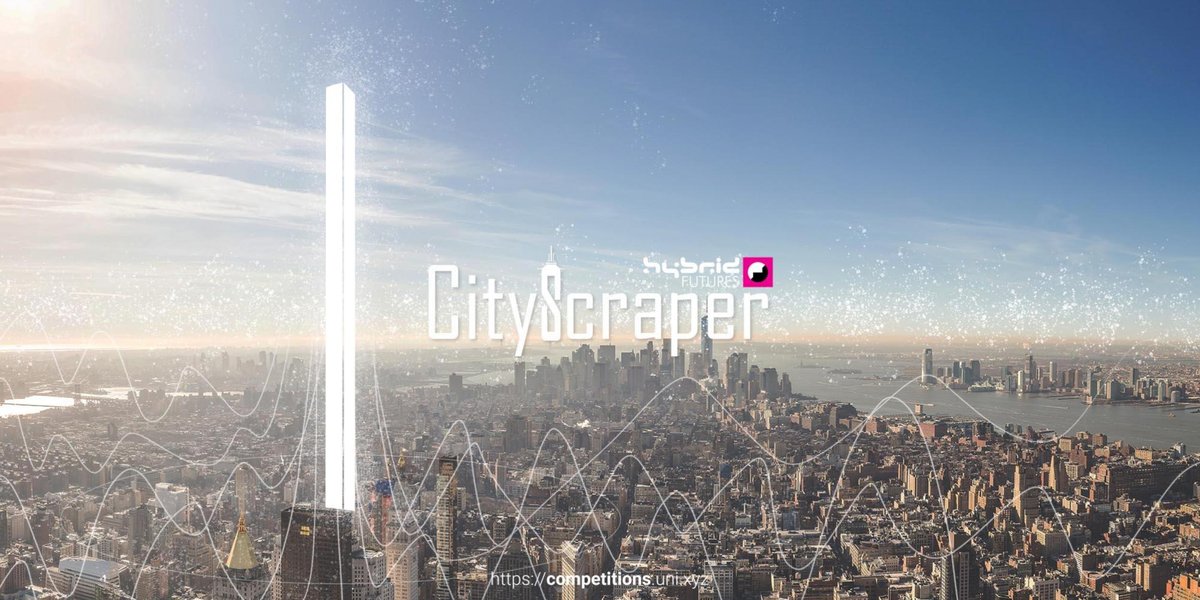
Img 1: A usual impression of a skyscraper - Concept
Premise
The promise of jobs and prosperity, among other factors, pulls people to cities. Half of the global population already lives in urban areas, and by 2050 it is expected to swell to two-thirds. The side effect of this is the most pressing problems facing the world today also come together: Disparity and Environmental Degradation.
As cities continue to grow, the way we construct and manage the buildings has become crucial to global economic and social development. Overpopulation in cities is the most pressing issue, silently aggravating the forces behind global warming, environmental pollution, degradation of the quality of life.
The vital task in a city is to pack a lot of people in one place without depleting the quality of life.
The soul of the city is in its people, culture, and heritage, architecture adds the character to it. But as we progress in time today, all we see is tall glass cutting edge buildings disconnected with the people and the city around. We must figure out how to make our cities more livable and sustainable without triggering the seemingly inevitable march of duplicity.
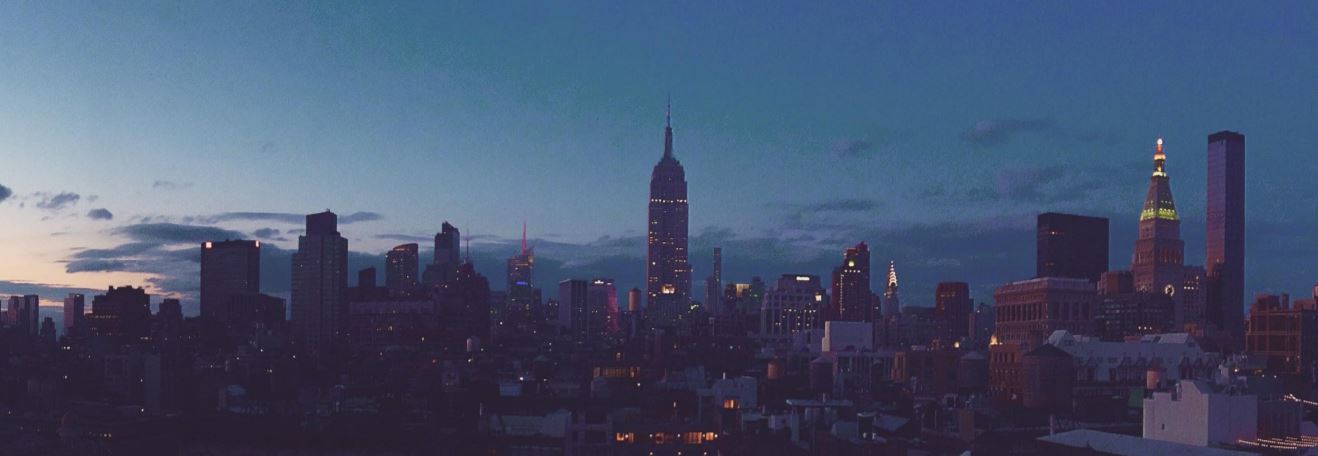
Img 2: Skyscrapers also have a city beneath it - A view of Empire states at night.
A Skyscraper
Skyscrapers as the name suggests, refers to the vertical desire to reach to the skies and live among the clouds. Increasing urbanisation in the recent decades has meant an upturn in construction of high rise building and towers all over the world making them a benchmark for the future buildings. Expanding cities horizontally to accommodate overpopulation would destroy more natural resources, therefore, the idea of the vertical cities is favoured. Present changes in occupation distribution and its interdependence on urban population growth due to migration, skyscrapers have shown functional benefits as well as an architectural style.
Urbanisation and white collar revolution has led to rampant sprawl in urban areas but, we can’t run away from the harsh reality of limited land available for construction. Besides making the city affordable and architecturally interesting, high rise buildings are greener than sprawl and can foster social capital and creativity.
So, if density is unavoidable then how can we as a community turn density as a solution?
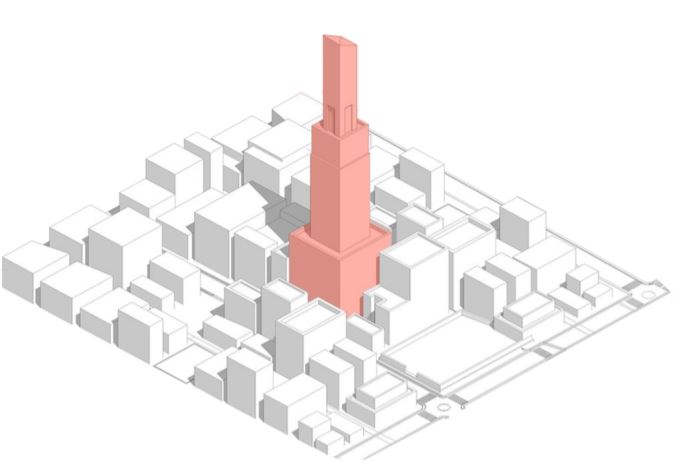
Img 3: Physical model of skyscraper
Physical View
A skyscraper acts as a distinctive landmark, stamping an imprint on urban landscapes where no common man can afford to live.
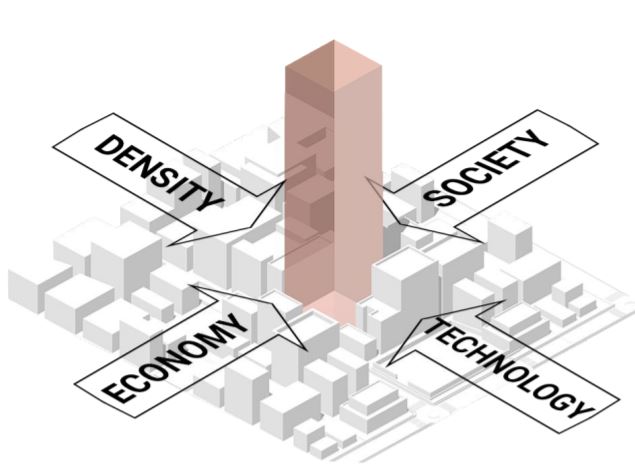
Img 4: What intersects while building a skyscraper.
Value View
But eventually it is a common point where Capital, People, Talent and Technology coincide. The responsibility goes way beyond the site because of the resources and time put into its construction.
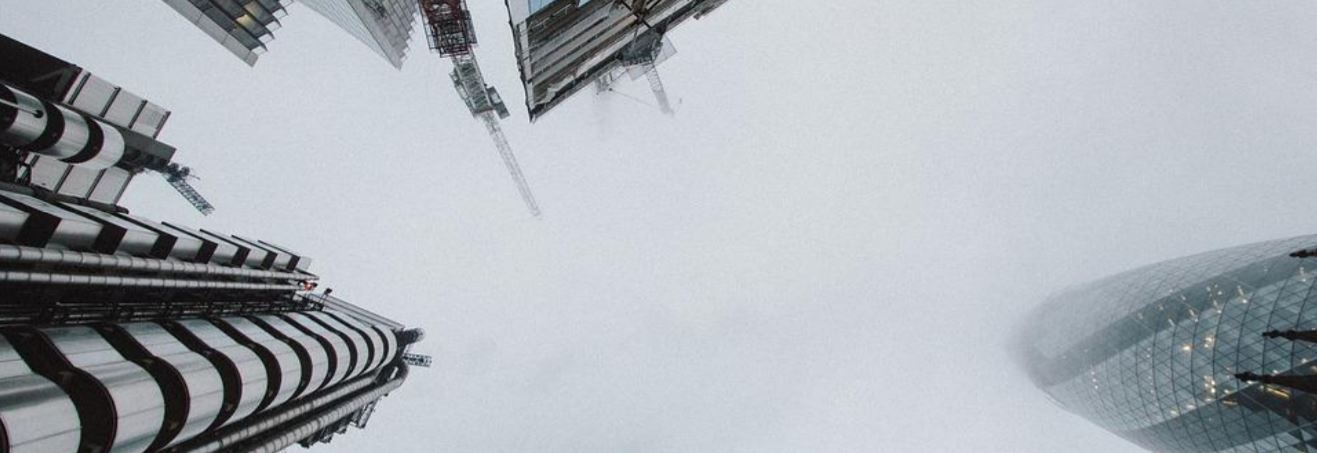
Img 5: Disconnect between building and its surroundings
Issue
Selfish city
A skyscraper acts as a distinctive landmark, stamping an imprint on urban landscapes where no common man can afford to live. It's not the cars but the buildings that's the number one cause of greenhouse gases. According to time magazine, buildings account for 40% (IPCC)of energy consumption in the US Skyscraper shapes the skyline of the city but neglects the lack of interaction with the city streets and its people.
Presently, skyscrapers are designed like an island: anchored at one spot, whereas they should be designed as stems to a city that are made to grow the economy, environmental conditions, social and cultural well being. Skyscrapers stand high and mighty symbolising power and strength of a city and it's high time that they start contributing towards the future development of the city around.
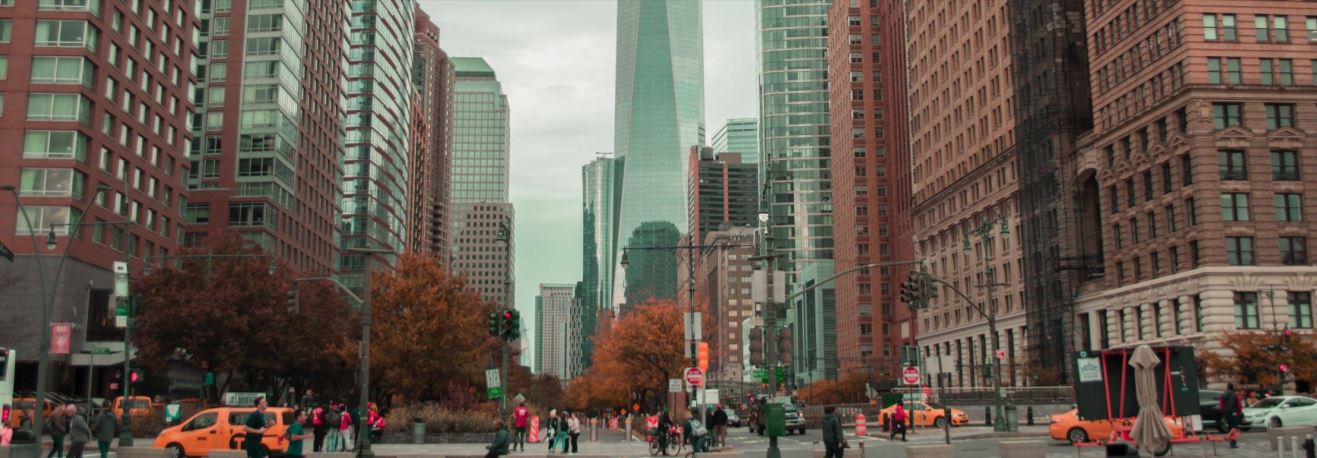
Img 5: disconnect between building and its surroundings
Brief of the competition
Generous city
The cityscraper is a symposium that explores the relationship between a high rise building and the city around it. The challenge here is to design a dynamic and adaptive vertical community that serves the needs of the inhabitant at the same time being a flag bearer of global responsibility towards the city below and the planet around.
In this challenge, the design of the skyscraper springs from the rising issues of the city like, deforestation, pollution, water scarcity, waste management, etc and many growing urban issues that continuously persist which are solved with capital, engineering, and mainly offered to skyscraper design.
The aim is to engage the design without any constraints in the most creative way possible. What does a skyscraper look like to you in the future ? What are the social, cultural, environmental, historical and urban responsibilities of these mega-structures?
Objectives
Functionality: Should be functionally and structurally stable and follow local safety norms.
Purpose: Establishing a purpose that the building serves for the benefit of the city.
Life Cycle: It should be able to sustain its form and function for the distant future.
Futuristic: Should take technical advancements into account (design & program).
The following objectives can be a point of beginning to conceive this design. Participants can assume their own contexts and users before initiating their design process.
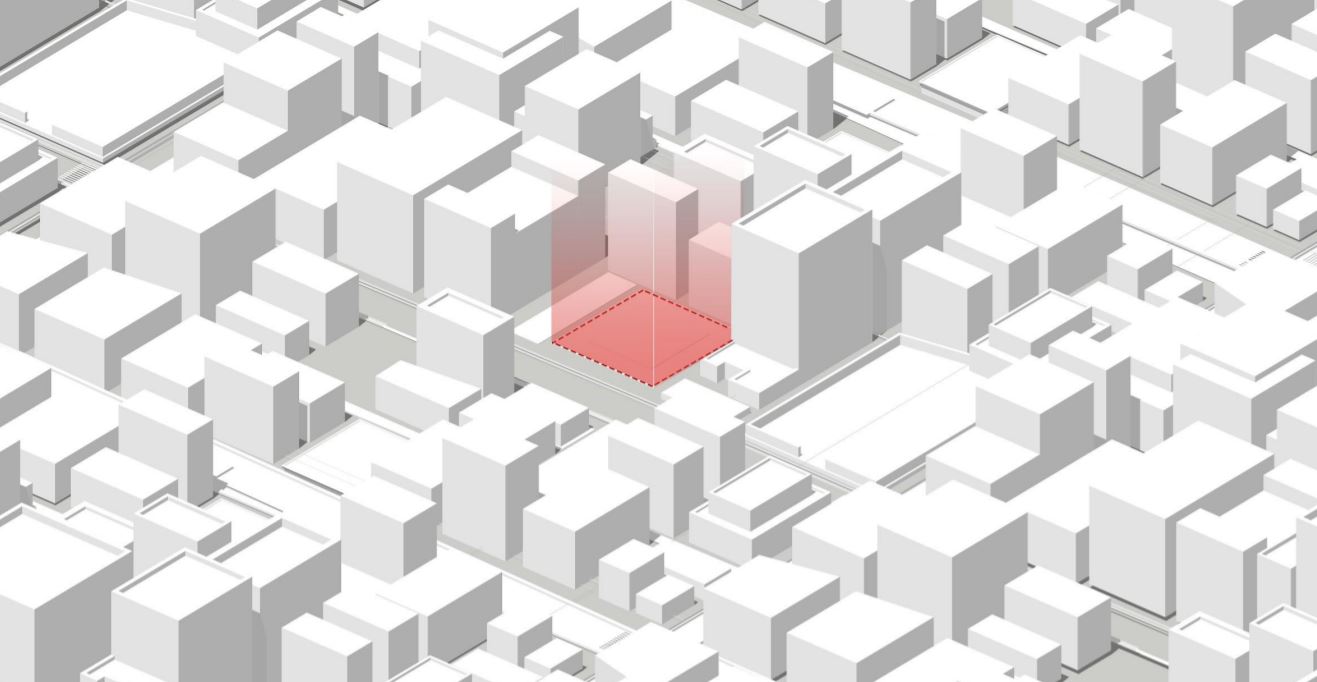
Img 6: conceptual model of the site and its context
Place
The site for design can be selected in any city anywhere in the world. The place of choice can be a near future urban condition or rooted in times of today. The chosen site need not be vacant/undeveloped. If there is construction on the site you may consider it empty for this design problem.
The minimum site area for the cityscraper should be 1 acre and it should not exceed 6 acres.
There are no height or floor plate restrictions.