Compute
Challenge to design a museum for computational technology
Overview
 Fig: 1 - Computation has come a long way from macro to micro technology
STORY OF COMPUTATIONAL TECHNOLOGY
A computer is a staple of modern life. Yet its complex and multifaceted present has come a long way from the first computer that was ever created.
The first computer was the steam-driven machine that was invented for number crunching. Today most of us carry powerful computers with complex computational capabilities in our pockets in the form of a smartphone, a device that has come a long way from where it started. In this technology-driven world, the story of computational technology is still being written as we experience it. It is an ever-changing history that grows with every new individual that introduces new ideas and technology to it.
Moreover, this story that we are witnessing will eventually determine the collective future we see for ourselves. Thus it may be valuable to begin creating opportunities that curate the complex and multifaceted history of computational technology.
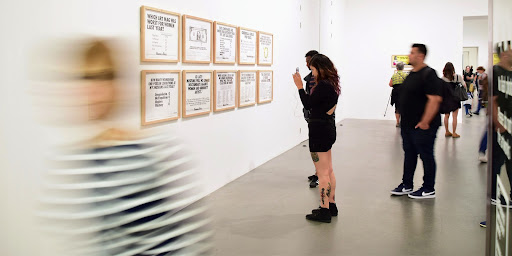 Fig: 2 -A museum becomes part of the past, present and future
MUSEUMS AND CULTURE
Museums are often perceived as spaces that curate history. More often than not, museums are far removed from the time periods they curate. Yet museums are also intriguing reflections of cultures and communities. Quite simply put, they curate history.
Mores of artefacts not, museums that visitors can engage with and learn from. As a result, museums need not be limited to periods of history long before the space itself. In fact, the world over individuals has found it both informative and amusing to curate artefacts that are very much part of our present everyday lives.
In turn, museums emerge as not just glimpses into the past but valuable reflections on even present cultures and stories.
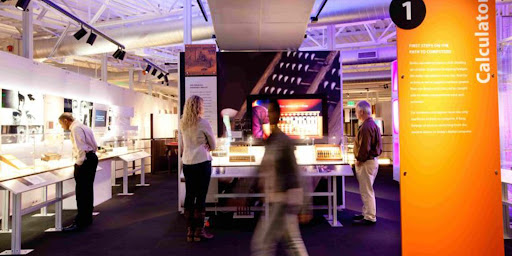 Fig: 3 - A still from the national museum of computing (Credits: https://computerhistory.org/exhibits/revolution/)
BRIEF OF THE COMPETITION
Museums of technology, and even more specifically museums of computation are not foreign to our world. Even while the technologies of computation are constantly changing, people have found it both important and interesting to curate and catalogue history as it happens.
The challenge here is to create one such museum for computational technology.
The design must be an immersive and experiential space that curates artifacts linked to computers and computational technologies. Since it's a public space it must also allow opportunities for individuals to actively learn from the curated materials. Remember that computational technology is still evolving and thus allows for opportunities that can translate into the future.
OBJECTIVES
- Design: How does the outcome pay homage and draw creative inspiration from the primary design influence- computational technology?
- Functional: How does the designed space serve the various functional needs of a museum?
- Engage: How does the space and its design help individuals engage and learn in immersive ways with the artifacts?
- Evolve: How will the designed space continue to evolve and change as technology itself advances?
SITE
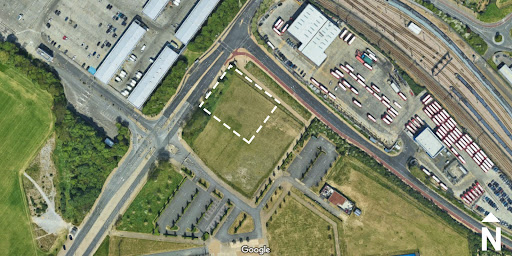
Owing to the theme of technology and its evolution through time, this project is intended to be located in London, United Kingdom which is the birthplace of both Alan Turing and Charles Babbage, two of the most significant contributors to the development of computing technology.
The site is located in a primarily commercial area with multiple large scale commercial compounds and a large sports compound on the southern side of the site. However residential spaces are only a short distance away and can access the museum by virtue of a well-networked street layout.
- Coordinates: London
- Site Area: 1504 sqm
- Maximum FAR: 0.75
- Ground Coverage: 60%
- Height Restriction: 18m
Setbacks as per CAD plan
AREA PROGRAMME
Design a museum for 800-1000 visitors/users
Museum ~ 30%
Entrance (Reception, Information kiosk, Baggage deposit, Security), Exhibition Halls, Gallery,
Administration and management ~ 20%
Offices, Conference/Meeting room, Locker rooms, staff lounge, staff washrooms
Recreation Spaces 20%
Multi-purpose hall, Cafe, Courtyards, Central Amphitheatre/air theatre etc
Storage and Services 15%
Archive Lab (Preparation room, Storage/Collection Storage, Conservation Lab, Archive display), Freight elevator, Loading and Unloading, Packing and Unpacking, Maintenance
Mechanical room (HVAC), Monitor room, Electrical room, Elevator machine room, Toilets
Additional Activities 15%
Education, Audio/Video room
Library and Reading room
Gift shop
Similar Competitions
Discover competitions you might be interested in