
Cordial Science
Challenge to design public laboratory
Overview
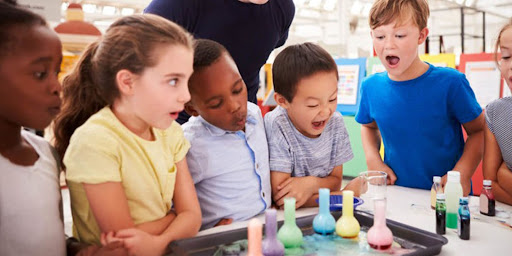 Fig: 1 - Hands-on learning proves to be an efficient form of teaching practice
LEARNING
Learning happens best when intertwined with hands-on experimentation and real-life engagement. A majority of pedagogical spaces don’t always offer spaces to experiment and learn. Instead, schools are more often than not spaces characterised by the unidimensional exchange of information.
Intriguingly research indicates that not only is learning better when one can engage with the material and learn by experimentation, but one also develops curiosity and skills for creative problem-solving.
While schools are often criticised for the predominant means of pedagogy, it may be difficult for these schools to effect change overnight. Instead, it may be valuable to consider additional spaces that are not always intertwined with institutions where children and even perhaps adults can collect and experiment and learn.
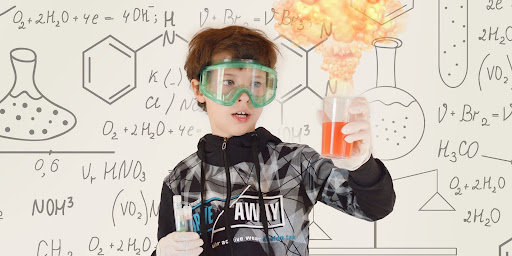 Fig: 2 - Chemistry teaches us about vital elements of nature in detail. While textbooks inform us about basic formulas, hands-on learning in the field of chemistry can help adults as well as children learn easier.
SIMPLE CHEMISTRY
In most schooling systems sciences are reduced to classroom subjects where one unilaterally absorbs information relayed by teachers. A lot of concepts and challenges thus remain abstract and therefore the learning is limited to the surface level.
Chemistry is one of the most common subjects to face this issue. The nature of most chemicals and the safety concerns regarding their handling lays the ground for hesitations regarding experimentation and handling by children and laymen.
Yet engaging with chemistry allows one to not only learn about one of the basic building blocks of life but one unfolds ways to creative thinking in relation to chemistry. This creative solving ability may manifest in increased innovation from unexpected sources that may respond to the problems we deal with in our lives.
It may be thus imperative to consider creating simple chemistry laboratories where children and laymen can engage with science.
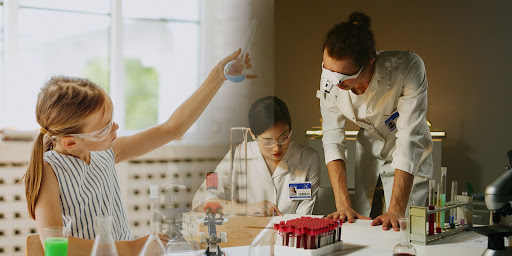 Fig: 3 - By creating a collaborative platform for both children and adults can we promote a new typology that brings a new type of learning to society?
BRIEF OF THE COMPETITION
Public labs are a simple proposition. They act as simple supplements to schools and work by creating spaces that provide the tools and the know-how to experiment and learn. They also allow more egalitarian access to controlled spaces that most people may not always have access to.
The challenge here is to create one such public laboratory for chemistry that can be used by both children and laymen.
The design must be exciting for people to be drawn to it but it must also maintain the primary safety standards regarding a laboratory.
The designed outcome must provide the space and the tools as well as opportunities to learn and collaborate. The aim is that one may use such spaces to engage and absorb scientific concepts to strengthen one’s learning as well as create opportunities for creative problem-solving.
OBJECTIVES
- Design: How does the outcome draw in and engage individuals through its form and design?
- Function: The space must be a functional public lab with appropriate tools and spaces
- Learn: How does the designed outcome provide opportunities to learn and strengthen knowledge gained in schools
- Collaborate: How does the designed outcome encourage collaboration?
- Accessible: How can we challenge the idea of a lab being reserved for professionals by allowing larger populations to access such spaces to learn and tinker?
SITE
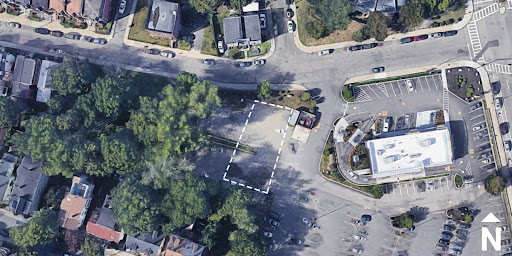
The site for this project is located in Boston, Massachusetts. It is located adjacent to a school in a largely residential area. The outcome must be adequate for the community and supplement the school while not being tied to the institution.
- Site Coordinates: Maps
- Site Area: 546 sqm
- Maximum FAR: 1
- Ground Coverage: 70%
- Height Restriction: 6 m
Setbacks as per CAD plan
PROGRAMMATIC OUTLINE
The designed outcome must contain the following spaces:
- 30% large central laboratory space
- 20% Office Spaces for the supervisors
- 20% Community space
- 20% Smaller individual rentable lab spaces
- 10% Services: Restrooms, storage, maintenance.
USER
While the designed space should be easily accessible and usable by students and educators, it should also be usable by a host of individuals looking to engage, learn and experiment in scientific settings and expand their horizons.

