
Divide 13
Designing a space for co-existence
OVERVIEW
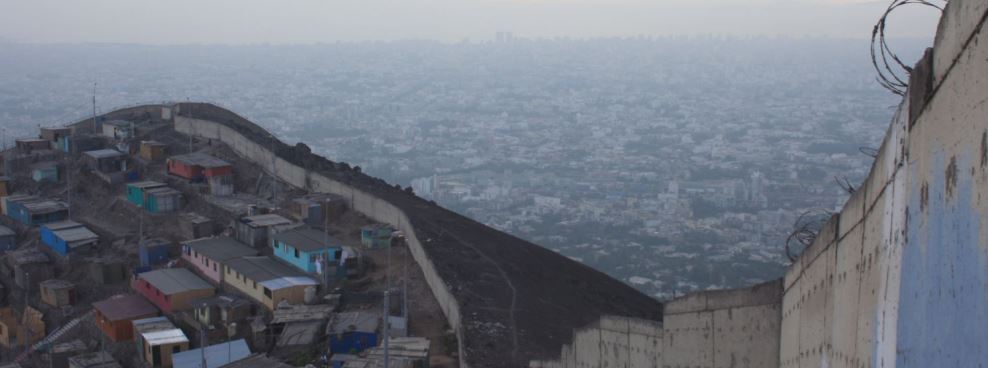
Img 1: Wall in Lima separating poor and rich has been coined by media as Wall of Shame.
Premise
Disparity. Division. Divide. The many words are synonymous with the cultural, social, and economic barriers that are being physically manifested through walls. Historically meant for defense, the structure saw its inception in around the tenth millennium B.C. But twenty years after the fall of the Berlin Wall, they are prominently back in fashion.
Some mark the border between two countries, others the separation between communities. Be it temporary or permanent, they are often built for 'security' purposes. Be it Europe blocking the passage of refugees, USA building a wall with Mexico or Israel isolating itself from Palestinian. But besides that, it is also being used to separate the inhabitants of a city on an economic basis.
In Lima, Peru - the economic divide has manifested into a six-mile-long wall dividing the city’s rich and poor. The concrete wall has altered the lives and perceptions of those on each side. It also stands as a testament to Lima’s economic disparity, which has cut across the culture for ages.
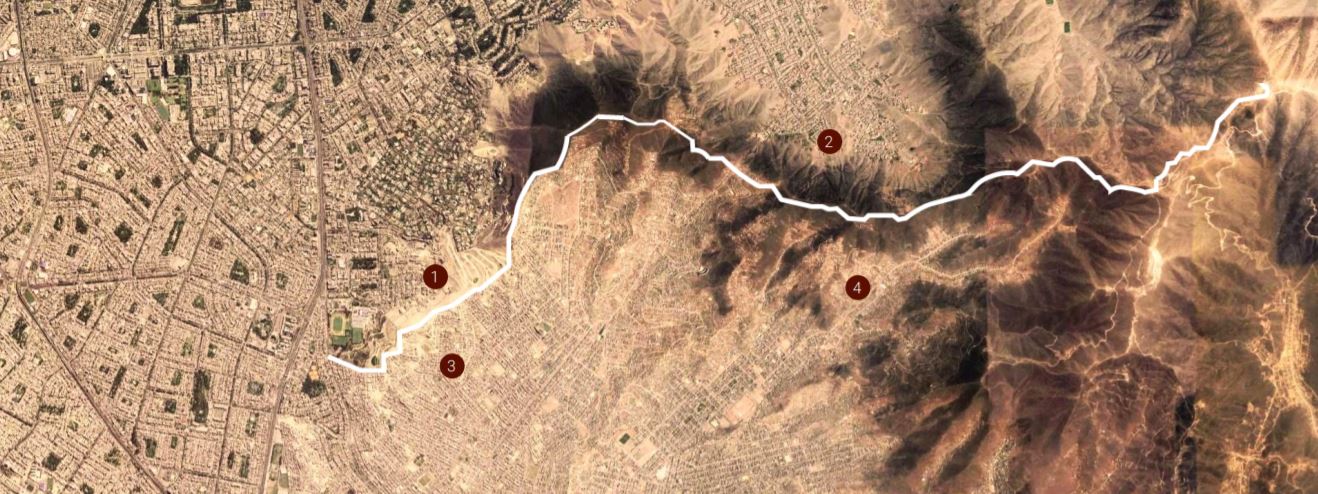
Img 2: Wall dividing area of 1. Las Casuarinao and 2. La Molina from 3. Pamplona Alta and 4. Villa Maria
History
In the 1980s, migration from rural areas took place after violence between the government and Maoist Guerrilla group broke out. Many escaped the bloodshed, and others saw it as a place of opportunity. Migrants settled in abandoned hillsides, on the edge of the city and constructed mass of informal settlements. Simultaneously, gentrification of the suburb lifestyle made many elite move towards the city outskirts. This meant that social groups, which occupied distanced geographical spaces, now shared the same territory. Both social classes mingled in the city’s peripheries.
Between 1940 and 2005, the population of Lima grew tenfold from 0.65m to 8.1m, particularly during the 1980s. Construction of the wall began in 1985 when a private school in Surco built tall brick fences along its boundary. School officials said the barriers would serve as security from the growing migrant settlements. Today the 13 km stretch excludes the gated community of Las Casuarinas from the slums of Pamplona Alta. (Source)
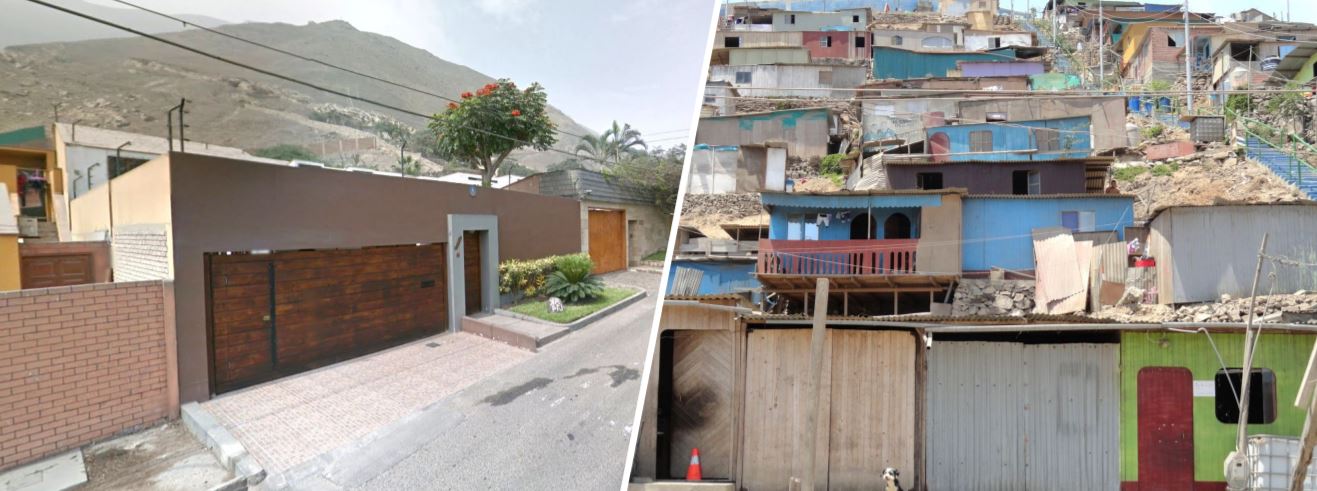
Img 3: Las Casuarinao on left and and Pamplona Alta on right

Today
There are many versions of why the wall exists after 30 years. Providing security in face of violence, to stop further invasion, an act of discrimination, hiding huts for the city’s beautification or a notable absence of urban planning. Many residents have claimed that crime in their neighborhood has dropped as a result of the construction. Yet, it’s hard to miss the economic inequality that exists.
The Santiago de Surco side has cameras and guards to provide security for houses, surrounded by pools and lush gardens. On the other side, people live in houses made from scrap material, surrounded by the arid characteristic of Lima’s desert landscape.
Many migrants working in the neighborhood had to leave their jobs because of extraneous travel hours and low wages. About 6.9 million Peruvians live below Peru’s poverty line, which the country defines to be earning less than 338 soles ($102) per month. The richest 20 percent earn nearly half its income, while the poorest fifth earn less than 5 percent. The wall stigmatizes the other side by visible prejudice and creates a fear of the unknown through physical separation.
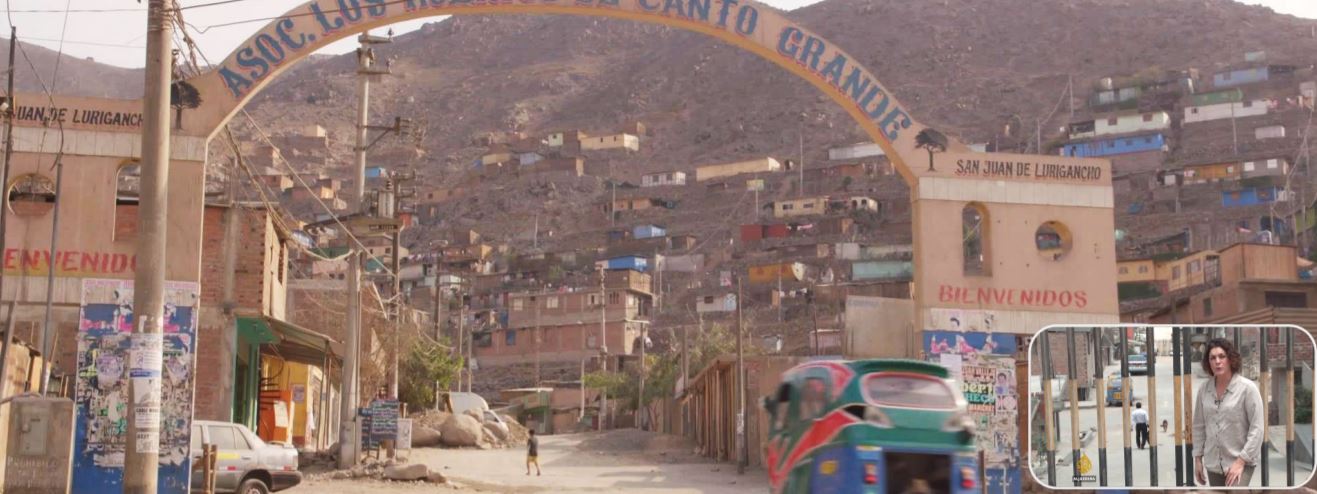
Img 4: Entrance of Pamplona Altho. Right Bottom - Main threshold between two places covered by journalist from Al Jazeera
Brief of the competition
Lima is a city where even a middle-class neighborhood has a gate, but Casuarinas is known for its elaborate security apparatus. Three distinct checkpoints — one for residents, one for visitors, and one for pedestrians. This ensures that only authorized individuals gain entry. Also unlike other barriers, here the power of state and authorities are nowhere to be seen.
The concrete wall has altered the lives and perceptions of those on each side. It also stands as a testament to Lima’s economic disparity, which has cut across Peruvian culture for ages.
There are no easy solutions. A lot of factors need to come into play for uplifting slum dwellers and bridging the existent gap. Politics and economics need to align for the wall to be completely removed. But an incentive can be curated to bridge one that is present mentally.
Brief is to design a public platform that bridges the gap between the two communities. An inclusive space for coexistence that allows respectful supervision of people at the same time.
Objectives
Community: Strong community-level participation is critical for equitable development.
Border: Design a non intrusive barrier eliminating the current wall.
Ceremonial: Potential to become an icon structure for a large scale public use attracting different user groups.
Inclusive: Act as a link to existent barrier between urban area and slums.
The following objectives can be a point of beginning to conceive this design. Participants can assume their own contexts before initiating their design process.
The main objective is to design a public platform that constitutes market space. It will be used by people in Pamplona Alto on weekly basis to sell their produce/goods. Further act as a landscape feature (plaza/park) that locals can use on other days.
Aim is to design an urban link - a non-aggressive and socially inclusive border crossing, eliminating the current wall. Effort is to initiate conversation between people and generate social capital.
Design can be programmed anywhere within the extents of the site.
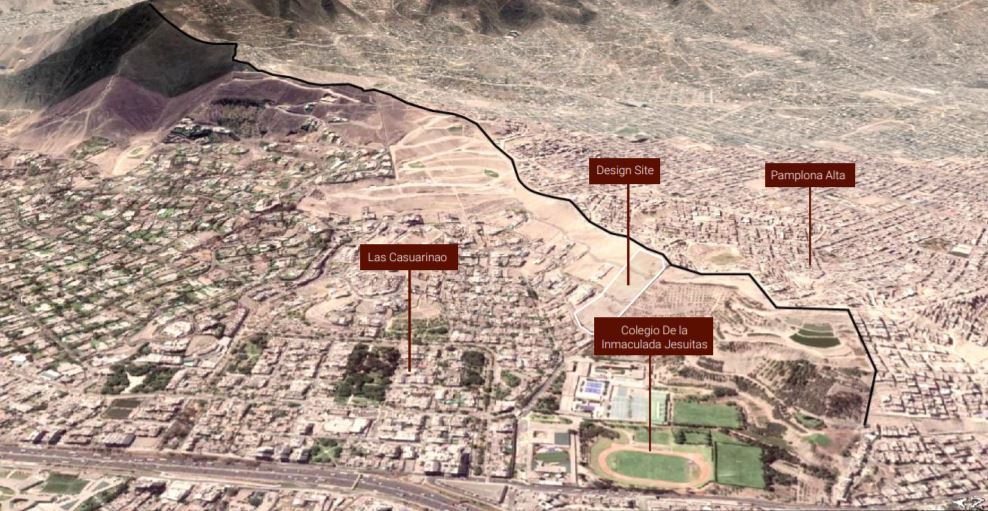
Img 6: 3D View of Site with wall dividing areas of Las Casuarinao and Pamplona Alta demarcated.
Las Casuarinao - Pamplona Alta
Houses in Las Casuarino sprawling over 1,000 sqm are characterized by pockets of green spaces. While the 25 sqm houses of Pamplona Alta, made of scrap material are surrounded by the sand and earth characteristic of Lima’s desert landscape. There are no available green patches for children to play and community to prosper in. The primary source of income for many families is selling scraps besides chancherias (sausage shop) characterized by an unpleasant smell. Peru is present in a high earthquake zone and the place has a desert climate.
- Area - 20,000 sqm
- Coordinates - 12.131585, -76.970362
- Maximum Ground coverage - 20%
- Maximum Height - 15 m
- Build Up Area - 2000 sqm
- Temp - 18.7 Degree
- Wind Flow - SW to NE
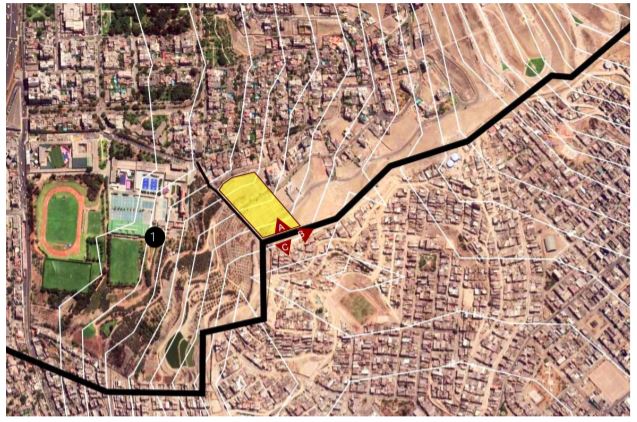
Site is on a hilly terrain with slope 1:10. It sits in between hotels, residences in Las Casuarino and (1) Colegio De la Inmaculada Jesuitas (College of the Immaculate) on it’s left. Participants must consider the plot empty for this challenge.
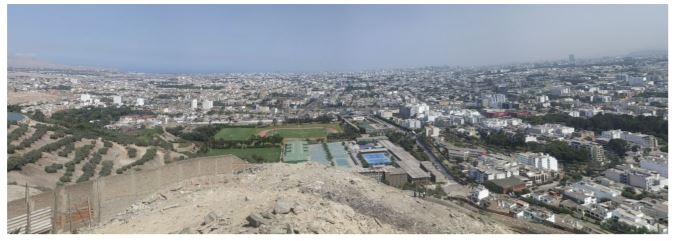
View A - View of Las Casuarinao from top edge of the site.
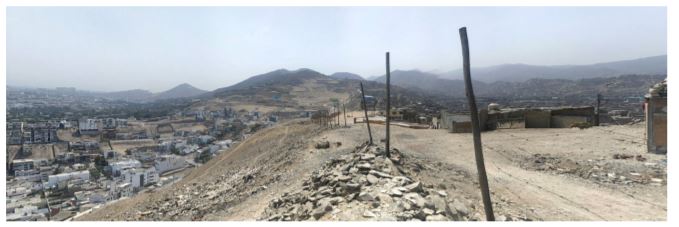
View B - Barbed wire at edge of site dividing areas of Las Casuarinao and Pamplona Alta.
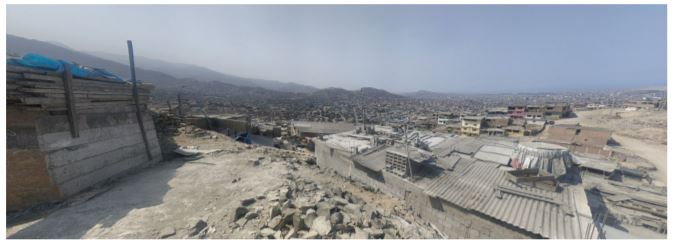
View C - View of Pamplona Alta from top edge of the site.
Programmatic Outline
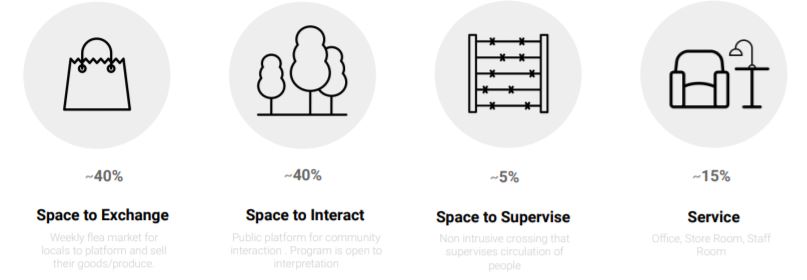
Intent is to design a public platform for sections of society living on both sides. The participants are free to add other programmatic facilities and change the percentage depending on their design. Every participant’s individual decision whether or not they want to keep the existing buildings. Percentage constitutes only the total built up area.
Judging Criteria
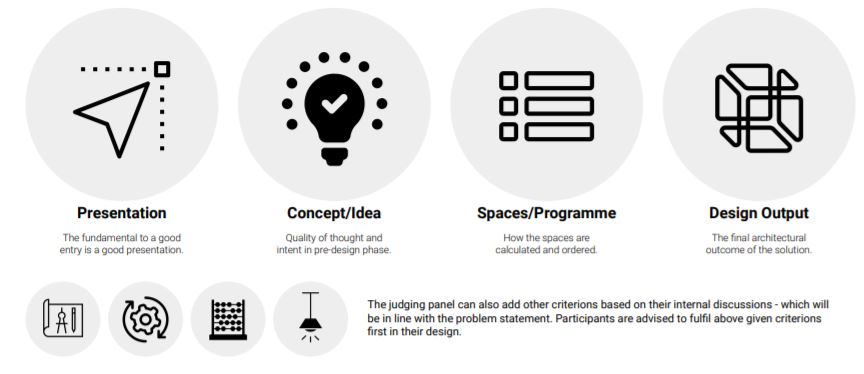
The entries will be judged by an international jury of the competition on the following criterions:
Similar Competitions
Discover competitions you might be interested in



Bring back Drive In's


Challenge to design an urban locus of culture and heritage


The Global Benchmark for Graduation Excellence


The Global Benchmark for Architecture Dissertation Awards

