
E-Heal
Challenge to design a learning and healing center
Overview
 Fig: 1 - Learning is an integral part of our life (Credits-Elements5 Digital)
PREMISE
Learning is regarded as an integral part of human development, from childhood we are constantly in a receptive mode. Every day, there are about 1 billion children heading to class across the world. Most children are engaged in basic elementary, primary level schooling around the world.
Today with the development and evolution of humans in terms of science and technology, schools have started to become even more important. The numbers of enrolled are high, but there is also an observed high number of dropouts. A variety of reasons are contributing factors to this cause, from marginalisation and poverty to financial deficit in the country. These reasons have become key factors for illiteracy, but there are areas where education is available and still, students are dropping out, leaving education completely.
Leading to a question as to why are they dropping out? And why is the mere existence of schools not enough to motivate them?
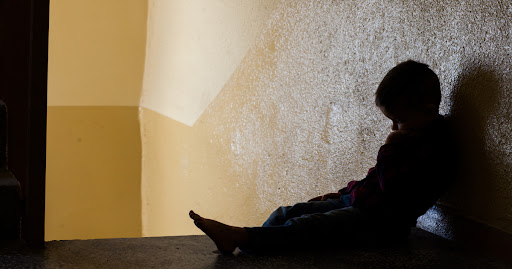 Fig: 2 -Children for whom the atmosphere at home is beyond repair emotionally and socially tend to drop out (Credits-Gettyimages)
ACCESS TO LEARNING
Education is not a singular entity, it is a part of a complex layer of social, political and environmental factors, which in turn affect its existence. The highest number of dropouts are from areas where the issues are poverty, low standard of living which in turn cause the children to turn to jobs and crime at an early age to fulfil their daily survival needs.
Bringing children to school who are struggling to meet daily needs, requires the school to extend beyond its fundamental use of education. Providing children with access to food and basic healthcare can help rehabilitate these children; and eventually, lead to making them learn.
Schools are one of the most important typologies of education, transformation in their structure and scope can help facilitate an increased enrollment and less dropout rate.
How can architecture interventions facilitate change? By innovating the school typology itself can we aid this change?
 Fig: 3 - How will schools evolve when rehabilitative spaces are included within? (Credits-Feliphe Schiaroli)
BRIEF OF THE COMPETITION
How can the design of schools be transcended beyond teaching?
How can schools provide healing and rehabilitate the children along with education?
What architectural intervention can change this perception towards schools?
The challenge in this competition is to rethink learning spaces beyond being merely centres of education, but by transcending their use as a rehabilitative space for children's well-being.
The architecture competition brief calls for a design of a middle school that facilitates both learning and healing environments, by creating rehabilitative spaces for children to learn more efficiently.
OBJECTIVES
Empathy: How effectively will your design model function for a child?
Flexibility/choice: How does this design provide individual freedom and flexibility for play and learning spaces for the child?
Healing spaces: How does the design incorporate rehabilitative spaces that cause healing?
Approach/innovation: How is the design innovating the typology?
SITE
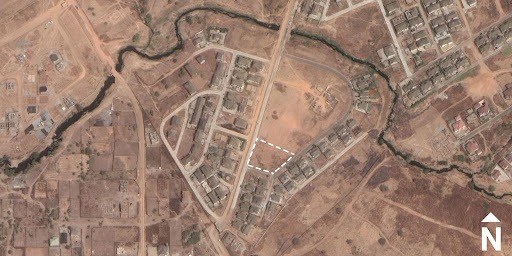
Kabusa, Nigeria
The site for this challenge is located in Nigeria, which is an African country located on the Gulf of Guinea. It is located in the West African region bordering Niger in the north, Chad in the northeast, Cameroon in the east and Benin in the west. The topography of Nigeria consists of plains in the north and south, majorly filled with the plateaus and hills at the centre of the country. Nigeria is a combined combination of a variety of distinctive regions, including desserts, plain areas to hilly regions. The river system in Nigeria is also one of the largest ones, which includes the Niger delta which is considered one of the largest in the world. The vast range of environments offers a variety of natural landscapes and diverse flora and fauna.
This site is located in the central region of Nigeria. The majority of the region surrounding the site is filled with major city buildings ranging from housing areas to open lands. This site location offers a major city context and small open areas in the neighbourhood.
- Coordinates: 8°58'25.3"N 7°20'14.3"E
- Site Area: 5,301 sqm
- Ground coverage: 30%
- Height limit: 10 m
- Maximum FAR (Floor Area Ratio): 1
PROGRAMMATIC OUTLINE
The programmatic outline is intended for one module capacity of 50 children and 40 Staff members. This is recommended for this challenge.
The space ideas are as follows:
- Spaces to learn 40%
- Spaces for rehabilitation: 20%
- Spaces for public engagement and recreation: 20%.
- Open play spaces: 10%
- Ancillary spaces: 10%
Other additional spaces can be added by the participants as per their design needs.

