
ElectriCITY
Adaptive re-use of an abandoned electric plant as a public space - Design Competition
Overview
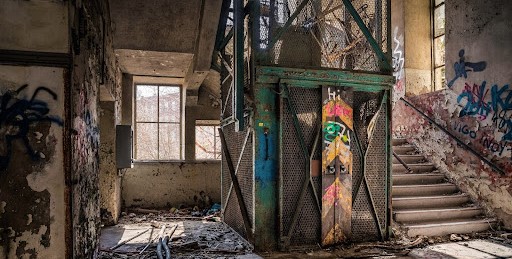 Fig: 1 - Abandoned buildings around the city become sites of concern in healthy communities.
LOST PIECES OF CITY
In regenerating urban cities, there is a large focus on creating increased housing and transportation infrastructure.
While this disproportionate focus on housing is necessary to accommodate the steadily rising populations in urban sprawls, it often comes at the cost of valuable public spaces that foster better well being for the residents of the city.
As a consequence, cities emerge as inert sprawls with disconnected communities.
However, if we are to build better cities with better community bonds it is important for us to foster diversity, community interaction and cultural amalgamation and one way we can do this is by creating valuable public spaces that truly act as the ‘living rooms of the city’.
It is further important for us to make adaptive use of the opportunities that are already afforded by the city. Opportunities in spaces that with time have been abandoned or fallen to disuse.
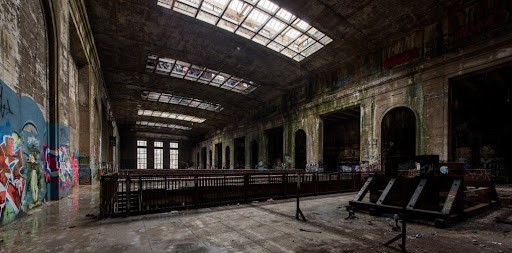 Fig: 2 - Stations are parts of city infrastructure built with huge investment and their footprint can be offsetted through adaptive reuse.(Credits: Abandoned)
REGENERATING SITE
In January 2021, new permits were issued for the regeneration of the Fishtown Delaware Generating Station. The new permit issued calls for the renovation of the massive structure to a new residential space on the Delaware WaterFront.
While housing in our modern cities is important, the 223,000 square foot plant, with almost a thousand feet of waterfront has a breathtaking public potential.
Apart from its expansive river frontage, the Delaware Generating Station has an illustrious history ranging from being the birthplace of the American Navy’s first submarine and destroyer and America’s first steam-powered fire engine- to being a valuable power generator through the years of the war.
What if we could reimagine and adapt this historic land and its coveted ecological positioning as a relevant and attractive public space for the community?
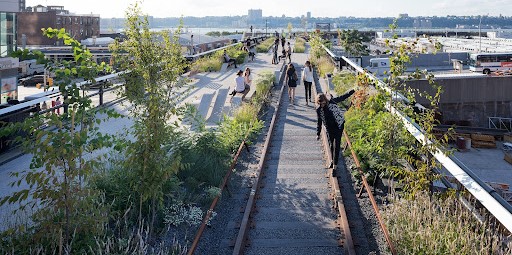 Fig: 3 - Historic buildings undergoing refurbishment can become activators of animation and well-being in the local community. (Credits: Iwan Baan)
PUBLIC AGENDA
Brief: The challenge in this project is to attempt to design an adaptive re-use public space on the abandoned Delaware Generating Station.
This project is not attempting to challenge the use that the local government has deemed fit, but rather an attempt to imagine for ourselves alternative public possibilities that the site could accommodate.
The design outcome must be a multi-use public space with various functional uses for the community around. It should be able to translate to various uses both throughout the day and across the year. In this design challenge, you must attempt to design your outcome around the existing space and its components, as far as possible.
The aim is to create a valuable public space that can be frequented by the surrounding community. A space that can truly act as the ‘living room of the city’ and incorporate integral cultural amalgamation and better community wellbeing.
OBJECTIVES
Adaptability: The design outcome should adapt the existing space and its offerings as a holistic and valuable public space.
Modular: How does the design adapt to the needs of its users through the day and across the year.
Cost-Effective: The designed solution must be inexpensive and cost-efficient.
Scalable: the designed outcome should be able to grow as the needs of its users change.
SITE
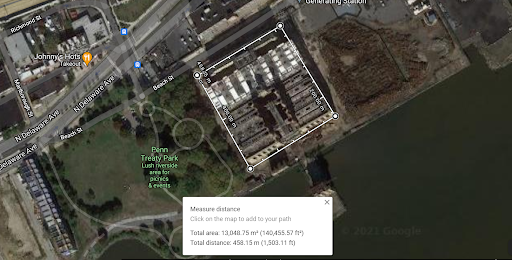
The site for this project is located on the Delaware Station of the Philadelphia Electric Company, in Fishtown, Philadelphia. The site is located on the Delaware River and is surrounded by other industrial areas that are also slowly being converted to new uses as the city changes.
Site Area: ~11,000 sqm
Height Restriction: 10 meters
Maximum Built Up Area: 11,000 sqm
Ground Coverage: 50%
Coordinates: 39°58'01.2"N 75°07'37.4"W
AREA PROGRAMME
The design outcome must have the following elements:
1. 20% Landscaped open spaces
2. 30% Commercial spaces; these spaces will be used on a contractual basis and will change over time in usage
3. 30% Eatery spaces. These spaces must be of 2 typologies:
- Small spaces for establishments that don’t have hot cooking such as cafes
- Medium-sized spaces for small intimate restaurants
4. 20% Multi-use public space that includes:
- Seating
- A performance space for small bands, open mics and small scale events.




