
Elevate
Challenge to create an installation in urban space
OVERVIEW
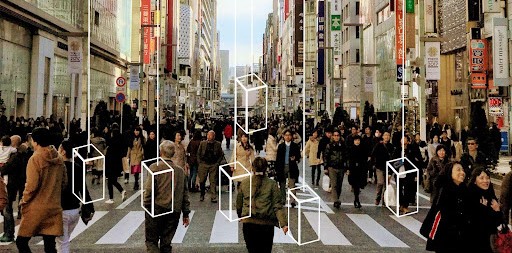 Fig: 1 – How human connected with technology – An impression
HUMAN RELATION WITH TECHNOLOGY
Technology has miraculously enabled people to stay connected, informed, and entertained, almost everywhere. We can now text, tweet, Skype, check Facebook updates, email, and feed on news from a subway stop or street corner.
It is usual for someone to stare at their screens despite being surrounded by people in a public space. Even though these spaces are designed to offer respite from the constant hustle of urban life while fostering interactions between strangers.
Social interaction is a way to communicate ideas, meet new people in urban places and share conversations in a social setting. However, this definition is changing with the introduction of new companions in the form of devices that accompany people everywhere we go. This raises the question of whether we have surrendered ourselves to devices that in turn isolate us from those around us?
Or conversely, is the real world space not interesting enough?
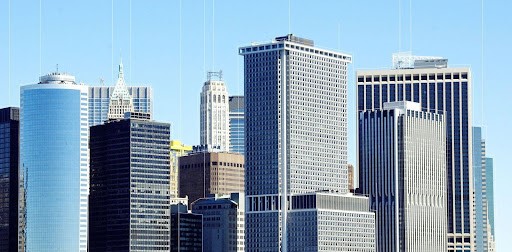 Fig: 2 -Building boundary
HUMAN-CENTRIC DESIGN
Wikipedia defines human-centered design (HCD) as “a design and management framework that develops solutions by involving the human perspective in all steps of the problem-solving process”
Our entire existence has been about involving the human perspective in all steps of the process. We are very aware of the vast and powerful interplay between the parts and pieces that surround us, but we continue to see the world as one big show unfolding in service to us. When you get right down to it, human-centered design is just an extension of this belief in both name and execution.
The whole world has been built anthropocentrically and so is the technology we use. This core idea has also framed the urban spaces we live in and homes we dwell in. How can we mould this space to serve the present needs of the urban population?
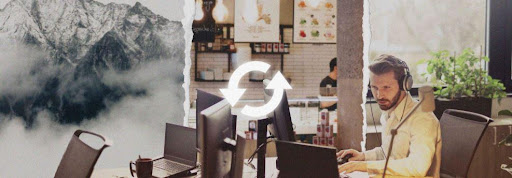 Fig: 3 - Technology connect everyone from everywhere - An impression
URBANE SPACE
This urban connectivity continuum, at its outset, has enabled us to do more than what we could in the past. In a way, this has also implied that we can be present anywhere anytime without actually being there.
For instance, it is usual to respond to an official email while being out on lunch, or taking a phone call from a distant friend during a business meeting in a public space. In times when multitasking is an enviable quality, this is the utopian dream we had been waiting for - but why doesn’t it feel like one ideal urban scape?
This hyper-productivity mindset with passing time has eventually made humans more dissatisfied and caught up with things in the name of efficiency. And our feelings for the role of public space, in general, are no different from this fundamental idea.
Its this similar mindset that propels the civic planners to squeeze in an extra office block, or a housing unit, or a road for quick mobility - instead of creating actual quality public space for plenty reasons - but mostly in the name of ‘efficient’ and ’cost effective’ city planning.
 Img 4: Elevate and disconnect for a while into urban envirnoments
BRIEF OF THE COMPETITION
As these applications constantly feed on our attention - how can our urban environments keep up with refreshing updates as well? Is the only solution possible is to break this encroaching screentime (connectivity continuum) to appreciate life? Does this mean our devices are getting better but our public spaces are not?
Rationally, breaking the continuum might not be the best way to approach a problem with deep roots like these. Cities in the context of today are tough places to live. Every day, every push for survival actually requires more than usual time and mental space as a price to live in them. The efficiency problem of the cities extends to our lives every day where we forget the element of play or fun. Conversely, we find it absolutely irrelevant as we age to being adults.
Not just us, even kids are glued to these devices as much as we are. Thanks to this new dimension of gaming and networking that is hard to evade in peer pressure, even for them.
Design questions: What can we do for these outdated poorly performing public spaces/streets/ urban environments suffering from this quality crisis and outdated design? If we can’t break this connectivity continuum, how can we break the screen time for a short while to disconnect and reconnect, even for a few seconds?
If not possible to break the screen time then how can we use these devices in our hands to make our urban relevant again? How can we think about the urban through design thinking?
The design challenge is to create an installation in the public urban space.
The urban installation should have the ability to elevate its people from these busy streams of thought / break their long screen time / introduce an element of play in their busy urban lives.
OBJECTIVES
- Lively: Should be a vibrant part of the streetscape/ urban realm.
- Inviting: Should be open/accessible for people to be a part of the space.
- Relevant: Uses fun/fresh/digital mediums to engage the people and the space
- Inclusive: Should be able to connect wide age groups in the urban context.
This activity/function/installation can be a permanent/temporary / or just a minor functional deviation every day that can brighten a public space/city life or an urban street even in the most unplanned places.
ELEMENTS
Beyond public/urban space, the most common forms of public space are the urban streets which are universal forms of mobility - for both pedestrian and vehicular. It usually has three significant components in an urban atmosphere, the roads - they built and sidewalks. The priority in urban design goes in the same sequence as the statement before.
Built form is the second for living-working and the pedestrian priorities are usually the last. How can we elevate this last priority where urban life actually happens?
SCALE
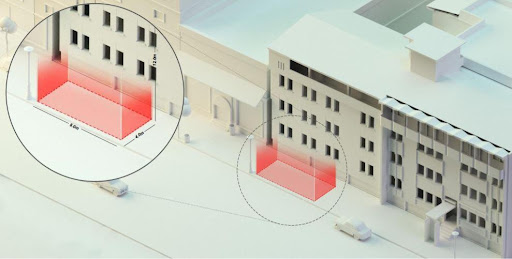
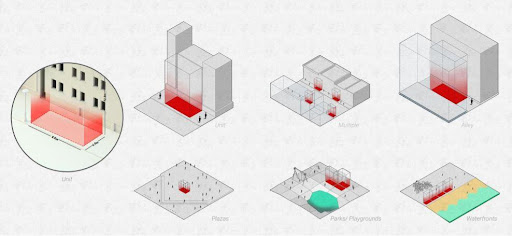
The streets are the most accessible form of public spaces, where we happen to pass through almost every day. We begin with urban streets as our first point of elevating public life and space. The size of this volume is derived after referring to various urban street configurations around these megacities of context and averaging the available spaces within them.
The height of the urban installation is restricted at 12m, but participants may consider a variety of uses when put in different locations, multiple configurations, or contexts.
Participants can begin from a single city, or generic urban space/ condition to kickstart the design process - but the design outcome should communicate to the generic urban scenarios of the world.
- Location: Urban - Universal
- Volume: 4m(L) x 8m (B) x 12m (H)
- Participants can design one or more applications.
Similar Competitions
Discover competitions you might be interested in


Design challenge to reuse E-waste

Illustrate the lost glory of Angkor Wat - Render Challenge

Photograph architecture without architects

Challenge to reimagine the Iron Throne