
Flow
Design competition for marine institute inspired by water
Overview
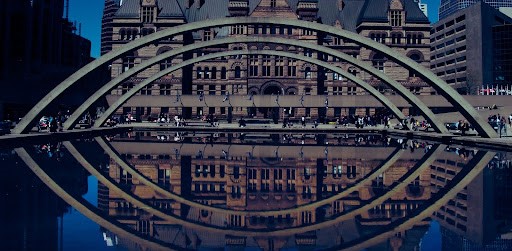 Fig: 1 - Water, both as a functional and artisanal means has inspired design interventions by architects in several contexts.
ELEMENT OF WATER
Water is an intrinsic component of life on Earth. It permeates our everyday lives and as a result, historically, it has lent inspiration to artists across mediums. This effect of water has invariably permeated the world of architects. It has lent itself to both aesthetic and functional goals set by architects. It may act as both materials as well as a metaphorical lens to understand the structure around it.
Water inspired some of the most famous structures and spaces are known today including Fallingwater by Frank Lloyd Wright, Sea Organ by Nikola Bašić and more recently the Beijing Olympics Water Cube. While there are countless more, what is distinct in each of these mentioned projects is how differently water has lent itself to each design.
How can we as designers challenge ourselves to imagine new possibilities with this age-old element in design?
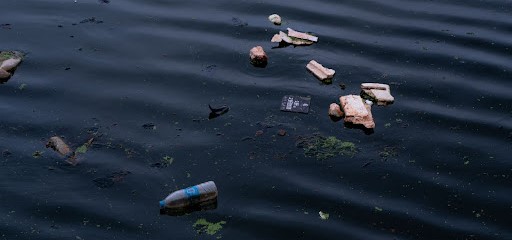 Fig: 2 - Various water resources are plagued with pollutants and waste that is affecting the quality of life on Earth.
ENVIRONMENTAL AND MARINE CRISIS
Today, this very omnipresent element of life is faced with various environmental challenges. Challenges that we as humans are still learning to grapple with. As we learn to navigate these ironical man-made challenges Marine institutes have proven to be a crucial part of both education and research in aquatic related fields.
On one hand, they equip future generations of experts in the field, on the other, they support and create opportunities for research. These opportunities further translate to a future that has both new discoveries as well as the invention and development of novel solutions for looming earthly problems.
In a future where water levels are rising considerably and marine pollution are at the helm of environmental challenges facing mankind, the need for these fields of research and innovation may be more pressing than ever.
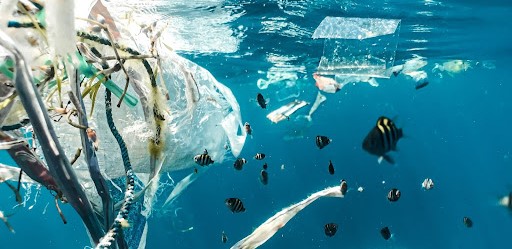 Fig: 3 - Marine life and water bodies are an essential part of the ecosystem and they are presently endangered by pollution.
WATER INSPIRED ARCHITECTURE
Marine Institutes are inherently tied to water by virtue of their field specialisation. What if we could imagine these spaces using their primary realm of study as the inspiration. What if the spaces that house these institutes helped orient the purpose of these spaces and their deep relationship with water?
Brief: The challenge here is to design a Marine institute inspired by water.
The design outcome must be able to fulfil the various functional needs of an institute but at the same time must be able to orient and celebrate the element of water through its architecture.
As stated above water can lend itself to the design of spaces in various capacities and thus, you are free to choose and envision how water shapes your particular design outcome.
The aim of the competition is to challenge participants to envision spatial identities in a given theme of water inspiration for a functional context.
OBJECTIVES
Aquatic: How does the design incorporate water as a crucial element in the design?
Functional: How does the design work in various functional capacities as an educational space?
Collaborative: How does the design offer opportunities for its users to collaborate and interact beyond classroom spaces?
Interactive: Can the designed space allow its stakeholders to actively interact with it?
SITE
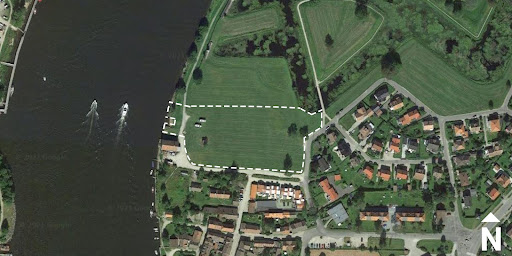
Norway has a good quality water supply system, but there is still pollution in many other resources due to hydropower plants, leakage from sewers, overflow discharges and so on. Marine litter is one of the major pollutants in the region that injures wildlife, the toxicity of water and causes losses beyond economic, to local people and global communities as well.
The site for this project is located in Fredrikstad, Norway. It is located by a fjord and is close to residential dwellings.
Site Area: 18,844 sqm
Height Restriction: 12 meters
Ground Coverage: 60%
Maximum FAR: 1
Setbacks (as per CAD plan)
Coordinates: Fredrikstad, Norway
AREA PROGRAMME
The proposed institute will accommodate more than 1000 people at a time, consisting of students, researchers, experts/teachers, support staff, workers/volunteers, visitors and so on
1. Educational Zone
- Classrooms: 18 rooms of 147 sq.m each (30 students each)
- Studios/Lecture Halls: 5 studios of 100 sq.m each
- Library: including reading rooms, study areas: 1500 sq.m
- Research Laboratories: 6 Laboratories 200 sq.m each
2. Interaction Zone
- Auditorium: 200 sq.m
- Conference Hall: 200 sq.m
- Multi-purpose hall: 1000 sq.m
- Lounges and Cafeteria: Total of 750 sq.m
- Information/visitor’s centre: 200 sqm
- Open air theatre: 400 sq.m
3. Administration Zone
- Offices: Administration, Offices of Deans and coordinators, Offices for Faculty, Offices for IT department: Total of 120 sq.m
- Meeting Rooms: 2 rooms of 40 sq.m each
- Storage: Documents, equipment, archives: Total of 60 sq.m
- Lounge, cafeteria: 80 sq.m
4. Workshop Spaces: 600 sq.m
5. Services
- Toilets: 12 units of 30 sq.m each
- Parking Spaces: 1200 parking lots (cars, mopeds, bicycles)
- Maintenance areas like mechanical room, janitor’s closet, control rooms for labs, security room, storage rooms for equipment, etc.
- Fire corridor, fire staircase, emergency exits, etc.
6. Landscaping features like gardens, green roofs, terrace gardens and so on.
7. Circulation: 20-30% of built area.
Similar Competitions
Discover competitions you might be interested in



Challenge to design public laboratory


The Global Benchmark for Architecture Dissertation Awards
