

Tower of Fusion
Challenge is to design a site tower as a landmark
OVERVIEW
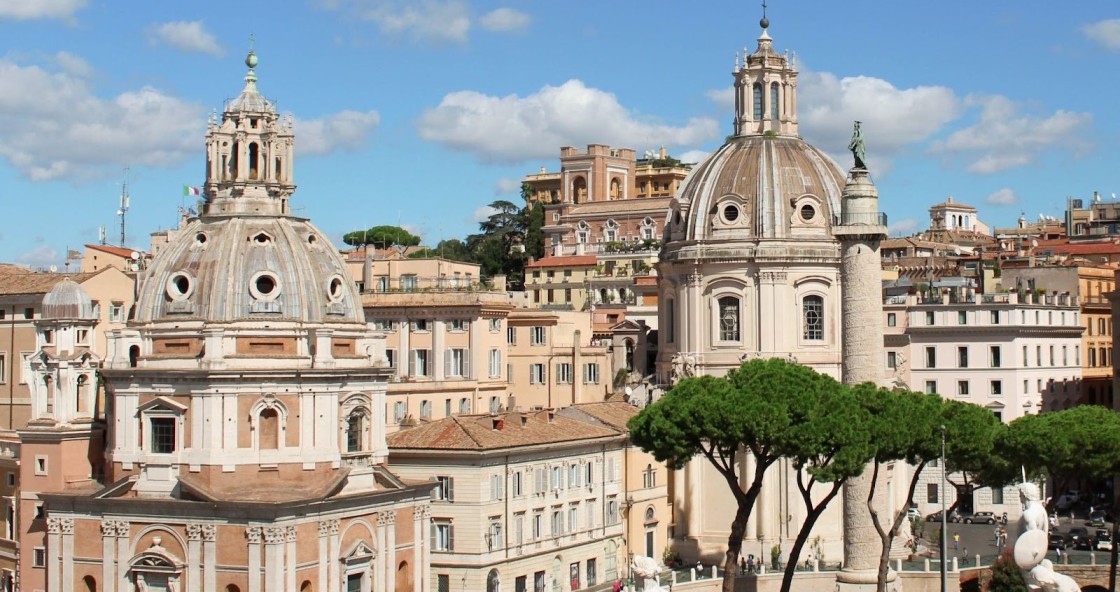 Fig: 1 - Roman architecture has evolved from the ancient style of classical, baroque, neo-classic to modern architecture to contemporary architects taking the floor today.
PREMISE
“Rome is not like any other city. It’s a big museum, a living room that shall be crossed on one’s toes.” - Alberto
Architecture is incomplete without the mention of roman architecture. Rome and Romans have played a huge role in ancient society; ranging from the magnificent structural heritage that they have to the rich history that dates ages back. The remains of Rome are evidence of the kind of impact their creations and culture had on the ancient world. As even in today’s date these structures make us marvel at their sheer existence.
Rome; the place that was built on the seven hills and is estimated to have begun its glorifying journey in 753 B.C has written and rewritten the history of the world through its regime. In which they gave the world one of the most magnificent architectural wonders, as they not only describe the valour and vastness of the roman empire but also showcase themselves as man-made marvels.
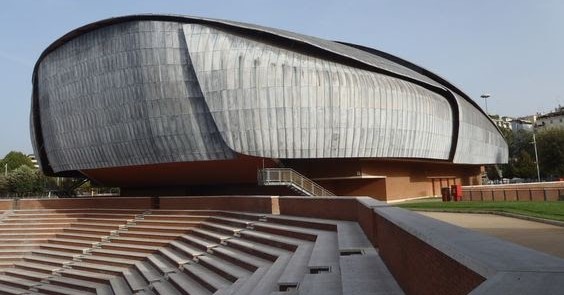 Fig: 2 - This music auditorium was built by incorporating the ruins of an ancient Rome villa and restoring it to blend seamlessly with the design of the complex. (Credits: SCE PROJECT – Cristiano Bendinelli)
MERGING
Considering this glorious history and feat of achievement in terms of architecture is something that still holds great respect even in these changing times, as with everything that changes; Rome has transformed itself through decades. From the architecture that was built centuries ago to the one, we are experiencing right now. Rome has successfully made space for both worlds.
The one that is gone and the one that is yet to arrive, as the city of Rome has transformed with time, accepting and changing with the newly derived forms of architecture being experimented in its rich context. It has created a space for itself inside this beautiful space while respecting the existing heritage. As it's the place like a room that experiences and holds the best of the past and the forthcoming better of the future in the same place. Both of which are important and define their heritage and culture.
But how can this fusion of past and present be expressed into reality?
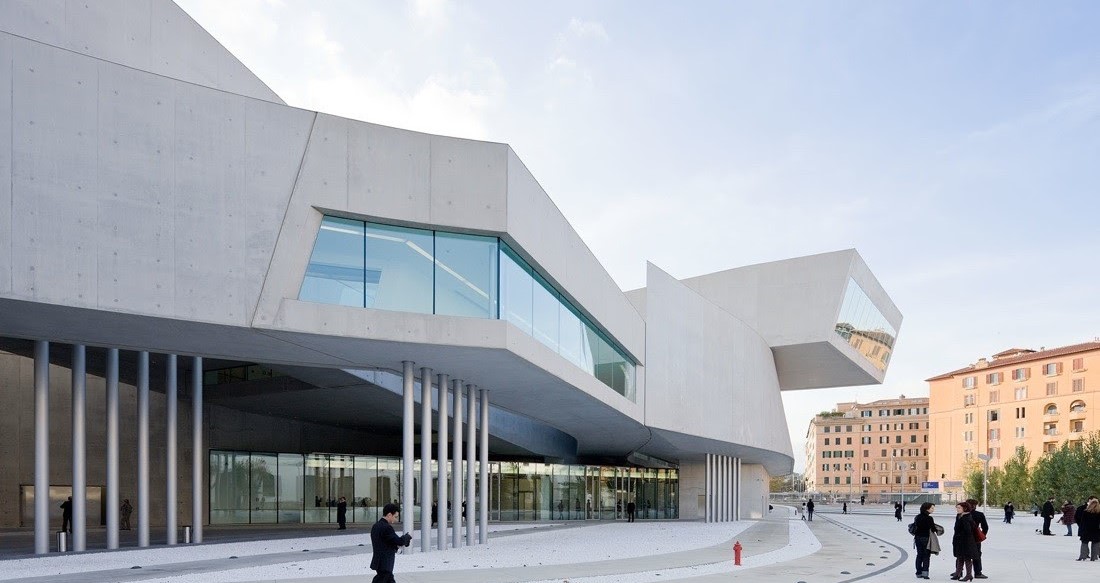 Fig: 3 - The design for MAXXI Museum was conceived as an experimental design with sharp angles and dynamic curves that offer a contrast to the plethora of ancient structures in Rome. (Credits: Iwan Baan)
BRIEF
To express this fusion in reality there is a need for a space that holds the capacity to include both the magnificence of the heritage structures and also the future buildings together in itself while narrating the rich cultural heritage of Rome.
Brief: The aim of this challenge is to design a site tower as a landmark space that represents the roles of architectural heritage and the newly arriving modern architecture; while acting as an interpretation space for the tourists and the world at large.
The design challenge here is not to design just a place but an iconic symbol that depicts the rich and diverse architectural fusion that Rome holds. By providing spaces that help the people to navigate through the city as a whole.
OBJECTIVES
Understanding the existing heritage: The past: Study the existing heritage sites and the context that it holds.
Understanding the changing modern architecture: The future: Understand the changing trends in architecture and its future in terms of the existing architectural context.
Study and understand how to create a fusion: Study how these changing facets can be combined into one.
The following objectives can be a point of beginning to conceive this design. Participants can assume their contexts and user group on the basis of their concepts and designs.
SITE
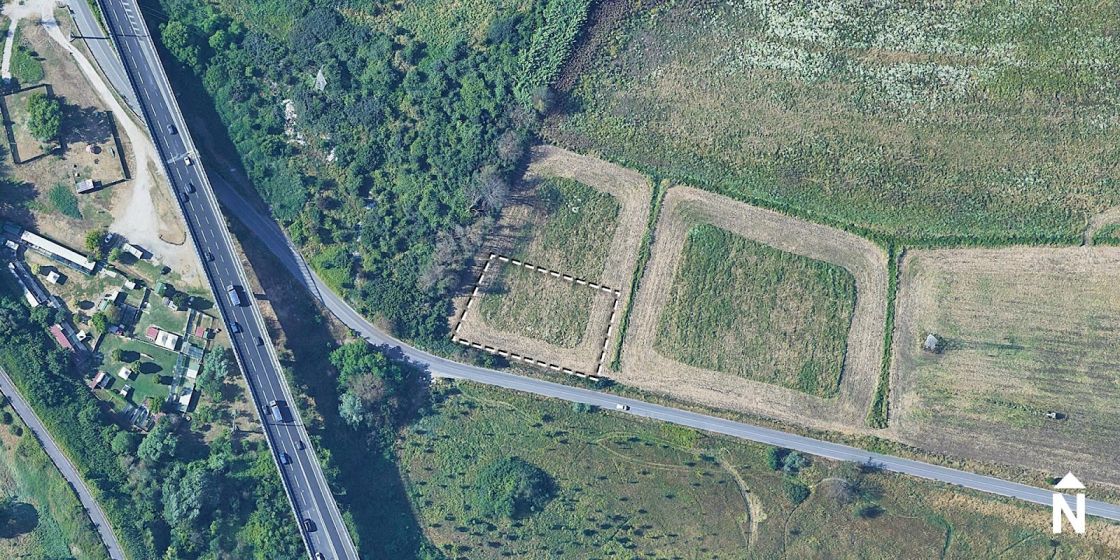
Site Area: 3015 sq.m
Height limit: No height limit.
Max FAR: 1
Ground Coverage: 30%
Coordinates: 41°59'15.1"N 12°33'56.6"E
Italy, a country of south-central Europe, occupies a peninsula that juts deep into the Mediterranean Sea. It comprises varied and scenic landscapes while also holding a large cultural and traditional heritage. The country is home to iconic buildings and in itself, a major architectural landmark.
The site is in Rome, Italy. Rome is one of the most popular tourist destinations in the world with more than 10.1 million tourists visiting in 2019. The city’s historic centre is listed as a UNESCO World Heritage Site. It has been around 14,000 years ago and has a vast, rich history.
The site is located in the suburban region, away from the main city. It is surrounded by open green patches of land, directly connected by a major road. The site provides a backdrop of vegetation and vast open grounds and provides a peaceful and serene environment.
AREA PROGRAMME
The space created is supposed to show the transition through time and architecture has shaped itself into reality. The design should work as a tower and symbol of architectural grandeur.
User data: The batch capacity of 50 tourists is to be considered for the design.
Spaces ideas:
- Entrance area: The starting point of the space.
- Information spaces - are designed to provide information to visitors.
- Lookout points: Spaces that act as observation spaces for the visitors.
- Rest area: The rest area is provided as a lounge.
- Landscape areas: These areas are to be provided in accordance with the context and concept of the design proposed by the participant.
Additional spaces are to be added by the participants themselves.




