
Future Food
Challenge to design a future dining experience
Overview
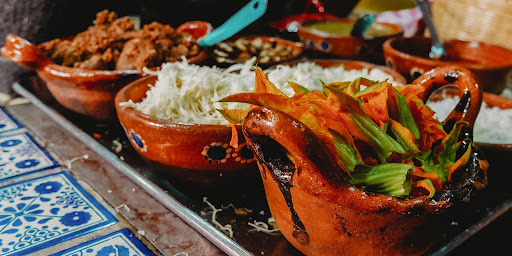 Fig: 1 - Latin/mexican communities have preserved their food and culture which make it their identity
LATIN CONNECTION TO FOOD
Food has the ability to evoke emotions and memories. It is a fascinating marker of community around the world. It speaks not just of country or region but also gains more intimate influences by families and individuals. Much like many other communities’ Latin communities have a strong and emotional relationship to food.
Many Latin communities have deep-rooted cultural and traditional roots entangled with food. It becomes not just a form of sustenance but a way to celebrate, a way to unite and socialize and even to welcome. As food futures are reimagined, new techniques, ingredients and recipes are bound to be developed as time progresses.
How then does this deeply traditional link with food manifest in the future?
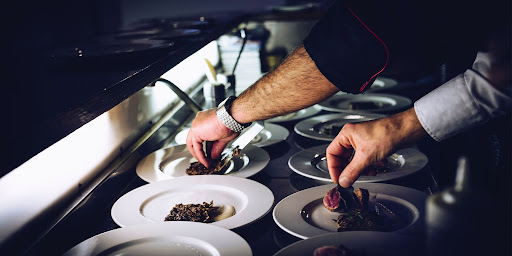 Fig: 2 - Making, taste and serving food has been transcending in current times
SCIENCE OF FOOD
Much like every other avenue of life, technology has seen new strides in the world of food. Cooking and its inherent processes are already an intriguing avenue of science so it is no surprise that scientists and researchers have been attempting to push the boundaries of food as we know it.
One of the marvellous strides in the food science industry is Molecular Gastronomy. The branch focuses on understanding the physical and chemical processes in food preparation. Intriguingly people have found fascinating applications for this science in an attempt to develop new techniques and dishes.
As a result, the world has seen a slowly increasing but exciting development in enticing food experiences that challenge traditional notions of food by infusing the process as well as the dish with scientific technologies and processes.
 Fig: 3 - How will a latin restaurant look like for revolutionary trends in making and serving food?
BRIEF OF THE COMPETITION
For Latin communities, food is an ancient participant in many cultural traditions. What happens when these deeply traditional roots meet the new strides in technology?
The challenge here is to imagine a novel restaurant that attempts to bring together the old and the new in an attempt to strengthen community interactions while inspiring new practices.
The design must pay due attention to the deep cultural roots of food in Latin communities and the images that are associated with the same.
At the same time, it should attempt to challenge and push the envelope in an attempt to envision the future of food and its possibilities for the community by drawing inspiration from molecular gastronomy practices. The challenge here is to draw inspiration from this fusion and design a spatial experience that celebrates both the past and the future of Latin food.
OBJECTIVES
- Form: How does the form of the design speak about its attempt to marry tradition to the new without being irreverent to the past?
- Interiors: How do the interiors, colours, furniture and finish further root the theme of the space?
- Culture: How does the space pay homage to the existing cultural roots of food in the region
- Future: How does the design help share and envision the future of food for the community?
SITE
The novelty of creating experiences for the future is perhaps more relevant in spaces where people might have traditional roots but have moved away from the cultural practices. In such spaces not only does one have the ability to borrow from old traditions but also rebuild relations through new practices.
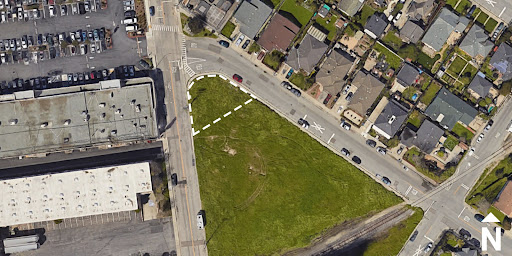
As a result, the site for this project is in Santa Cruz, California. Santa Cruz was a Spanish colony that was established in 1791 and has a long relationship with Latin culture.
The site is located in a mixed-use area. On its immediate Western side, there is commercial activity while the Eastern side has housing. To the south of the site is the Santa Cruz Coastal Rail Trail.
Coordinates: Maps
Site Area: 551.5 sqm
Maximum FAR: 1
Setbacks as per CAD plan
Height Restriction: 6 m
AREA PROGRAMME
The restaurant must have enough space to seat 30-40 people, the reception, kitchen and restrooms. Other creative additions to the project can be made within the space constraints.
Entrance: 10-12 sqm
Reception, Waiting area
Seating Area: 60-80 sqm
Seating area for 40 people (max.)
Recreation spaces: 20-25 sqm
Cultural corner/game room/reader’s area/Lounge
Services Area: 20 sqm
Kitchen, Pantry, Storage, Staff Room, Washroom (Staff and Guests), Service Entry
Additional Activity Area: 15-20 sqm
What other activity will your restaurant hold?
Similar Competitions
Discover competitions you might be interested in




Healing places through music.


The Global Benchmark for Architecture Dissertation Awards
