
Graveyard
Challenge to visualize future spaces of waste
Overview
 Fig: 1 – Waste disposal (Credits- Gray Chan)
PREMISE
The word waste has its origin in the Domesday book, a survey book of England in 1086. The book mentions waste as the land itself, of desolate regions which are unusable and of uncultivated value.
Since its inception, most of our activities have generated waste, but the nature of its production and management made a difference. Given the number of humans and the availability of land, the management of waste in prehistoric times wasn’t of much concern. But this attitude and lack of foresight affected the management of generations to come. Especially after the industrial revolution, as there was an increase in the variety of wastes; chemical, industrial, constructional, weaponry and much more.
In the past decades, plastic and e-waste have been a rapidly growing problem in the world. We have discarded/produced 53.6 million tons of e-waste in 2019 and more than 380 million tons of plastic every year. Due to their non-biodegradable nature, they end up as pollutants, entering our environment through the biosphere or atmosphere.
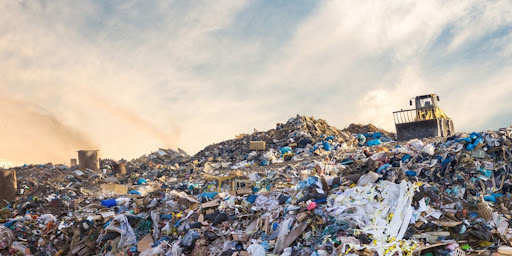 Fig: 2 – Landfill sites are increasing and there is almost no space to accommodate waste (Credits- shutterstock)
IMPACT OF WASTE DISPOSAL
Waste remains a part of our daily lives, most of these products improve our lifestyle in some way or the other but the demand is outpacing our capacity to dispose of it safely.
It not only degrades the land but its properties are hazardous for human health too. While certain regions are still a bit away from direct crisis, the impact on countries that carry this waste is harsh. About 40% of the world’s waste ends up in open dumps.
Respiratory diseases, gastrointestinal diseases and occupational health risks add to the misery experienced by the 50,000+ people living near open landfills. Since the production of waste is increasing day by day, these landfills require another outlook. For instance, the conversion of landfills into an ecological park, or using it as a resource for energy generations.
The question and investigation here lie in the disposal of waste, our perception of landfills, and how the spaces of those materials will look like shortly.
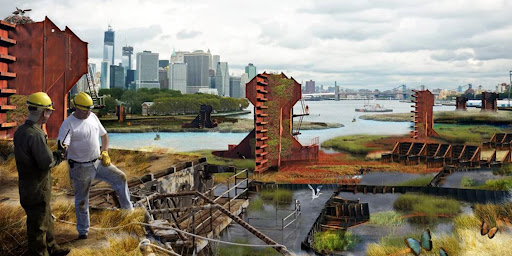 Fig: 3- Turning waste into cities (Credits- Urban Designer Mitchell Joachim)
BRIEF OF THE COMPETITION
If we look at waste from the lens of a biologist or a planetary scientist, we will find that it's inevitable. As we are biological beings there will always be a waste. The issue might lie in our attempts to eliminate it and the refusal to look or to acknowledge its presence.
As designers can we change this and try to accommodate waste in landfills in other ways? Can we initiate creative thinking and take a step towards equalizing zero-waste and 100% waste scenarios for the future?
Envision future landfills spaces to accommodate the ever-growing waste.
Reflect on the concept/idea of waste, and investigate its production, use, disposal and effects on immediate humans and the planet.
Thereby, transform your understanding of waste into the landfill areas through illustrations/visualisations for the future. Use any mediums, video, images, drawings, sketches, models, or paintings - and communicate your design.
OBJECTIVES
- Technical: Try to express design/engineering of how you would treat different types of waste.
- Lucidity: Clarity in composition and intent to communicate the idea better.
- Visual Language: A distinct visual language to help the graphic stand out for better communication.
- Expression: The graphic should effectively communicate its intent and landscape to the viewer.
The objectives can be a point of beginning to conceive this design. Participants can free to form their own programmatic outline according to the user group.
Any of the techniques mentioned in the brief may be utilised to achieve the desired outcome. The more creative the method, the better.
DELIVARABLES
You have to deliver a graphic/visual outcome representing the given theme, based on the following outlines. The images should be of size [2800px x 3200px] in portrait or landscape digital format (JPEG only).
The graphic may be entirely hand-drawn and rendered, digitally created, or a combination of both. The usage of photographs, stylized/credited or otherwise, directly is strictly not allowed.
The use of lassoed graphics lifted from an existing image is limited to half of the total graphic. (The guidelines are indicative, and are placed only to reduce plagiarized artworks – any infringement detected or reported will be notified, and may be removed from competition if found guilty)
The list of deliverables are:
1. Title
2. Subtitle
3. Illustration/images or 3D renderings x 3
4. A few process images
5. Additional cover image of 2000px x 1000px
6. A statement in about 200 words supporting the visuals - You can attach this as an additional image below your artwork.

