
Hustle Hub
Design a youth housing design '2022
OVERVIEW
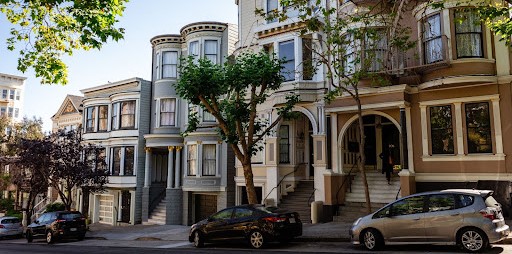 Fig: 1 - Real estate in urban environments forms a basic foundation for people to move in cities
MOTIVATION TO LIVE IN CITIES
Cities, beyond their several interpretations, are primarily platforms of economic exchange. As we move ahead in time, the aspect of money driving most of our lives is more real than ever. The problem is not money, but not acknowledging this fact head-on.
Rising real estate prices and their materialization as investments clearly separate housing from a need. Instead, they are items like gold which are barely used but valued so high that they are kept locked privately. Which eventually causes the prices to soar and a shortage of already existing housing.
As people migrating to cities come there to find means to ‘earn money, the fundamental nature of our cities (being economic) and opportunities it should be offering; works quite the opposite.
With most of the young population working today to acquire basic security of livelihood and not investing in their lives for the long term (depreciating because of the ‘grind’) due to various social stigmas associated with not owning a home; create this rat-race. This may sound overboard yet it is the motivation for a lot of our current population.
 Fig: 2 - Ownership signifies as a permanent state in urban cities
OWNERSHIP OF HOMES
This grind to ownership is pretty steep today, compared this difference to the previous century when a citizen could manage to scratch a parcel of land (which grows in value significantly compared to flats).
This eventually becomes the foundation of a first home. Today, the ownership while migrating to new cities begins at ‘renting’ - which slowly converts into a mortgage (of a house/flat) which pays off in decades now (eventually does not give returns as good land ownership). After the mortgage is over the property is considered to be owned. Cities being an economic platform that is constantly growing every day - equity of housing has become an issue as they turn more and more severe/unaffordable every day.
Affordable housing design is one of the measures taken by the government but is not enough considering the vast number of people pooling into the city every day to look for means of livelihood.
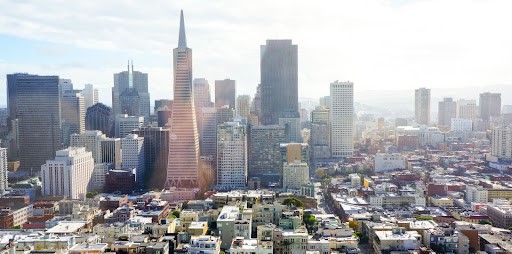 Fig: 3 - Rental fee is as high in developed cities for modern skyscrapers
ISSUES CREATED BY REAL ESTATE
As real estate is a highly valuable asset to its owners, renting is one of the safest ways to make use of this asset and keep threats of encroachment/hassles/crime/risks at bay. This usually happens by a highly contractual case-to-case ownership leasing. Commonly, this is on a per-month payment basis with varying tenures.
The owners commonly have a lot of restrictive clauses including eviction on will, if the property is needed by the owner on a certain notice period. On the flip side, these housing units can range from good to poor. The affordable ones are usually at the poorer side of the curve where ‘dreamers’ many times have to choose places; which don’t even have at-par services.
The other choice is to succumb to a relentless commute, as the options are very few/unreachable. On a larger level, what makes things different is the absence of a network to bloom. Considering they left their housing comfort and family to migrate here and with few or no contacts. This implies that the ‘leap’ we need; to become ‘settle’/’stable’ begins at a tough outset before it even begins. And this is happening at almost every metropolis.
Slowly the urban centres with their skyrocketing economic growth have almost priced out a lot of their citizens before they could even realize.
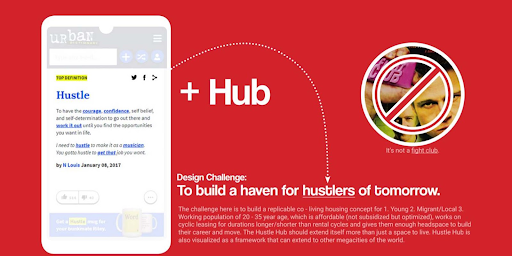 Fig: 4 - housing challenge hustlers hustle life hustle and learn job livelihood social stigma student hoousing
BRIEF OF THE COMPETITION
An entire generation of youth with dreams, dealing with shanty/poorly insulated/cramped home design in these megacities. The problem aggravates more and more with this increasing divide caused by inflation vs. earnings. ‘It has been like this - and cities are the way they are - and this is what we are made to believe.
As the world population booms, this housing design issue will become more and more evident, which will virtually lock many of us out.
Supporting the issues and negligence we urge participants to propose co-living housing for the youth.
The challenge here is to build a replicable co-living housing concept for 1. Young 2. Migrant/local 3. The working population of 20-35 years of age, which is affordable (not subsidized but optimized). Works on cyclic leasing for durations longer/shorter than rental cycles and gives them enough headspace to build their career and move. The Hustle HUB should extend itself more than just as a space to live. Hustle HUB is also visualized as a framework that can extend to other megacities of the world.
OBJECTIVES
- Concept: The fundamental premise
- Basics: Primary Amenities
- Model: The fundamental premise
- Overlap: Contribution to city
- Flexibility/Choice: Should have preferences
- Un-’Hostel’ify: Should host a sense of pride
SITE
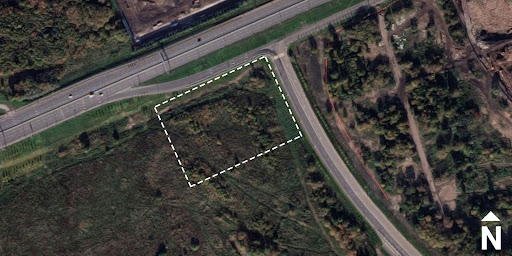
Khoroshyovo-Mnyovniki District, Moscow
Moscow, the capital of Russia is now undergoing a major overhaul in terms of its urban language. A vast portion of this city’s last century communal (Khrushchyovka) housing is now being replaced by large-scale mixed-use townships and housing societies. The value of the housing will shoot up more than 4 to 5 times as soon as the new revamp comes in which will fuel the real estate market even more.
This will positively trigger city growth and eventually, more people will move to Moscow to find places for their new dreams. Development is good - and it should happen, but pricing out is discrimination. With its one of its kind rich communist housing roots, a co-living housing concept like Hustle Hub is more possible here first than anywhere in the world.
- Coordinates: 55°41'42.2"N, 37°37'52.9"E
- Site Area: 10,574 sqm
- Ground coverage: 50%
- Height restrictions - 60m
- Maximum FAR: 1
Setbacks as per CAD plan
Similar Competitions
Discover competitions you might be interested in


Design challenge to reuse E-waste

Illustrate the lost glory of Angkor Wat - Render Challenge

Photograph architecture without architects

Challenge to reimagine the Iron Throne