
Impart
Design a Learning Center to prevent human-trafficking
Overview
Brief Updated: 07/11/2021
Update: User Profile
 Fig: 1 – A human trafficking activist (Credits-Hermes Rivera)
Human trafficking
Hidden in plain sight the issues of human trafficking are very real and widespread. Around 24.9 million victims have fallen victim to human trafficking and labor worldwide. It denies basic freedom and joys of life to someone who deserves it. A major chunk of distress migration is noticed in tribal and remote areas. The cases of trafficking during migration are higher in developing countries.
In culturally diverse countries, it is more than just the mentality. Religious and cultural practices play a major cause in child labor and trafficking. Though such practices are curbed in most cities, they continue in the rural regions. Unfortunately, these remote sections are a majority of society.
While many non-profit organizations and government schemes work towards the betterment of these issues, can we as design thinkers offer solutions through our methodologies?
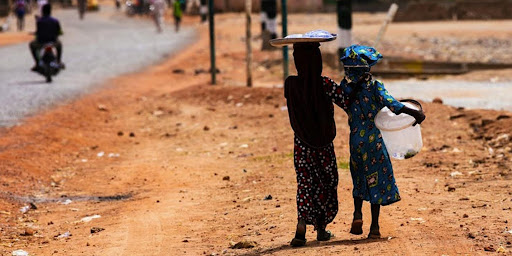 Fig: 2 - Child labour poses significant threats to children’s safety (Credits-Shuttershock)
Children in need of help
During migration, among reasons of domestic help, agriculture, and construction there is a striking number of cases in human trafficking, bonded, and child labor. Root causes of trafficking and child labor include poverty, illiteracy, and lack of awareness. Traffickers find their prey in vulnerable conditions under forced service and exchange.
Human trafficking and child labor happen in three stages: Action, Means, and Purpose. The core point of these stages is; Control. Physical, emotional, and legal control over the victim. Exploitation can take place in the victim's own home, a foreign country, or during migration.
The system lacks enforcement and decision-making in terms of these issues. Myths that labor and trafficking happen only violently are widespread.
Despite having funded shelters and schemes, children work for long periods in hazardous environments.
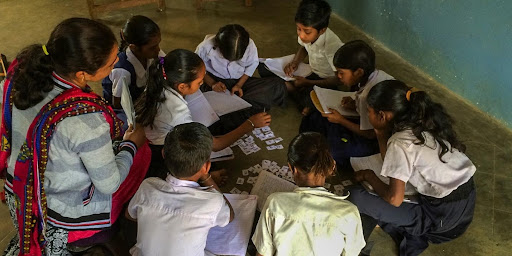 Fig: 3 – Learning imparted to kids in remote regions ( Credits- Luke Strathhmann)
Brief of the competition
Entering the core of the issue is locality and mindset. Can we establish a foundation of change at the source itself?
Education and learning is the start of awareness and thinking. Imbibing a platform for learning creates opportunities in the village and communities themselves.
Wanting a better life for children and families is the major reason for migration. Can we mitigate the issues that come while migrating by providing educational and social facilities in remote areas themselves?
Brief: Design a center for a new form of the learning module, which is primarily skill-based. The skill center should emphasize spaces of learning life and valuable skills.
The design should also provide interactive ways of engaging children ranging from kindergarten to high school.
Design Objectives
Keep it open: Design for easy accessibility around the region.
Spaces: Induce change through radical learning spaces and spread awareness through architecture and quality of planning.
Intervene and communicate: Aim to educate and empower not only the students but also their parents.
Transform: Architectural spaces can induce positive or negative impact, use the programme and surrounding site context to transform the locality.
Evolve and adapt: Spaces for future needs should be considered and the centre should evolve with time.
Site
The coronavirus pandemic has worsened the migration issue in India. A shocking number of cases of human trafficking during migration were found in past years. The three stages of trafficking were revealed in many of the cases. Entire groups were arrested and have been charged under the strong possibility that more girls from tribal areas of Chhattisgarh and Madhya Pradesh, may have been trafficked.
The faster such groups grow, the more time it's going to take to shift mindsets.
How can we induce a stop to these malpractices from their roots? Can architecture help us begin?
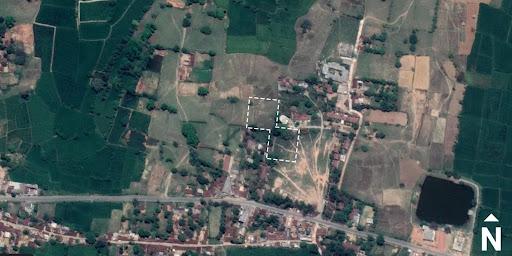
The site selected is located near a secondary school for Kotba. The learning center will serve as an integrated part of the school and the community nearby.
Location: Kotba, Chattisgarh
Site Area: 5962 sq.m.
Height Limitations: 10 meters
Maximum Built-Up Area = 5962 sq.m
Ground Coverage: 40%
Setbacks (as per CAD plan)
Coordinates: 22°26'02.7"N 83°44'47.5"E
Program Outline
The following programmatic outline is the point to begin your design at. You can add more functions and activities in relevance or modify the below design programme.
Learning (50%)
Open classrooms, Various skill-based workshops, Library, Common activity space, Staff rooms, Services (Washrooms, storage).
Community (30%)
Gathering plaza, Enclosed discussion area, activity space for all, services (Washrooms/kitchen), Cafeteria.
Environment (20%)
Open Park, Landscaping
User Profile
- Teaching Staff = 15 - 20 persons
- Service Staff = 10 - 12 persons
- Admin Personnel = 4 - 5 persons
Similar Competitions
Discover competitions you might be interested in




Challenge to design public laboratory


The Global Benchmark for Architecture Dissertation Awards
