
In Plain Sight
Designing to rejuvenate Urban Voids
OVERVIEW
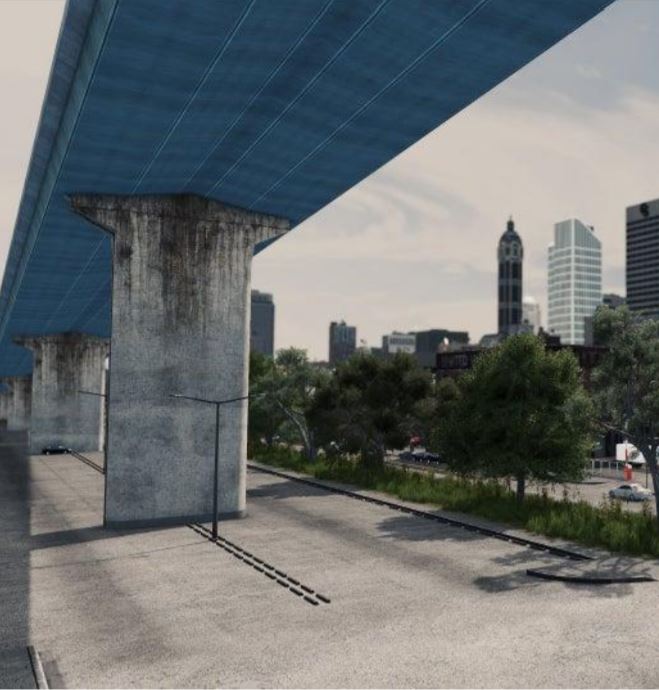
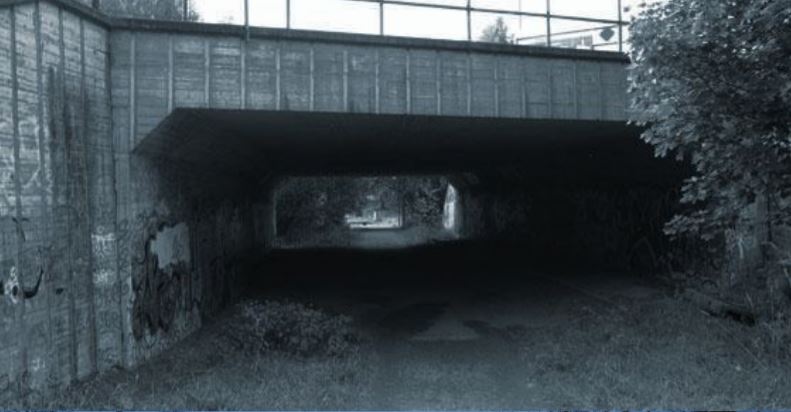
Img 1: Image illustrative of an urban void. Source
Story of forgotten spaces
When systems of infrastructure providing a single-use converge with each other, they produce residual spaces; spaces which are entirely forgotten or spaces whose intended purpose of use has been abandoned and replaced by an assortment of informal activities, thus disrupting the urban fabric, creating an Urban Void.
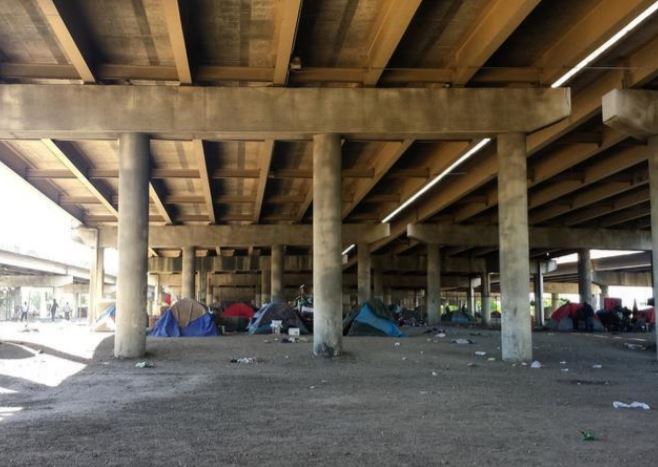
Img 2: Image illustrative of an urban void being as a site for temporary accommodation by the growing homeless.. Source
Understated potential of unused spots?
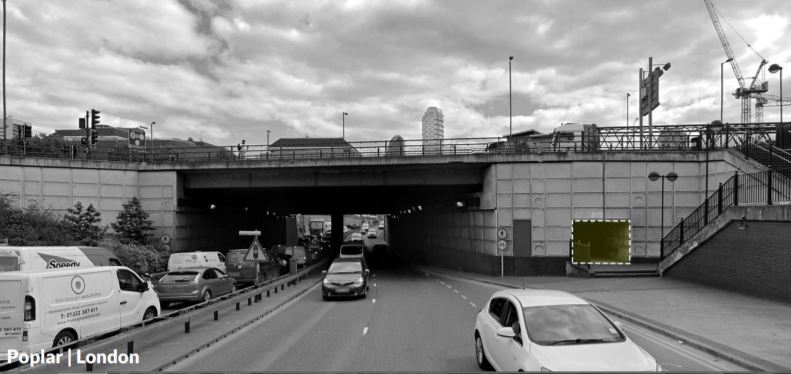
One such example is when one elevated passageway (roads/highways/bridges) pass over another one, creating a space that is longitudinal and barrier-free, sandwiched between an underpass and an overpass.
When infrastructure is primarily a service that enables human circulation and interaction, can the revival of these unused, underused or misused spaces only encourage this more?
Do these spaces present an opportunity for a design intervention?
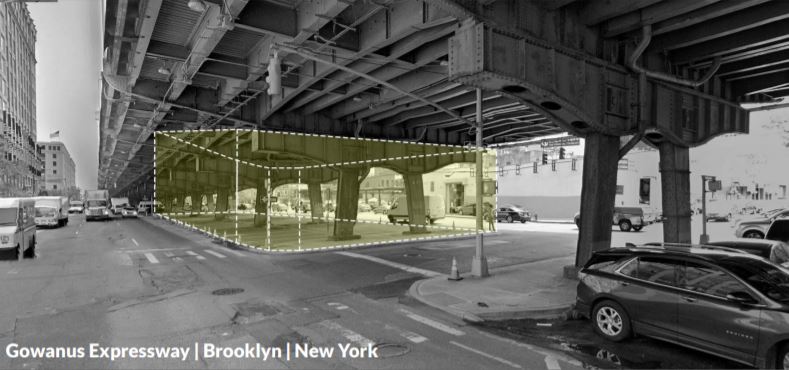
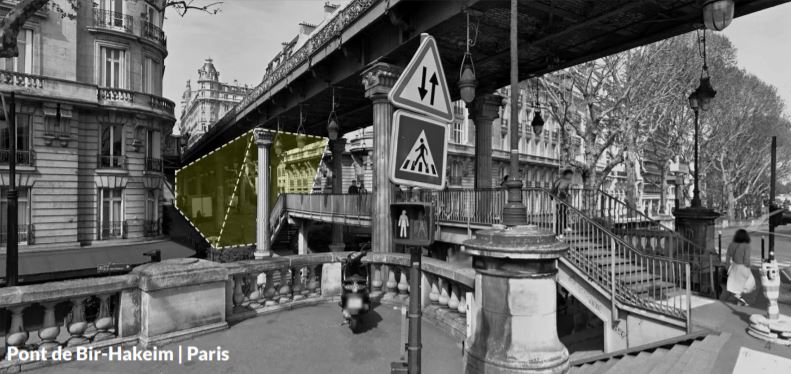
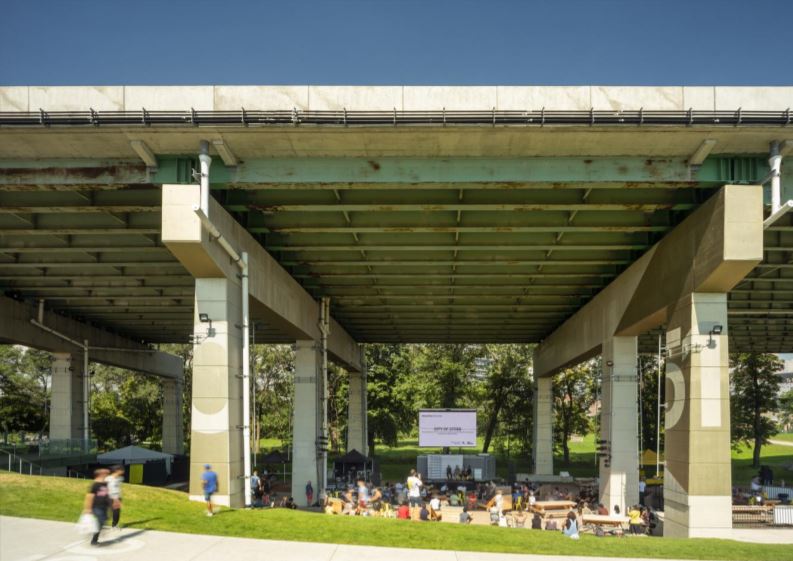
Img 3: Image illustrative of an example of the underside of an expressway re- imagined to be a community space. Source
Oppurtunity for the community
Can a system of infrastructure typically assumed single-use, become multifunctional, allowing different spatial experiences to be created?
Would the addition of programs (services and social) lead to the development of a spatial identity that is reflective of its community?
Can the juxtaposition of various formal and informal programs mean that space which was once inaccessible, is now accessible to all the members of the community?
Can design help transform these spaces to facilitate and redefine exchanges (service/social), allowing these voids to become seamless within the broader urban fabric?
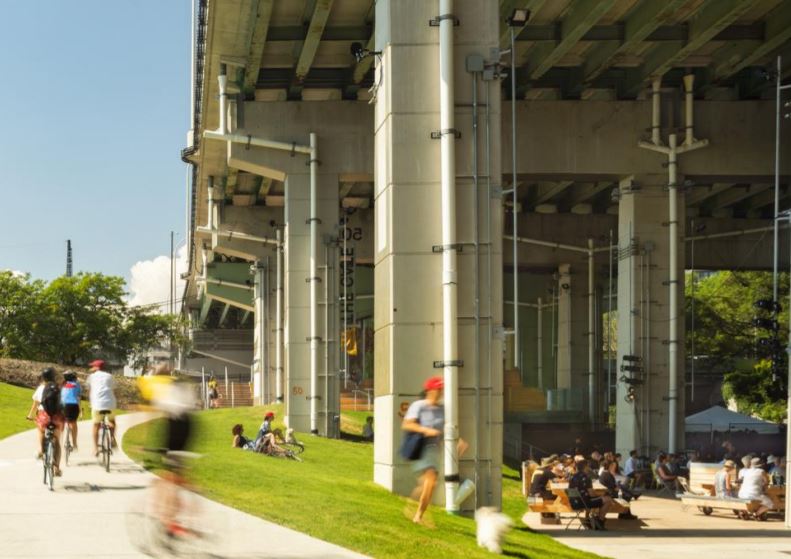
Img 4: Image illustrative of an example of the underside of an expressway re- imagined to be a community space. Source
The Bentaway Case
Transforming a length of 1.75 km under Toronto’s Gardiner Expressway, this projects attempts to rejuvenate the area underneath the expressway into a vital artery for cyclists and pedestrians and a vibrant community space for Toronto's growing population- a perfect example of a system of infrastructure promoting public life, its design and programming led by its layered history and future potentials.
The canopy of the expressway varies for lower intimate heights to a majestic 15 feet, accommodating varied programmes, ranging from passive contemplative places to creative hubs and market places.
On ground the project treats stormwater and repurposes displaced soil to establish new topographies.
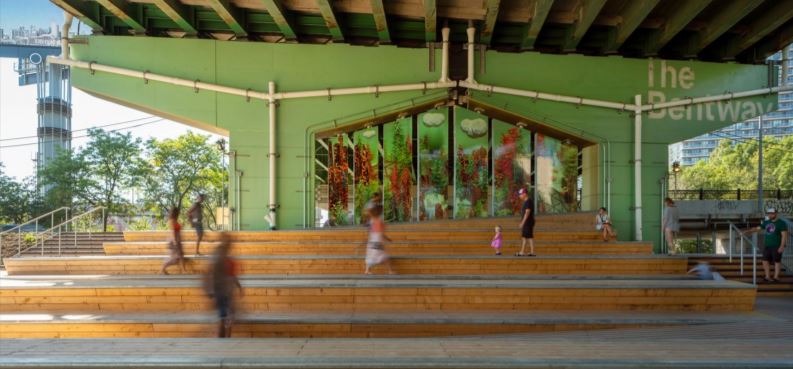
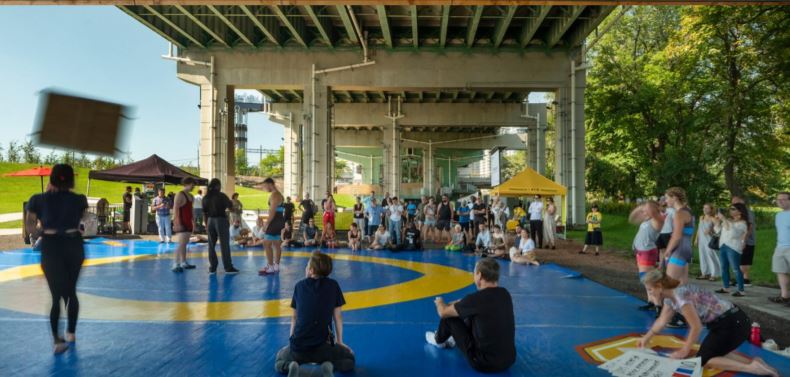
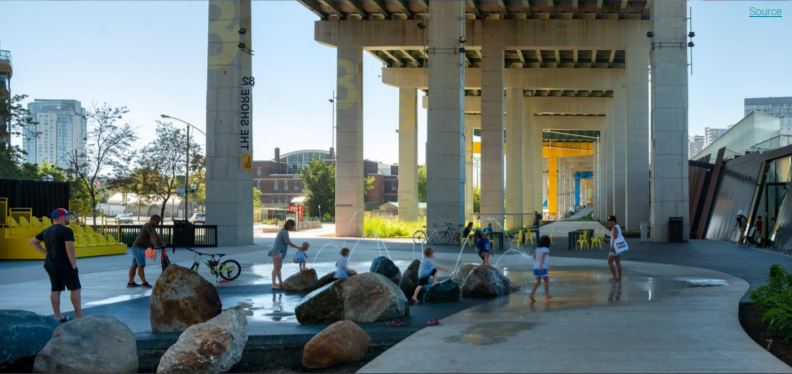
Img 5: Image illustrative of an example of the underside of an expressway re- imagined to be a play space. Source. Other examples
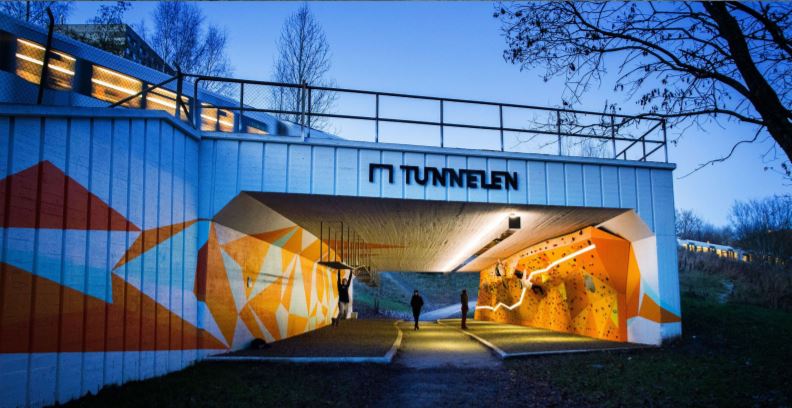
The Tunnelen Case
The Tunnelen is a place where people can be active, socialize and meet other people.
Once a 30 - meter long disused railway underpass, it has been re- imagined into a lively play space, with its own climbing wall, monkey bar and a creative exercise area.
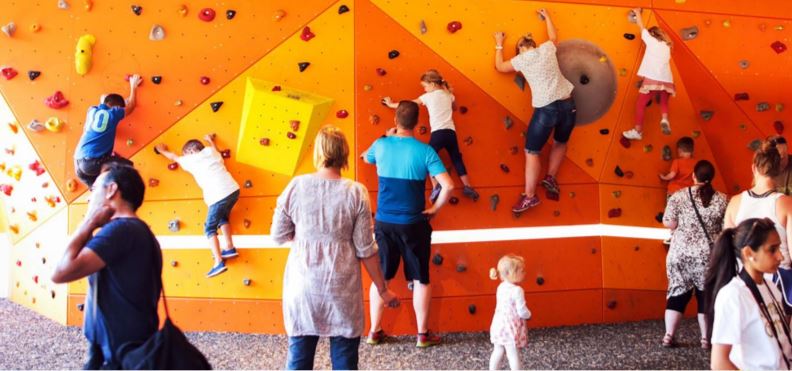
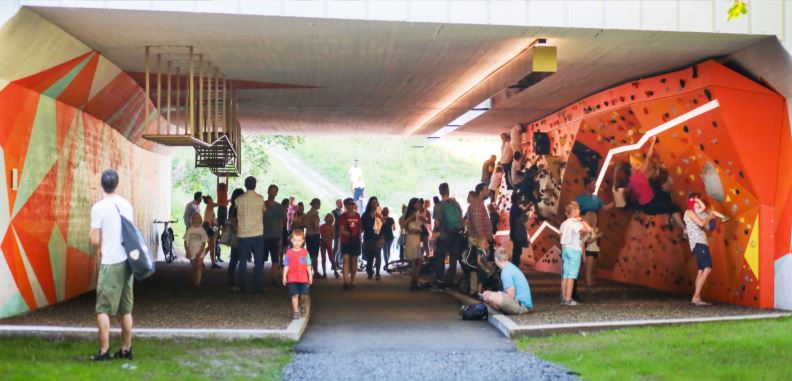
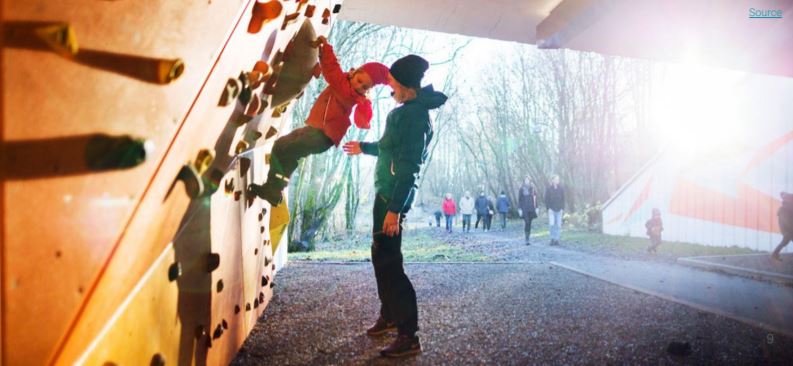
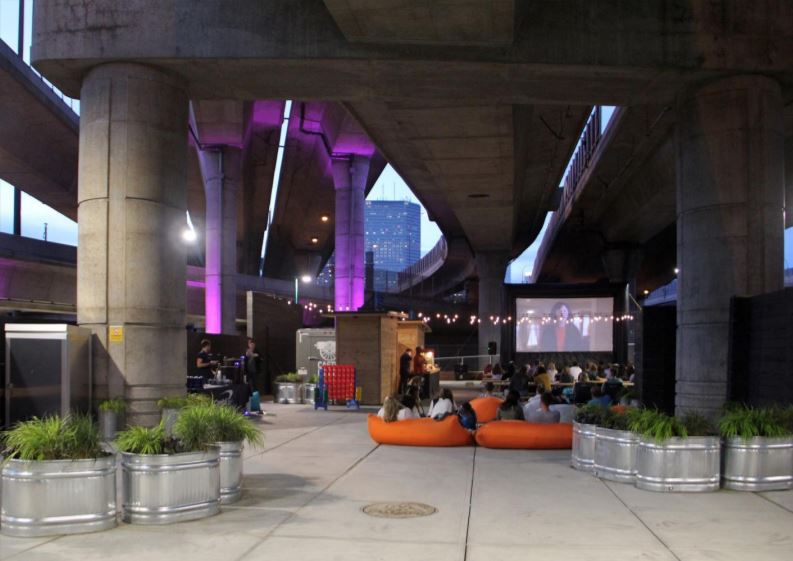
Img 6: Image illustrative of an example of the underside of a flyover re- imagined to be a community space. Source
Brief of the competition
Can these spaces be reimagined to become the heart of the community, facilitating creative patterns of use, drawing from the physical, cultural, and social identities that define a place, thus being able to reflect the community’s identity and channel its evolution?
Design Challenge: Rejuvenate the urban void in question, creating a space maximizes its shared value and re-establishes the context.
Objectives
Locate: Create an inclusive, accessible community
Identify: Reinvent and refine spatial experiences
Ideate: Allow an array of activities and functions, thus meeting all the needs of the community
Prototype: Reflect the needs, identity and aspirations of the community
Participants can follow the above steps can to arrive at the end solution. They should however, assume their own contexts and users based on their choice of location at the time of initiating their design process.
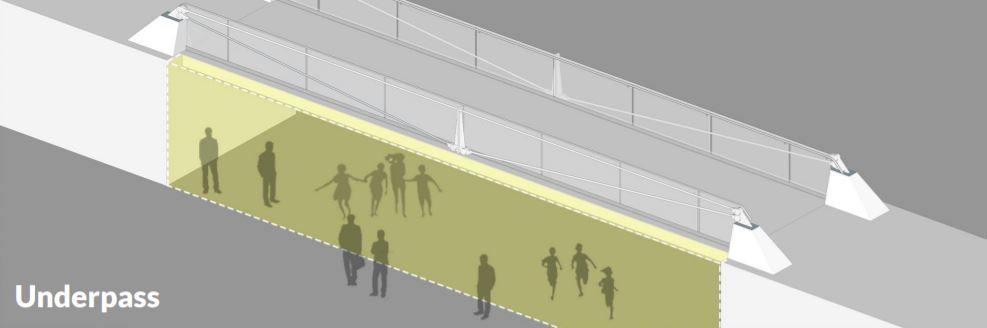
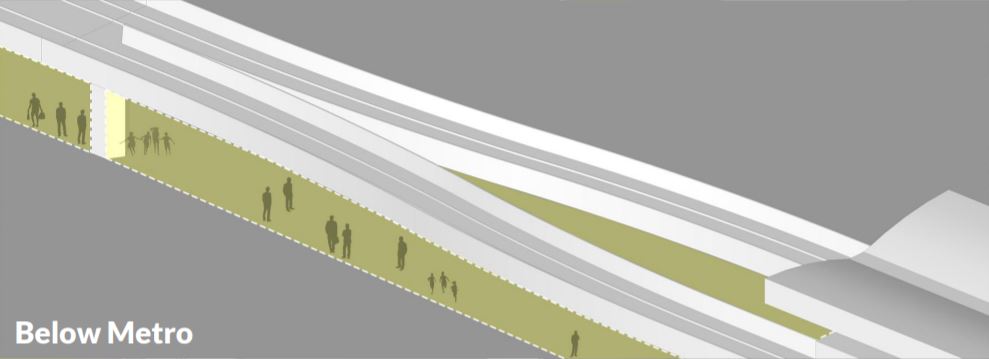
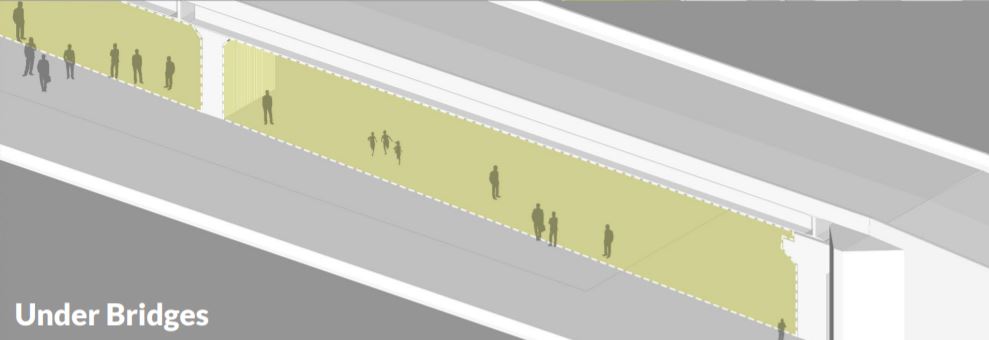
Img 7: image illustrative of the types of infrastructural voids in an urban scenario
Voids
Select Urban Voids of an area within the range of 250 sqm and 500sqm. If exceeding 500 sqm, assume modules of 500 sqm.
Understanding that this is a solution with the context and the community at it’s centre, focus on gaining significant insights into the constraints and allowances dictated by the site
Similar Competitions
Discover competitions you might be interested in


