
Informally
Challenge to revitalize public spaces for street vendors
Overview
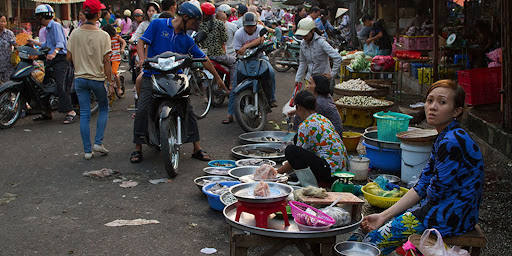 Fig: 1 - The urban informal economy @GIZ
PREMISE
The informal economy is a large part of our world today. Based on research by the Labour Organization in 2018, almost 61% of the world’s workers earn through the informal economy.
Quite simply, it is a host of activities of various magnitudes that do not formally come under the regulations and protections of the state. Unfortunately, the informal economy is often relegated to a shadow economy or an illegal economy.
In reality, the informal economy has a larger percentage of individuals who are striving to make a living despite the odds. More importantly, these jobs often provide many essential services that provide relative ease for the consumer in the urban world.
Recent research also indicates that Urban Informality is also a striking contributor to the process of urbanization. Their inherent ability to link economic activity to urban spaces serves as a potent mode of urban transformation.
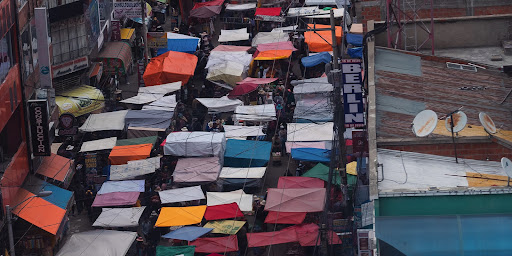 Fig: 2 - It's necessary to transform the growing informal economy into a more designed and public environment.
REVITALIZE
Often denied legal access to spaces, informal economies tend to find spaces in the public realm, close to their consumers. Through the continued process of piecemeal urban appropriation, these informal workers create urban spaces that slowly emerge as a consequence of their economic transactions.
This ability to catalyse urban transformations is an important virtue that can be harnessed by public policy.
Unfortunately, the predominant urban policy has often failed to include the informal economy in its designs and strategies. However, it may be valuable to reconsider these strategies and create opportunities to integrate or at least attempt to integrate the informal economy.
Not only would this create opportunities to be inclusive of a large part of the workforce, but it would also help regenerate stagnating spaces in the urban world.
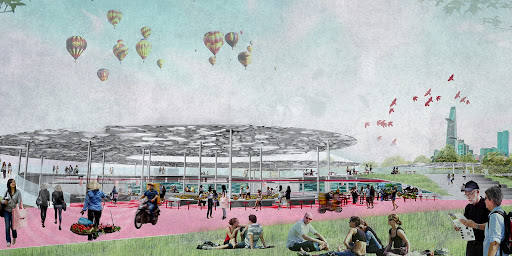 Fig: 3 - ‘Moving through the mangrove’ - A Concept and entry for Street city Vietnam
BRIEF OF THE COMPETITION
The popularity of the urban informal vendor often stems from their location, which is more often than not in close proximity to the consumer.
With time the spaces, these vendors occupy, grow and change as more people accumulate and create a small economic habitat. All this is done in places that aren’t designed for these uses. So what potentials could we create if we did design spaces for these uses?
The challenge here is to envision one such space for informal vendors.
The design must allow and encourage the inherent ability of the informal economy to catalyse urban transformations but must merely create the stage, instead of dictating.
Apart from welcoming the vendors and creating spaces for them the design must allow and encourage public use beyond buying and selling.
OBJECTIVES
- Adaptability: The design outcome should go beyond a mere marketplace. It should be a holistic and valuable public space
- Modular: How does the design adapt to the needs of its users- the informal and changing needs of the vendors as well as the needs of the consumers?
- Cost-Effective: The designed solution must be inexpensive and cost-efficient.
- Scalable: the designed outcome should be able to grow as the needs of its users change.
SITE
The site for this project is located in Philadelphia, USA. The site is close to residential spaces and is near a railway line. The residential area adjacent has some commercial activity sporadically. It is also a short distance away from the Delaware River.
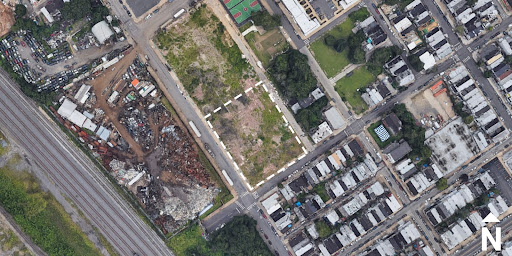
- Site Coordinates: Maps
- Site Area: 6206 qm
- Maximum FAR: 0.5
- Ground Coverage: 50%
- Height Restriction: 10 m
Setbacks as per CAD plan
PROGRAMMATIC OUTLINE
The design outcome should suffice for 100-150 vendors and must have the following elements:
1. 20% Landscaped open spaces
2.40% Commercial spaces; these spaces will be used on a contractual basis and will change over time in usage
10% Administrative spaces
3. 30% A multi-use public space that includes:
- Seating
- A performance space for small bands, open mics and small scale events.
- Small cafes/eateries
- Services such as restrooms, storage etc.
You may choose to use the remaining 10% of the space in one of the above-mentioned requirements or include other spaces you deem fit for your design




