
Integrate
Challenge to design a green school amidst the crowded city
Overview
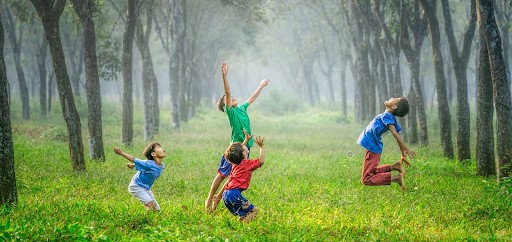 Fig: 1 - Children enjoy their time in nature and outdoor activities.
PREMISE
Our vision for the future has changed with the advent of climate change. The way we live, imagine our lives and society, everything changed with this era. As we prepare to battle this challenge, a fundamental wave of evolution is triggered that forces us to learn to adjust to environmental restraints on Earth.
While the present generation is focused on ensuring survival through conscientious actions, a change in mentality is essentially required. This effort must not only be concentrated on today’s populations, but shaping the thinking of the new generation of children is important.
The generation of children now, is the working populace of the future, a future where we may manage to survive the climate battle with intense efforts. Planning ahead is necessary, since as difficult as getting through climate change is, neither our planet nor humans may survive through another one. Repetition of the same mistakes already committed, is not an option.
How can children be influenced to lead better lives in the future?
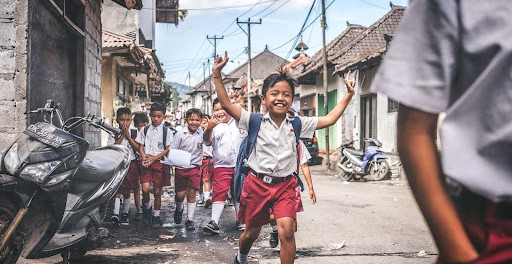 Fig: 2 - Children spend most of their time in homes and educational institutes in their formative years.
TAKING ACTION
Propelling the next generations in the direction of sustainability is a comprehensive task. Though the enormity of the situation of existential threat may be lost on them, their impressionable minds can certainly be moulded to act compassionately with all forms of nature.
Education has always been the foundation of inculcating values in children’s lives, practical knowledge of co-existing harmoniously with nature can also be imparted from a young age. As much as the teaching infrastructure of any educational institute is essential, the physical space in which learning occurs holds a certain importance.
The spatial design and architecture must respond to children, in order to create an engaging learning experience. But at the same time, since these spaces are where kids tend to spend a majority of their time, designing natural environments as an inseparable part of the centre, gives them an opportunity to interact with nature, uninhibited and intensively, so that they develop a connection.
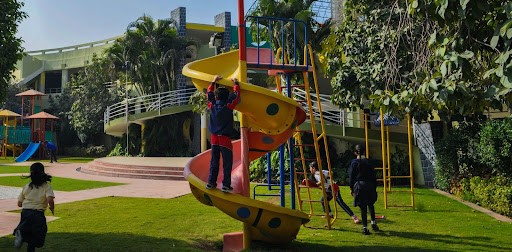 Fig: 3 - Greenery is incorporated in play areas for children but the outdoor area is limited and does not allow for learning of the environment as nature remains an inactive background.
BRIEF OF THE COMPETITION
Brief: The challenge is to design an education institute that is embedded into a natural environment.
The centre not just operates as a traditional teaching institute, but the environmental experience shapes the minds of the young generation in a sustainable manner.
Design, through its tangible form, has the capacity to convey ideologies and positive ways of living for humans. This potential must be explored in designing this Naturalis education centre. The centre will perform as a school for primary up to high school education. It will be located amidst a natural setting so as to inculcate the value of unadulterated nature from a young age.
The aim of the design is to take a step forward and try to understand how we can prepare for a world beyond the climate crises. While changing the mentality of the present generation is a daunting task, we must also focus on planning the future of continuance of life on Earth.
OBJECTIVES
- Concept: The design must generate an educational journey that is comfortable and stimulating.
- Nature: Extensive natural environments are to be created or existing terrains must be utilised for a unique learning experience of outdoor learning.
- Balance: Traditional learning spaces along with their outdoor counterparts must be balanced in the layout to create an efficient educational institute.
- Safety: Children must be independent to roam around the centre and explore and interact with nature on their own.
- Sustainable: Reduce negative impact of design on the environment, by improving building performance, reducing waste and ensuring comfort for occupants.
MANILA, PHILIPPINES
The Philippines is a diverse nation with a population of many cultures and ethnicities. The literacy rate is very high and the infrastructure supporting this is in large numbers. But with a large population and their increasing demand, there is a lot of environmental degradation.
Manila is a global city and is the most densely populated city in the world. It is prone to disasters such as earthquakes, typhoons, floods and landslides. The high rate of urbanisation has degraded the local environment with severe pollution and poses a threat to people’s health. The city is characterised by traffic, waste, pollution of air and water, and heatwaves.
SITE
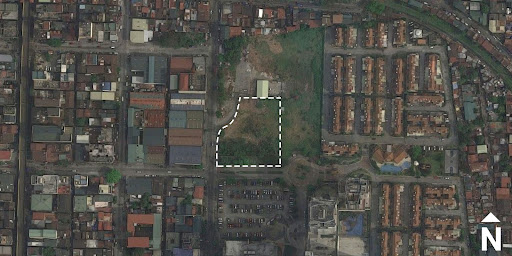
The site is in the heart of the neighbourhood of Santa Cruz, with access from Batangas Street. It is well connected to the rest of the city and the location is ideal for this typology due to its proximity to residential settlements.
- Coordinates = 14°37'15.4"N 120°59'07.1"E
- Site area = 4891.16 sq.m
- Height restriction = 10 metres
- Maximum FAR: 1
- Ground coverage = 50%
Setbacks (as per CAD plan)
Ground Coverage refers to the ratio of maximum allowed solid/permanent footprint on the site to balance the built and unbuilt spaces. You can utilize the other 50% of the site for any temporary intervention/recreation.
AREA PROGRAMME
Design a school that occupies primary, secondary and high school sections.
- Academic (primary wing, secondary wing and high school wing): 800-1000 sqm
Classrooms, Audio Visual Room, Computer Lab, Seminar Hall, Workshops/studios/, Subject (as per the nature of school) Laboratories, Library
- Administration: 350 sqm
Principal/Manager Cabins, Educators Room, Admin/Support offices, Utility & Maintenance, Security Room/space, Meeting/visiting room, Conference Hall.
- Recreation and landscape: 400 sqm
Common Hall, Exhibition Hall, Arts/Performing Arts spaces, Cafeteria, Indoor game/playrooms, Playground/Sports Pitch, Sports room/facilities, Open/Semi Auditorium.
- Care services: 30-40 sqm
Medical care room, Counsellors room.
- General services: 180-200 sqm
Kitchen, Pantry, Student & Staff Washrooms/Toilets/Changing rooms.
The programmatic outline is the point to begin your design at. You can add and modify functions and activities in relevance to the brief statement.
Similar Competitions
Discover competitions you might be interested in




Challenge to design public laboratory


The Global Benchmark for Architecture Dissertation Awards
