

Listen
Design an installation for music in public spaces
Overview
 Fig: 1 – Growing connections through technology / Sdecoret/Shutterstock
Modern interactions
Our society has evolved through cultural and social elements. Right from our origins, we have strived to develop signals and languages to improve communication and understanding. Before globalization, each community had its ways of engaging and celebrating their cultures. Miraculously, technology erased social and cultural borders, as a result, a diverse exchange of traditions, ideas, and creation was possible. The inception of this exchange witnessed the most beautiful moments of connecting, collaborating, and keeping in touch. While communication is stronger than ever, rare moments of connectivity are transforming into multiple digital devices accompanying us every day.
Today, talking or interacting with people on the other side of a digital device is more likely the scene than interacting with someone sitting close by. This brings us to a question that has communication on screen induced more isolation in real life, than idly looking out of a window?
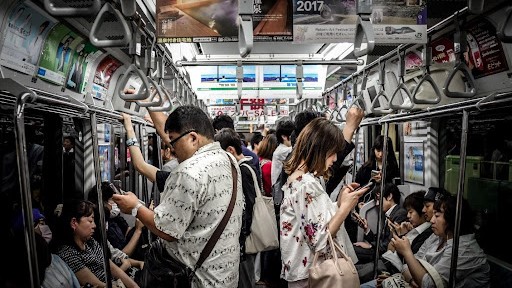 Fig: 2 – People immersed in their mobile phones / Hugh Han
Connecting with the real
The sci-fi concepts of the 2020s have come to reality. These devices have enabled us to multitask and connect efficiently. But then, why do we feel more fatigued than ever? Even with numerous forms of devices, why do we constantly feel lost? Why do our digital interfaces look more organized than our minds or environments? Public and community environments were meant to serve as a break from our daily lives, to unwind beneath a tree, observe or just listen to sounds of the city, people or nature. But today they have boiled down to isolated spaces or just mediums of getting somewhere.
Most sectors of our society have evolved with technology, and it is shaping our future. Then why do our phones and work screens have more upgrades, but public spaces none?
Has our balance tipped more to the development of personal and economic assets? If this is the case, how can we shift our attention to make public spaces alive again? Is there a solution to reduce constant screen-time, to look up for a while, and be aware of our surroundings?
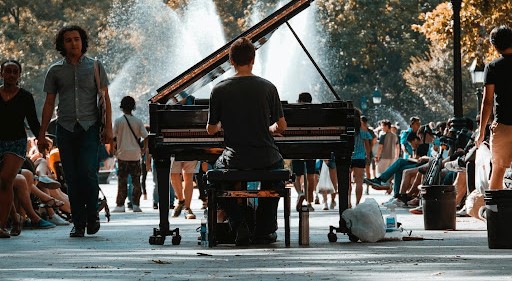 Fig: 3 – Music in public spaces / Josh Appel
Influence of sound
Everyday sounds affect us at a subconscious level. The smallest of our reactions is our cognitive mind speaking. In urban environments the constant high-frequency sounds of honks, railway engines make us more tired than the actual work we do. But low-frequency sounds can induce a relaxing effect on the psyche.
Imagine a scenario of crossing a high-traffic street with honks, a crowd coming from every corner, and then suddenly stepping into a tropical rainforest, in a washroom. Music is the art of arranging sounds and creating beautiful compositions. It is one of the universal and the most beautiful creations of mankind. It can make us sad, happy, and excited at the same time. Music uplifts our mood and allows us to feel raw and at peace. It can induce calmness in between the busiest of environments.
Can we introduce the universal element of sound in our public spaces as a means to make life more enjoyable?
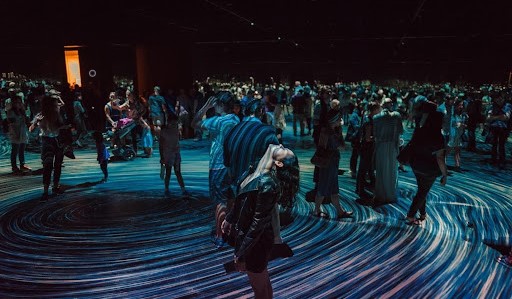 Fig: 4 - People mesmerized by an installation / Kevin Laminto
Brief of the competition
Almost everyone finds solace in music. Music has a personal touch to it. Even more so, digital mediums have made this experience worthwhile and special. Music-induced on our devices is also one of the reasons that make our disconnection with technology more difficult. What if this exact scenario is replicated but in a public and open space? To be able to connect and disconnect at will, can we use our devices to enhance music in these everyday environments? Through this, is it possible to make public spaces relevant again?
Brief: The challenge is to create an installation that can uplift the public environment through music; to make them look up and stop.
To create a lively space to break the monotonous engagement with their screen, at least for a few seconds. The installation/activity/function can play music permanently or temporarily. The typology and structure of the installation are open to imagination.
Design objectives
Decoding: Select a music style and synthesize its elements/qualities/composition that can be implemented in your design.
Functions: Introduce functions that are not only effective for design but also useful/effective in an urban context.
Inclusive: All age groups and communities should be able to interact with it.
Upgradeable: The installation/function should evolve with time.
The following objectives can be a point of beginning to conceive this design. Participants can assume their contexts and audience before initiating their design process.
The purpose is to make people feel better even for a few minutes. To make them listen to beats while walking or talking, to make them want to tap while on their phones, or just nod at the music while sipping coffee.
Scale
The streets and transition/buffer spaces like subways, footpaths, open markets are the most used form of urban elements. They are underrated parts of a city streetscape but also acts as a medium for crossing, passing, standing, selling and sometimes recreation.
The project can be streets as one of the environments for this function. The size of this intervention is 6m (L) x 5m (B) x 4m (H). The design should be able to communicate with all generic public spaces over the world.
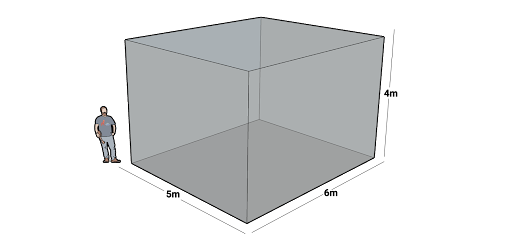
Fig: 5 - Size of the intervention
Similar Competitions
Discover competitions you might be interested in



Design challenge to reuse E-waste


Illustrate the lost glory of Angkor Wat - Render Challenge


Photograph architecture without architects


Challenge to reimagine the Iron Throne
