

Luminous
Challenge to design lighting inspired by nature
Overview
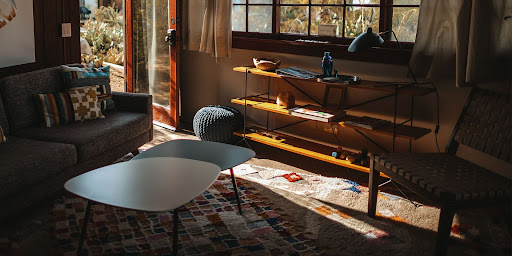 Fig: 1 - Natural lighting is one of crucial elements of design, as it not only is a source of illumination but also brings us closer to our roots (Credits- Roberto Nickson)
IMPORTANCE OF LIGHTING
Lighting is an important feature of our built environments. Architects and designers for years have manipulated lighting to create experiences, highlight features and most importantly illuminate.
Lighting used appropriately in space has the ability to shape the human experience in space. Just reflect back to the comfort you feel walking into a warmly lit space as compared to walking into a space with harsh fluorescent lighting.
Despite various efforts in the field of lighting, research indicates that most humans still tend to gravitate towards natural lighting, preferring large windows or open spaces to closed spaces with artificial fixtures.
Undeniably, natural lighting has phenomenal effects on positive brain stimulation so it may be worth understanding the light we see in nature and designing our fixtures inspired by what we learn.
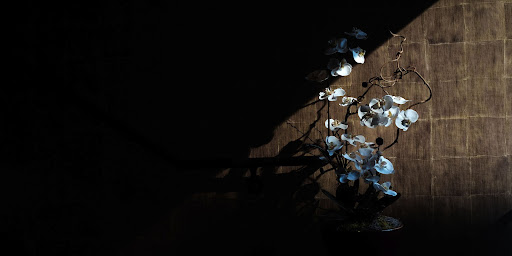 Fig: 2 - Mimicking natural lighting-a concept (Credits-Berlian khatulistiwa)
LIGHT AND NATURE
Humans are not the only species on earth that create light. In fact, nature has an awe-worthy range of organisms that produce and use light in various different ways.
The most striking feature of natural lighting, however, is its dynamism. Light from natural sources is variable in colour, intensity and even quality in patterns that can be predicted through research and observation. This variation in lighting can be observed in phenomena ranging as widely from the changing sunlight to the bio-luminescent properties of certain plankton species.
Mimicking these natural phenomena is not a new practice. In fact, for years designers, researchers and even laymen have time and again attempted to recreate the natural phenomena they see around them.
In lighting, designing with natural lighting creates opportunities for individuals to design for positive emotional states, better brain stimulation and even increased creativity.
 Fig: 3 - How can natural light be transformed into lighting design? (Credits-Iva Rajovic)
BRIEF OF THE COMPETITION
As humans become increasingly appreciative of the natural processes around them, we tend to seek out increasing natural inspiration in the technologies that surround us. Given the opportunities that natural lighting affords us and our natural afflictions towards it, it may be valuable to consider designing artificial lights to mimic their processes.
The challenge here is to design a lighting fixture inspired by natural lighting or bioluminescence.
The design must embrace the dynamism inherent to natural light while keeping in mind the human requirements of light and illumination. The form and materiality of the resultant lighting design can be inspired by nature or by an innovative new form that merely mimics the process.
You may also draw inspiration from existing practices in biomimicry lighting if you wish to.
OBJECTIVES
- Reimagine: Understand and observe natural lighting phenomena and reimagine the possibilities for artificial lighting
- Form: What form does your lighting fixture emerge as
- Usage: What benefits and uses does the light fixture afford to its users.
- Dynamism: How does that fixture recreate and channel the transient nature of natural lighting.
SCALE
The design must be an indoor lighting solution. You are free to choose whether your design is a floor light, a ceiling-mounted light or a table light. While the design can be as small as technology permits, a single form can not be any bigger than 28 cm x 28 cm x 137 cm (lxbxh) i.e. it must not be bigger than a standard floor lamp in an interior space.

