
Moon Base 2124
Moon colonizing on Artemis Centenary design competition
OVERVIEW
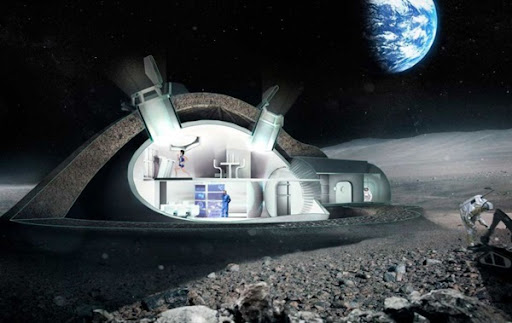 Fig: 1 - Housing on moon
PAST MOON MISSIONS
In 1969, the Space Race peaked with the successful Apollo 11 mission, which allowed the first man to walk on the moon.
Between 1969 and 1972, there have been six successful manned missions to the Moon, all from the USA. In total, 12 people (all male) have walked on the lunar surface.
Nobody has ever walked on the surface of the Moon since 1972.
Today, nearly half a century later, new technological advances and a renewed desire on space exploration have ignited a new race. Attention is moving back to the Moon. This time, however, we are tired of just walking… what we want is to inhabit! Space Architecture is becoming a growing field with the desired outcome to kick-start space tourism, expand our scientific knowledge, and ultimately make mankind a multi-planetary / galactic species.
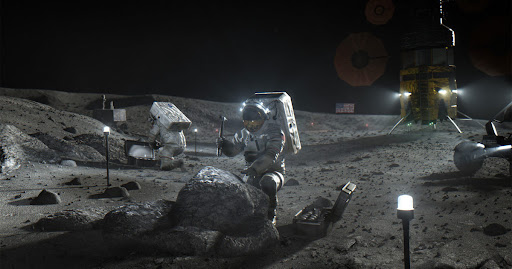 Fig: 2 - Artemis program by NASA
ARTEMIS PROGRAM
The Artemis program is an ongoing crewed spaceflight program carried out predominately by NASA, U.S. commercial spaceflight companies, and international partners such as the European Space Agency (ESA), the Japan Aerospace Exploration Agency (JAXA), and the Canadian Space Agency (CSA) with the goal of landing "the first woman and the next man" on the Moon, specifically at the lunar south pole region by 2024. NASA sees Artemis as the next step towards the long-term goal of establishing a sustainable presence on the Moon, laying the foundation for private companies to build a lunar economy, and eventually sending humans to Mars.
The Moon Base competition 2124 asks architects and engineers “What will living on the Moon in the future look like in the 100th anniversary of the Artemis program?”
We challenge students, architects, designers, scientists, and visionaries to propose ideas on how the lunar settlement in 2124 would be constructed. Ideas could be realistic, actually analyzing how we may live on the Moon in the next 104 years, or creative fantasies of how the Moon can serve the human race.
Moonbase 2124 consists of the planning and design of a phase three colonization on the Moon to support a resident staff of a minimum viable population of 160 people. The primary purpose of Moon Base 2124 is to provide a permanent commercial, science, and technology development facility on the Moon.
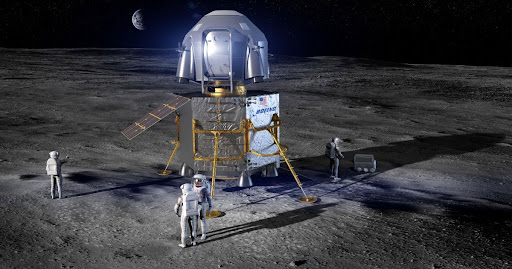 Fig: 3 - NASA: Next Moon Astronauts Will Hike 10 Miles on Lunar Surface
BRIEF OF THE COMPETITION
Task: To design a Self-sufficient, Self-sustaining lunar settlement with a closed-loop system and a modular nature designed for ease of future expansion, construction and assembly.
It will be much more advanced in achieving self‐sufficiency such as food production and regenerative life support. To be a stepping stone for outer space exploration (i.e. Mars).

LEGAL OWNERSHIP
LEGAL OWNERSHIP OF MOON BASE 2124:
According to the United Nations Outer Space Treaty, signed by every space-faring country, no nation can claim sovereignty over Earth's lunar satellite. 102 countries have entered into to the 1967 accord.
In 1979, the Agreement Governing the Activities of States on the Moon and Other Celestial Bodies (also known as the "Moon Treaty") was put forward by the United Nations. Its goal was to place control of the Moon and other celestial bodies into the hands of the international community.
Under the treaty, any use of the Moon should benefit all states and all peoples. No country should use the Moon or its resources without the approval or benefit of all nations. The ownership, financing and governing body for the base will be an international consortium of space agencies (CSA, ESA, RSA, JAXA, NASA, etc).
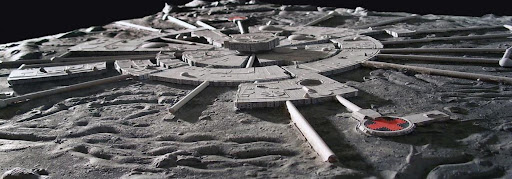
BASE POWERING:
The contestant may explore one or a combination of new technologies like:
1. Solar satellites beaming power to the dark areas of the moon
2. Solar sails to be used as a passive tool to generate energy? Can we utilize solar sails as a solar turbine generating energy?
3. Or would you like to go with the traditional nuclear batteries.
4. Or perhaps it is preferable to use the fusion reactors that will be developed in the next few decades due to availability of Helium 3 on Moon.
DEMOGRAPHICS
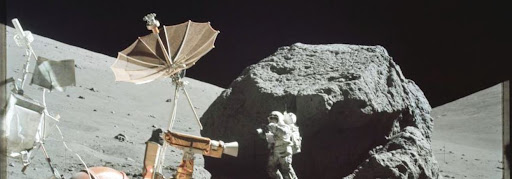
The base should be designed to house a minimum viable population (MVP) of 200 persons composed of scientists, engineers, entrepreneurs, medical specialists, technicians, in addition to specialists representing the arts, humanities, and spiritual leaders.
COLONIZATION
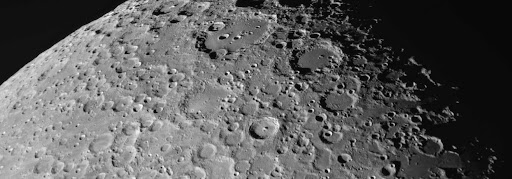
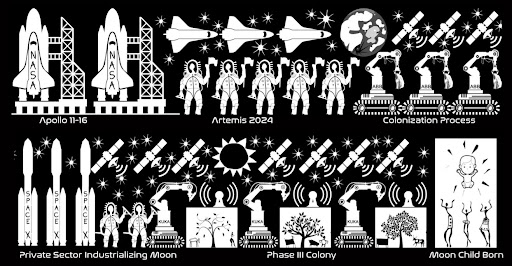
COLONIZATION WILL GO THROUGH 4 PHASES AS WE LEARNED FROM HISTORY OF COLONIZATION:
1. Expedition campaigns that didn’t last long, Started already in the 60's of the last century.
2. Small missions in which some of them stayed with the aid of private sector.
3. Larger scale colony that ship back the resources to Earth.
4. Colony declaring independence with a self-replicating robot to construct more settlements independently from Earth. With the first extraterrestrial generation children born on this settlement.
Our Moon Base is destined to be Phase 3 Colony.
INSPIRING FACTS
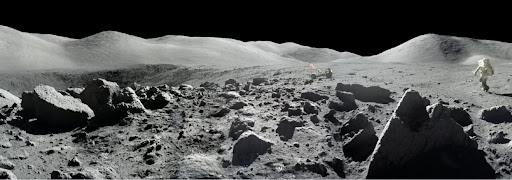
1 moon day lasts 29 earth days.
Temperatures varies from 127 to -173 degree centigrade between sun lit and dark areas on moon surface.
Moon has an electrostatic surface due to continuous exposure to cosmic radiation.
The Moon surface is always bombarded by all sizes of meteors and asteroids.
The Moon regolith is a fine hazardous dust.
The moon gravity is 16.8 % of Earth gravity enabling heavy equipment to operate easily and longer spans constructions to exist.
Proximity from Earth is a key benefit of Moon to be a station to Mars. We can reach moon from Earth in around 3 days which make it a perfect base for future space exploration.
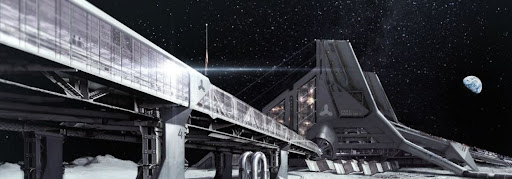
FUTURE TECHNOLOGIES
FUTURE TECHNOLOGIES THAT YOU CAN USE AFTER INVESTIGATION:
- It is expected that these technologies will advance rapidly in the next few coming decades, You are free to use and imagine whatever you need to complete you design.
- 4D printing and memory shaped alloys for self-repairing structures.
- Thermoluminescence materials might be used as a source of artificial lights.
- Bio-molecular 3D printing to 3D print any organic materials for probable medical or biological use including for example organs transplanting…etc.
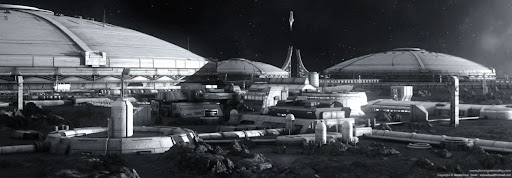
PROGRAM OUTLINE
- Moon mining facility for excavation and extraction of rare Earth elements like Uranium, titanium, helium 3, gold and platinum…etc) then shipping them back through a space elevator.
- Hazard biological experiments, Low gravity industries and advanced Nanotechnology research labs.
- Spaceport to other celestial bodies like Mars
- Space-safe time capsule buried under the moon ground carrying our history, sciences and arts.
- Lunar tourism facility where the moon will be a place for contemplation and sanctuary from the materialistic planet Earth.
- Living areas including sleeping pods, exercising areas and living spaces with regard of Human psychological and physiological well-being (Circadian Rhythm,..etc)
- Aeroponics and/or hydroponics farms with 4 types of plants (Medical, Oxygen bomb, Vegetables and fruits for nutrition, Construction wood trees).
- Communication center connecting the base with Earth and with the Satellites around Moon.
- Power station protected from the surface environment.
- Surface Access Unit including airlock system for crew and lunar terrain vehicles with purification zone from Moon harmful regolith.
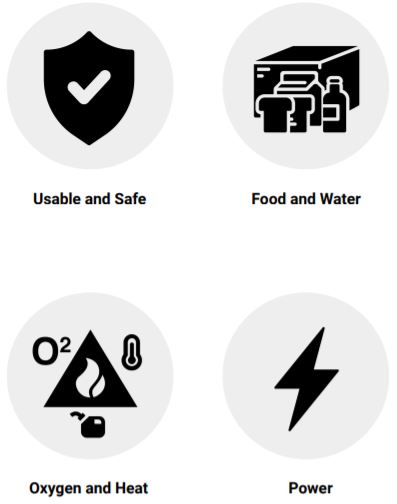
LIVING CONDITIONS
The following objectives can be a point of beginning to conceive this design. Participants can assume their own contexts and users before initiating their design process. The base should carry 8 features essential for life support: Usable, safe, providing oxygen, water, food, heat and power. All habitable spaces will hold an atmosphere of 101.35k Pascal (14.7psi) in an Earth‐normal gas mix at sea level.
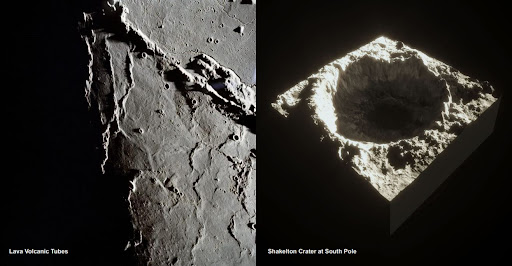
PROBABLE SITES
- South pole craters because of the presumed availability of recoverable water ice by placing the base Core underground with minimum required thickness of regolith above of 3m for protection of harsh moon environment.
- Underground lava tubes as a natural Shield from meteors and radiation with an average width of 500 meters and several kilometers long.
You are free to choose whatever site, Also feel free to choose another site than the indicated based on your research.
CONSTRUCTION GUIDELINES
A hybrid method between: 3D printing technology, pre-integrated modules and inflatable structures would be recommended to reduce landed payload‐mass and mass that the construction process. Dividing the project into multiple self‐sustaining units or clusters improves safety and reliability of the whole base.
Similar Competitions
Discover competitions you might be interested in




The Global Benchmark for Graduation Excellence


The Global Benchmark for Architecture Dissertation Awards
