
ParaSports
Challenge to design a barrier free sports center
Overview
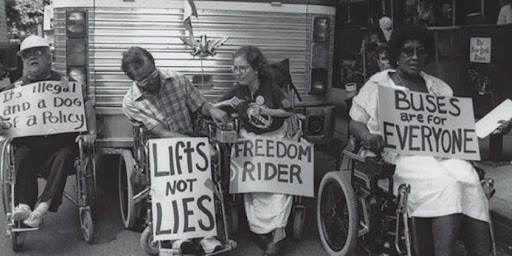 Fig: 1 – Disability rights movement for the Rehabilitation Act 1973 (Credits-Tom Olin)
PREMISE
Disabilities and deformities have existed as long as we have. Throughout history disabilities were viewed by different lenses, some were completely rejected in cultures like Greece, while in some they were treated as economic liabilities.
In other settings, persons with disabilities were tolerated and treated in incidental ways, while in other cultures they were given respected status, even that of a deity and allowed them to participate to the fullest extent of their capability.
Strong discrimination towards the differently-abled people was seen during and after the Industrial Revolution, in regards to employment, accessibility and basic human rights.
This gave rise to the Disability Rights Movement, which eventually spread across the world. It has played a major part in gaining accessibility and safety in architecture, transportation, and other activities, today, they form the largest minority in the world
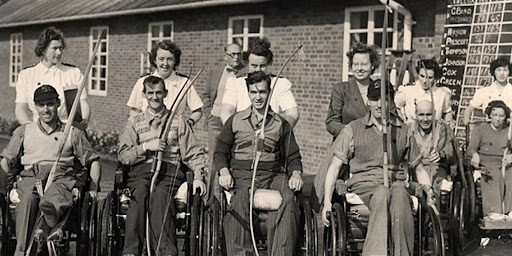 Fig: 2 – Initial Paralympics moment held by Dr Ludwig Guttmann (Credits- Progetto Dreyfus)
SPORTS
Throughout the 18th and 19th centuries, the sport began to be viewed as a successful rehabilitation tool for people with disabilities. In world-war II, injured soldiers with spinal injuries were treated by Dr Ludwig Guttmann, who made it compulsory for all disabled patients to be treated with the help of sports. He believed that it played a vital role in the physical and even mental rehabilitation of patients.
Thus, wheelchair Polo was the first competitive sport developed in that hospital grounds itself and with it, the Paralympic movement started. Today Paralympics is a yearly elite sports event for athletes with sensory and physical disabilities from all over the world.
While not everyone has access, privilege and the ability to involve themselves in large competitive sports. The unique ability of sports to transcend cultural, and communal barriers makes it an excellent means of adaptation to any place or community.
Can we use it as a common ground for differently-abled people to just play and enjoy?
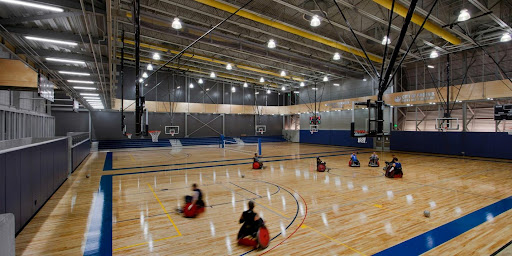 Fig: 3 – Basketball court of a sports and fitness centre for disable people (Credits-Baldinger Architectural Studio)
BRIEF OF THE COMPETITION
While laws and policies have accepted them as a part of society, infrastructure and attitudes in certain countries/ regions still lag to accommodate their needs. As a result, this stigma fosters inactivity which often causes people with disabilities to experience loss of morale and restricted mobility which is beyond their cause of disabilities.
Sports can help to reduce this by giving the person a common environment. It can help to bring out the best of skills in people and increase self-esteem.
The challenge is to design a barrier-free Sports center for differently-abled people.
The project aims to fulfil a permanent space for sport/physical activities while promoting health, wellness and the active participation of the widest group of empowered users; be it the individual user, friends, an athlete, or a local sports.
The competition not only aims at helping the disabled but also to help designers and architects broaden their sense of knowledge and space. To help them understand and see the environment through the eyes of the challenged.
OBJECTIVES
- Barrier-free: To design not only investigate the written standard for barrier-free designs but also focus on the experience of the abled person in a given space.
- Accessible & open: Design closed as well as open sports areas to involve any immediate people/community to play.
- Functions: Activities for sports and other functions should be inclusive for all levels of players.
The objectives can be a point of beginning to conceive this design. Participants can free to form their programmatic outline according to the user group.
Participants have to include the general physical and recreational activities of a clubhouse, but they can choose any 5 sports to devise their program around.
SITE
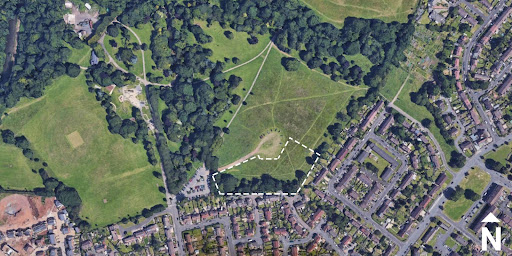
Bristol, England
The site is located near a park and recreational ground. The community consists of WECIL, a platform dedicated to disabled people, making it an appropriate site to host a sports center and encourage local participation of disabled people.
- Coordinates: 51.4876571 -2.5240739
- Site Area: 8046.06 sqm
- Height Limit: 15m
- Maximum FAR: 1
- Ground Coverage: 50%
Setbacks (as per CAD plan)
Ground Coverage refers to the ratio of maximum allowed solid/permanent footprint on the site to balance the built and unbuilt spaces. You can utilize the other 50% of the site for any temporary intervention/recreation.

