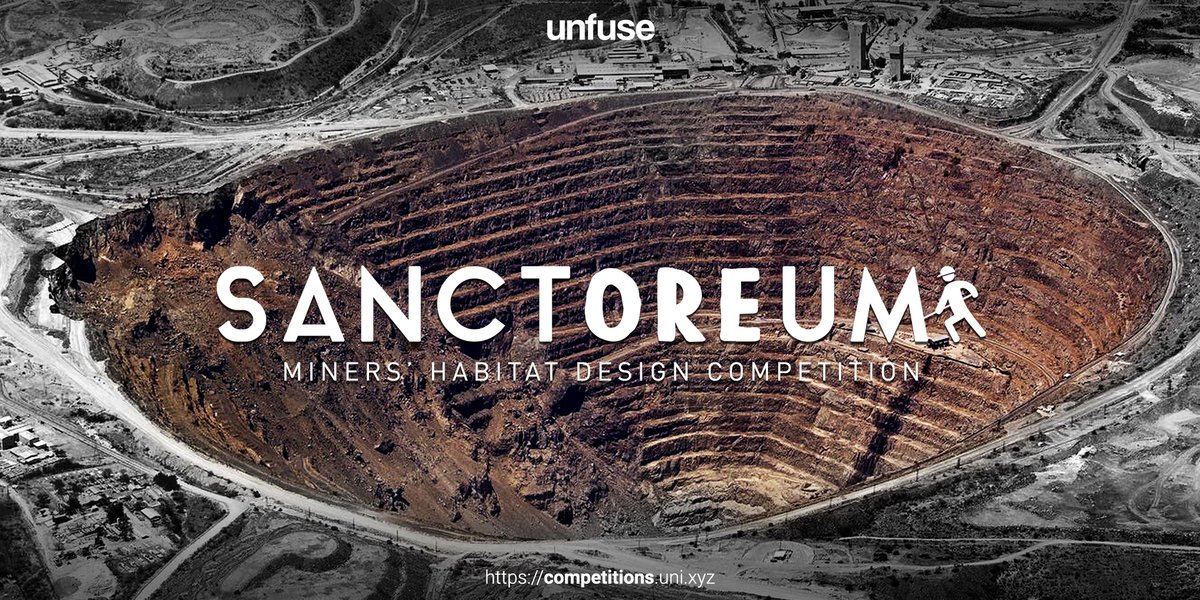
Sanctoreum
Building safe habitats for South African miners
OVERVIEW
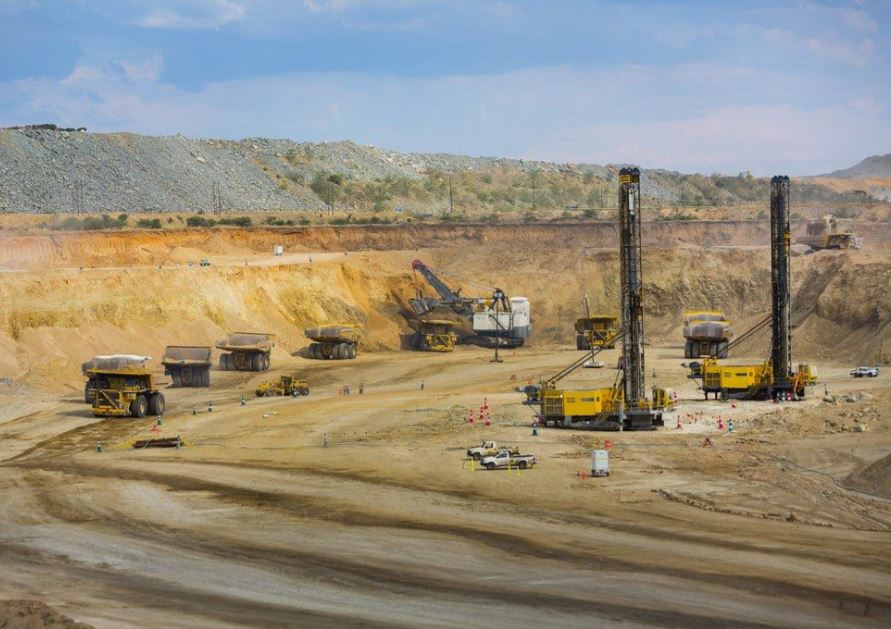
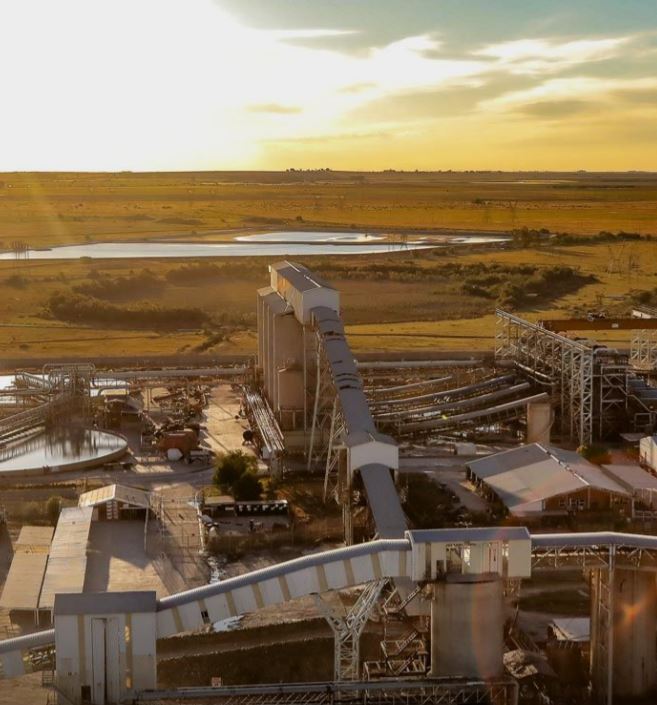
Img 1: An Anglo American Platinum Mine in South Africa. Source
Global Mining Industry
The country of South Africa has been renowned worldwide for its mineral wealth, both in diversity and its sheer abundance. Coal, Gold, Diamonds, Chromium, Platinum, Palladium, and Uranium are only some of the resources originating from Africa’s mineral fertile soil. Platinum in particular is one of the most utilised metals across the world with a rising demand, primarily for its use in the automobile and the jewellery industry. South Africa provides roughly 80% of the world’s supply of the precious metal, contributing to billions in the nation’s GDP.
However, the human cost of the mining of platinum over decades at end has been extraordinary, serving as a microcosm of the entirety of the problems associated with the mining industry the world over. The immense social, environmental, physical and inequitable economic costs of these mines in South Africa have drawn international criticism while opening avenues for bringing universal mining conditions under a lens too.
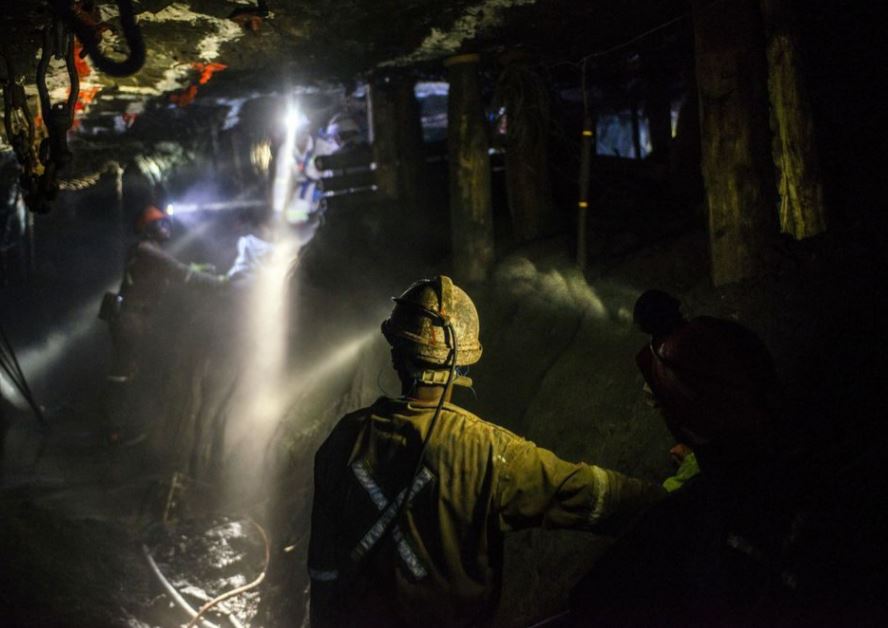
Img 2: A platinum mine shaft outside Rustenburg. Source
The Platinum Miners
The platinum rich Bushveld Igneous Complex stretching over roughly 60,000 square kilometers accounts for a majority of South Africa’s platinum producing mines. The belt comprises of its Northern, Eastern and Western limbs. Among these, the sprawling mining community of Ikemeleng in Kroondal in its western leg forms the nexus of as many as six mining companies.
The region had been a small rural farming village since the 60s that was pillaged with the establishment of mining industries in the region in the 90s. The community of displaced farmers forced into mining for livelihood, and migrant miners looking for opportunities thus made their homes in an informal settlement just across the mines. The overpopulated settlement has grown unchecked since in the face of lack of proper residential provisions and low wages for the mine workers.
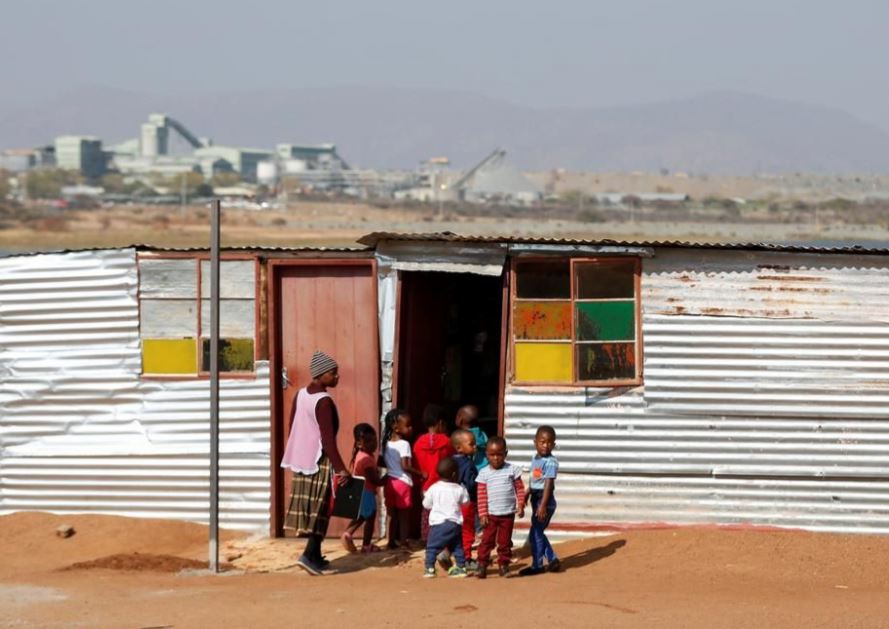
Img 3: Platinum mines overlooking a day care centre in the Ikemeleng settlement. Source
Issue
The Ikemeleng informal settlement of miners is at the receiving end of high levels of dust and atmospheric refuse from as many as three mining sites in its immediate vicinity, having a terrible impact on the residents’ respiratory health.
The scrawling settlement with rows of shacks also lack basic municipal services, and have become flagrant grounds for substance abuse, HIV/Aids and other STDs, rape, underage pregnancy, unemployment and xenophobia. The land around is rendered unfit for agricultural use due to the mining, and a public health crisis within local communities ill-equipped to cope with mining-generated air, land and water pollution is brewing. The miners too seem to be stuck in a vicious cycle, as vast capitalistic conglomerates fail to provide basic working conditions for miners, glossing over mining accidents without proper compensation to the affected.
This systematic exploitation of labour has been found to have a disrupting influence on traditional cultural and familial structures.
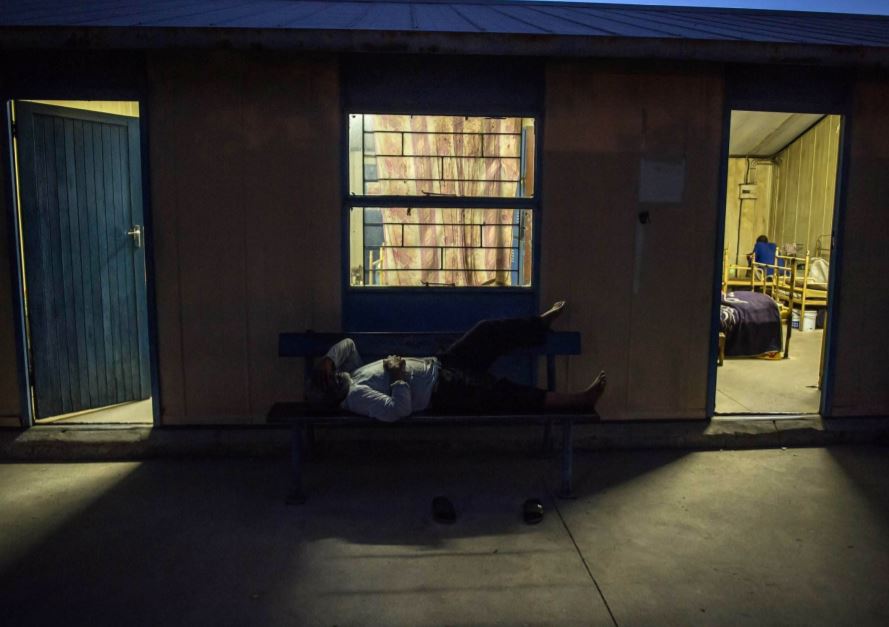
Img 4: A miner resting outside the Kroondal Mine Hostel. Source
Brief of the competition
The challenge is to design a neighborhood resettlement model for the mining community of Ikemeleng.
For the purpose of the challenge, the size of the community to be relocated would be drastically reduced, and the model so proposed would be intentioned to be replicated to settle the entire mining population in the region.
Following the 2012 Lonmin Strike and its unfortunate aftermath, the government sanctioned some community level facilities like playgrounds, community taps and a primary school. However, the plight of mine workers has continued due to the sheer volume of people to be serviced and erratic supply of provisions. Their desire to lead dignifiable lives remains unmet. This intervention thus takes into account the destructive nature of mining, but also recognises it as the only source of employment for Ikemeleng’s community.
The challenge doesn’t seek to reinvent the process of mining to make it safer for miners, but instead chooses to focus on how those relying on it can thrive in a healthy way.
Objective


Resilience: The model neighbourhood must look to be a safe haven for the miners, especially from the environmental hazards stated.
Scalability: The design of the model neighbourhood must be scalable to be applied to the whole region.
A Beacon: The design must aspire to be a beacon for mining colonies everywhere with subpar living conditions.
Dignity: The design of the unit and neighborhood must look to restore normalcy of life and dignity for the mining community.
The above objectives can be a point of beginning to conceive this design. The design requirement (no. of units) and demographic is to be conferred from the programmatic outline.
Programmatic Outline
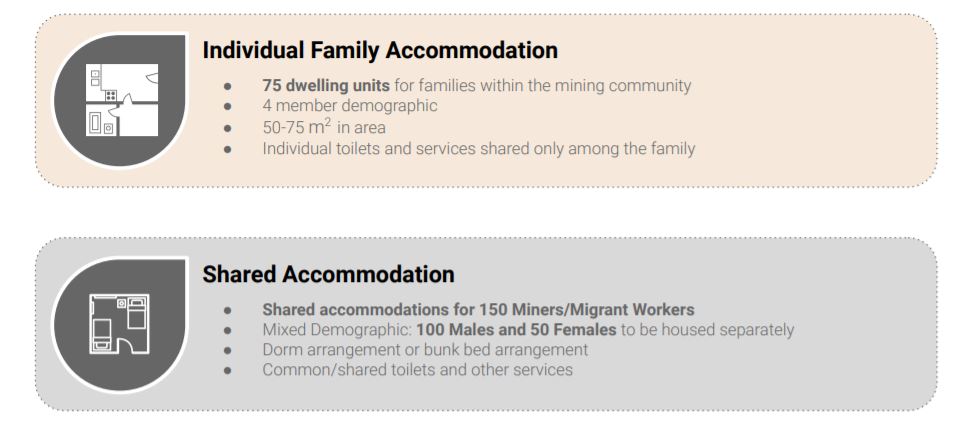
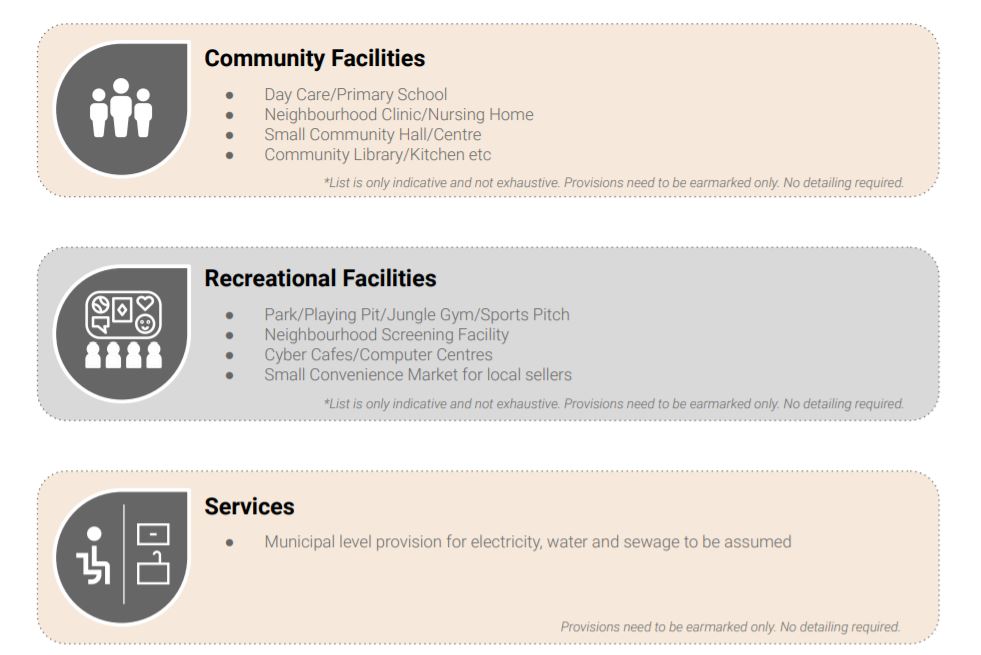
The above functional requirements state the provisions that would constitute a functional neighborhood with community welfare as its objective. As stated, the list is not exhaustive, and only indicative. Participants might alter the program if it benefits the design, but these may be used as check marks to conceive the design in finality.
Rustenberg, South Africa
Rustenberg is a city and an administrative district located in the Northwest province of South Africa. It is flanked by the western limb of the Bushveld Platinum mining complex, at the foot of the Magaliesberg mountain range, with the platinum mines located close to the city centre, as well as occupying the outskirts of the moderately populated town. Its strategic location in the foothills lend the town its mineral richness, with the city attracting mining companies and investors since as long back as the 1920s.
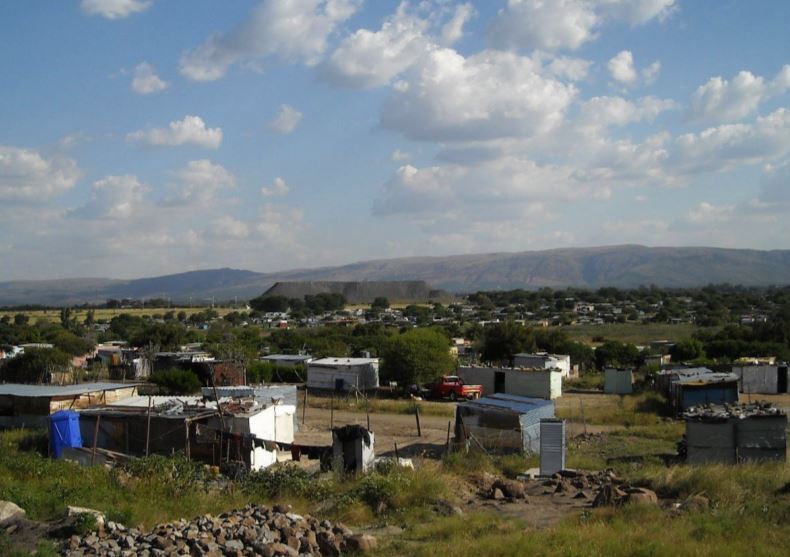
Img 5: The informal mining settlement in Ikemeleng, east of Rustenberg, South Africa. Source
Ikemeleng and the Kroondal Mines
Also called Matebeleng, the sprawling overpopulated community has three companies operating within close proximity, namely Sibanye Stillwater (formally Anglo platinum and Aquarius platinum), Xtrata and Samacor. All these major dig sites are just across the R104 road which separates the informal settlement and the mines.
Decades after the community first sprang up and continued growing, Ikemeleng has been a beacon for people seeking employment in the mining industry, many journeying from all over Africa in search of better opportunities. However, the miners here too have been caught in a mosh pit, with years altogether between pay raises, poor working and living conditions.
Naturally, the workers still cannot afford renting a place in the town of Rustenberg and have settled in shacks next to the mines themselves, with many replacing those with permanent buildings when their financial position allowed.
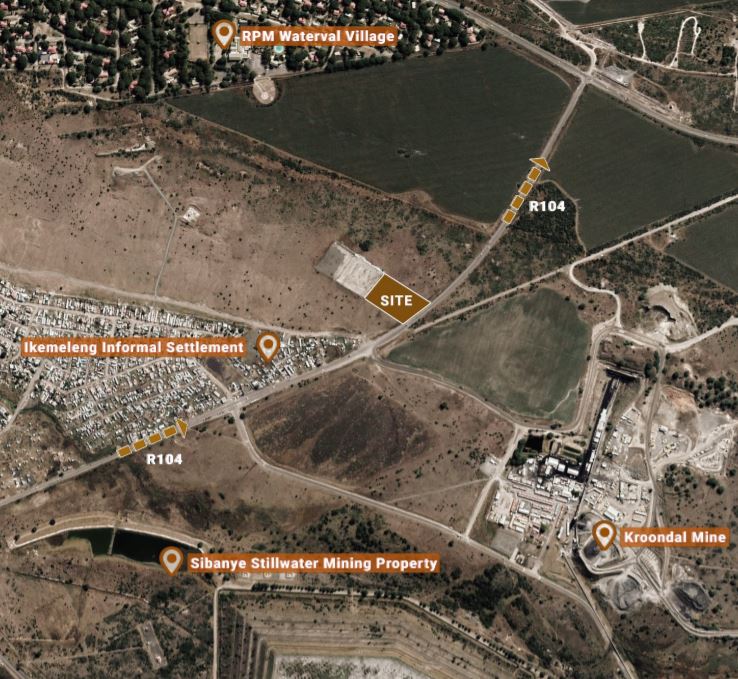
Img 6: Aerial View of the Site.
Site Plan
The site for the design of the model neighbourhood has been proposed right next to the existing informal miners’ settlement of Ikemeleng. As can be inferred from the aerial view of the site, most of the major mining conglomerates and mining pits for Platinum are located in close proximity, contributing to the poor health conditions of the miners. The site has been chosen so as to keep a requisite distance from the mines, while still maintaining the factor of walkability for miners to their workplaces and dig sites.
- Site Area: 10642 sq. m.
- Site Coordinates: 25°42'09.9"S 27°19'50.0"E
- Ground Coverage: 30%
- Height Restrictions: Low-rise (3 typical storeys)
Judging Criteria
Presentation: The fundamental to a good entry is a good presentation.
Concept/Idea: Quality of thought and intent in pre-design phase.
Spaces/Programme: How the spaces are calculated and ordered.
Design Outcome: The final architectural outcome of the solution.
The judging panel can also add other criterions based on their internal discussions - which will be in line with the problem statement. Participants are advised to fulfil above given criterions first in their design.
About Unfuse
Unfuse serves as a unit for Uni in the field of Architecture. It intends to break the fusion of traditional design barriers and methodologies by making it a platform for experimentation and conceptual exchange of ideas in architecture, urbanism, society, culture and ecology. It is a research initiative dedicated to providing opportunities for designers from all domains to explore ideas that go beyond the boundaries of architectural discipline and enrich our built environment; thereby opening up possibilities for promotion of architectural thought at a global level.
Queries: support@uni.xyz
Discover other competitions: https://uni.xyz/competitions
Facebook: https://www.facebook.com/unixyzglobal/
Instagram: https://www.instagram.com/uni.xyz/
Discover FAQ’s about this competition on our help forum here: https://help.uni.xyz/