
Di - Generic Cities: Shanghai
Challenge: Breaking generic cities
OVERVIEW
Background
The 21st century is known for the age of globalization. The process of urbanization in cities, the interaction between people and integration among businesses & society are no longer driven just by local forces like climate, culture, languages, geography or its inhabitants. It’s also a well-known fact that data-driven technologies are playing a major role in shaping us and the kind of cities we live in today.
These forces of technology, for all the good they are doing to us in so many ways, are also powerfully speeding up the homogenization of culture. This force of technology in the world we live in today has been there for quite some time and now seems to be unstoppable. In the past, cities have always been seen as an incubator for creative ideas and human evolution
However, with our technological evolution, the question this brief seeks is retaining this distinct identity, culture and languages of a city as an incubator of creative ideas in the next century.
Technology
Technologies that we use today, have strengthened our connection with each other as human beings which resulted in reducing time & space. It has also allowed us to have a virtual presence anywhere in the world at any time. This sounds wonderful until we realize that this has resulted, in some ways, making us feel like we are less where we really are. In other ways it makes all places seem more or less the same.
When we try to connect with someone for any purpose, we can immediately connect whether we are on a vacation or at work. Today, we are more bonded to our interest groups for collaborative development by culture, languages and homogenous identities, which is possible from any geographical location because of the virtual networks and our handheld devices.
What does it mean? : Every place is so generic that it feels like just a node or a network to connect, and so do we as a person act like a node or a network.
"People can inhabit anything. And they can be miserable in anything and ecstatic in anything. More and more I think that architecture has nothing to do with it. Of course, that's both liberating and alarming. But the generic city, the general urban condition, is happening everywhere, and just the fact that it occurs in such enormous quantities must mean that it's habitable. Architecture can't do anything that the culture doesn't. We all complain that we are confronted by urban environments that are completely similar. We say we want to create beauty, identity, quality, singularity. And yet, maybe in truth, these cities that we have are desired. Maybe their very characterless ness provides the best context for living." —Rem Koolhaas for an interview in Wired, July 1996
Globalization
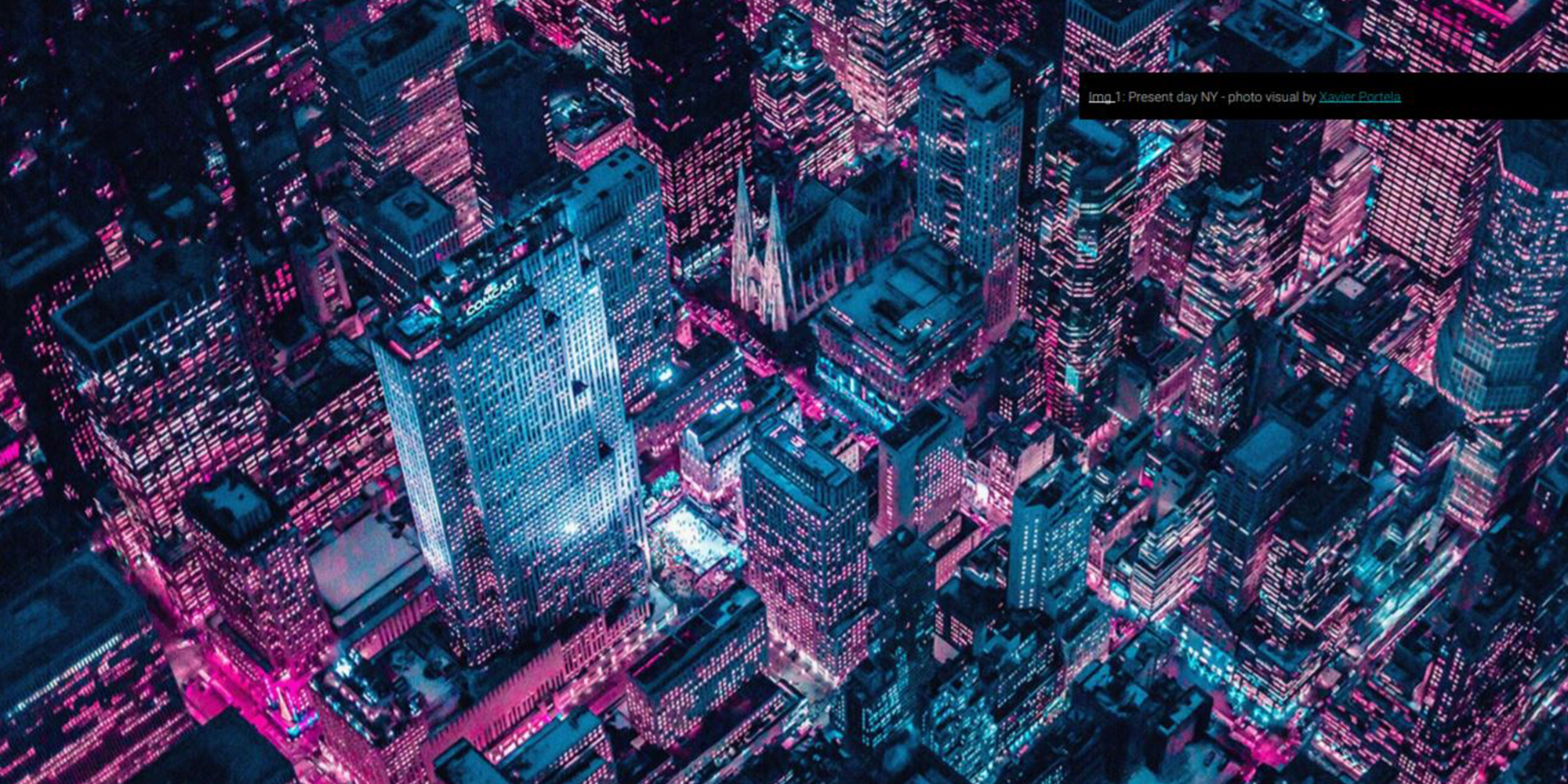
The urban setup we live in today is a result of the multi-layered evolution that our cities have gone through. If we take the example of cities of western countries, urban areas were known for issues, crises or challenges in the past. The urban crisis was a given, cities were deemed harsh, dirty and dangerous. On the contrary, the Asian cities that now loom so large were large, but they did not loom. These Asian cities had very little to do with the global economy and they were technologically backward. The major cities on the world stage were European and American for the most part, and many of them were known for the mess that they had in the cities.
Today we might have come over these issues, Asian cities like Shanghai, Tokyo or Mumbai are known for their presence in the global economy, cities from the west are setting examples for others to follow. But this has also generated a plethora of urban issues for which we seek a new solution today.
The word Urban crisis might not be there but has taken a new shape. Pedestrianization, climate change, traffic congestion are some of the many issues for which we seek the solution today. These common issues in almost all the mega-cities, in turn, started generating universal solutions. In this race of making the world a better place for ourselves, we have shaped the cities what we see today, that is what we promote, that is what we as an activist, architects, designers, planners, filmmakers or any other stakeholders of the city seek. This race, in turn, has given birth to a “Generic city” that we see in Megacities, be it, New York, Tokyo, Mumbai, or Shanghai. This poses a question for the cities of the next century or rather centuries.
What will make a city special? Will stakeholders of the city ever be able to build special places in the next century?
Your Utopia, my Dystopia
Cities of the 21st century are racing with each other to make a utopian society. They are setting up examples for each other to be followed by each other. This race is the process in which we are building a “Generic city” driven by wealth and technology. We cannot underestimate the extent to which, nowadays our cities feel the same. It is because the people in them are more the same than they once were.
These cities can be anywhere yet it may give you a sense of being nowhere. Today nowhere is virtually any place, every place that is the world of technology, accessible to all of us. Now every place is, to a greater or lesser extent, a product of its time.
Languages and cities
Does architecture yet again have the potential to make our cities di-generic? Can we save our cities from the destined by using languages?
If skylines around the world are looking too much the same, Is this because the new and important buildings are done by the big names (designers) from far away and not by the locals or the opposite is true? In the age where the information is easy to consume, what role does starchitecture play, or what role does local architecture play? Not only skyscrapers but museums, civic centre's, concert halls, bridges, libraries, opera houses all give cities part of their identity as well. Many of these buildings that succeed best and make places feel special may not be designed by local architects either, but by architects who were hired because it was thought that they could bring more imagination and a sense of freshness to the problem. This brings us to so many questions that are the starting point of untangling this issue:
- How can we reclaim our cities to act differently from each other in the next centuries through languages?
- What does the architectural design need to have or provide to disengage and distinguish itself from the evolving technology?
- Can architecture be more than an object or an icon? If so, how?
- What kind of urban programs do we consider to be useful to its inhabitants and what do they seek from the city?
- Can architecture again become a node or intersection for people? If so, how?
- What kind of space possesses a question that you are in a special place for all age groups where they can interact with each other?
Brief
Every city needs to be a place in which the basic idea of the urban fabric of streets and public places and decent architecture forms the foundation. But if that is all we have, and if we lose our desire for great and special buildings that break out of all of this then we have failed our cities just as much. The “Generic city” is not only a place with identical glass towers and freeways and malls. It is also the place that stops caring about things that are different and no longer builds buildings that break the rules and makes us feel that we are in a place that is like no place else. And that, the feeling of being in a special place, is one of the greatest gifts that any city can give us.
Can an architectural building in one of the “Generic cities” make the urban space/architecture special by using languages?
Objectives of the challenge
Your outcome can be a combination of anyone, two or all three forces that exist in a city. Function:
- Function: A function-driven outcome to make people understand that function matters in a technology-driven society.
- Local Forces: A combination of multiple local forces, like climate, people, culture, geography, etc.
- Global Forces: A unique unmatched style that breaks the boundary of architecture and design that we know today.
Shanghai
Shanghai is one of the largest cities in China by population, and the second-most populous city in the world, with a population of 24.18 million as of 2017. It is a global financial centre and transport hub, with the world's busiest container port. With the rich and vast hinterlands of the Yangtze River Valley, Shanghai quickly emerged as a booming international trading port.
Engagement in the global economy triggered Shanghai’s geographical advantages as a port city, which greatly strengthened its import and export function. Geographers who have studied the growth of Shanghai over the past four decades tend to sum up the pace of change with one word: Unprecedented. Shanghai has become a cornerstone of the globalization of China. It sprung to the level of a global city between 1990 to 2000 - through unparalleled industrialization, transportation, and commerce, which today almost every world city aspires to achieve.
Programme - ‘Languages and architecture'
’ Until recently, the story of English was broadly similar to that of other global and official languages: it spread through a combination of conquest, trade, and colonization. But then, at some point between the end of the second world war and the start of the new Millenium, English made a jump in primacy as a “global language”. One straightforward way to trace the growing influence of English is in the way its vocabulary has infiltrated so many other languages.
For a millennium or more, English was a great importer of words, absorbing vocabulary from Latin, Greek, French, Hindi, Nahuatl, and many others. And now everything we see around us is in English (Internet, Mobiles, Everything). As many as half of the world’s 7,000 languages are expected to be extinct by the end of this century. Can architecture help conserve this new threat of generalization through language by preserving knowledge systems that got us this far and are fundamental to our identities?
Site of the competition
Changxing Island, Shanghai
- Site Area: 40,000 sqm (~10 Acres)
- Max Ground coverage: 40%
- Coordinates: 31°19'03.3"N 121° 46'56.3"E
- Location: Changxing Island
No restrictions on building codes are applicable to this challenge.
The river Yangtze has been an important factor in shaping Chinese culture and society. Languages simultaneously play an essential role in communicating these ideas and philosophies like a river. No matter how globalized Shanghai may get tomorrow, the contribution of the river and language have been pivotal in crowning it as one of the megacities of the world. The center for languages finds its place right at the intersection of these ideas. The Changxing Island which connects Mainland Shanghai and Chongming Island is predicted to be the next micro city to keep up with the demands of the infrastructure of Shanghai. The Linguatheque- languages center is the biggest bastion of similar identities of the world which are under constant threat of globalization - while giving its people a chance to discover their roots through languages.
Explore other editions of Di-Generic city challenges:

Similar Competitions
Discover competitions you might be interested in



Design challenge to reuse E-waste

Bring back Drive In's

Illustrate the lost glory of Angkor Wat - Render Challenge

Photograph architecture without architects

