
Slum City
Challenge to visualize slums of 2080
Overview
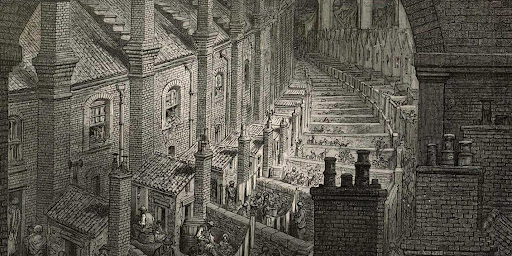 Fig: 1 – Desolation Row-Sensational Slums of 19th Century Britain (Credits-Gustave Doré, 1872)
PREMISE
The expression slum is used far too indiscriminately today. One speaks of informal settlements in more or less scientific terms, referring to different realities.
However, the way this term is perceived fails to do justice to the complexity of its history. In a short genealogy contained in “Planet of Slums,'' Mike Davis retraces the first definition of the slum, attributing it to a text from 1812 in which it appears as a synonym of “racket” or “criminal trade”. It was misunderstood by many people and in some ways still seen in the light. But the term has less to do with a place, but to the disadvantaged of social conditions.
The first spatial definitions of the phenomenon appeared in the late 19th century. Rapid industrialization accompanied by rapid population growth and the concentration of working-class people in overcrowded, poorly built housing gave rise to ghettos and then later to massive settlements, especially in developing countries.
As of the 21st century, informal settlements/slums have become the subject of growing interest as the number of people living in slums has grown to over 1 billion.
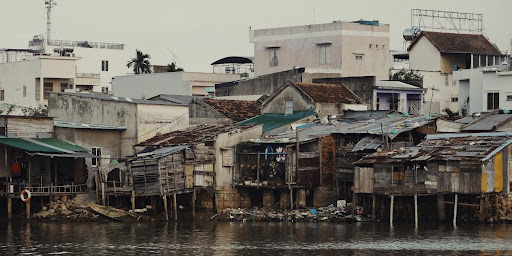 Fig: 2 – Vietnam Slums (Credits-Jordan Opel)
THE OTHER SIDE
Rapid industrialization in 19th-century Europe was accompanied by rapid population growth and the concentration of working-class people in overcrowded, poorly built housing and social disorganization. Today, more and more slums sprout and continue as main cities are becoming overcrowded.
The growing number of slum dwellers is the result of both urbanization and population growth that are outpacing the construction of new affordable homes. Slums are also a result of a combination of social, economic, political, poor planning, and economic stagnation. They usually grow from the central areas or at the fringes of a city. It is estimated about 3 billion people will require adequate and affordable housing by 2030. There are a lot of issues regarding how informal settlements affect the city and how people live there.
Although less often talked about is that they are places of tremendous resourcefulness, scrappy invention, and whose residents have every bit as much pride of place as the owners of a row of historic mansions, maybe more.
 Fig: 3 – Babel- An Illustration for futuristic Slums (Credits-Nivanh Chanthara)
BRIEF OF THE COMPETITION
With land scarcity rising each day, slums are going to be more prevalent, not only in developing economies but also in developed ones. This makes us question how these unplanned but resourceful places will evolve in the future? Many science-fiction movies, video games and animations like ---depict the hardships, issues, infrastructure and creativity of spaces better than the systematic urban report about it.
Landscapes of a slum are often coupled with the richness of community, resilience in the face of adversity, and the often heroic bootstrapping efforts of the inhabitants. While this may be true in certain aspects, the real problems affect them as well as the cities.
Can we as designers step into the fictional world-building to showcase solutions for real problems in a slum settlement? Can we imagine 2080, where the population would be out of control and the way out for the slum dwellers would be innovation?
The challenge is to envision a Slum City of 2080. Produce realistic visions of how the settlements would be functioning.
OBJECTIVES
- Research: Research on how the building technologies, cities and slums would develop in the next few years.
- Technical: Try to express through design/engineering how the city is self-sufficient for humans underwater.
- Expression: The graphic should effectively communicate its intent and landscape to the viewer.
The following objectives can be a point of beginning to conceive this design. Participants can free to form their programmatic outline according to the user group.
Any of the techniques mentioned in the brief may be utilised to achieve the desired outcome. The more creative the method, the better. Use any mediums, video, images, drawings, sketches, models, paintings - and communicate your design.
COMPOSITIONAL OUTLINE
The usage of photographs, stylised/ credited or otherwise, directly is strictly not allowed.
The use of lassoed graphics lifted from an existing image is limited to one-third of the total graphic.

