
Space Village
Challenge to design challenge a lower orbit neighbourhood
Overview
 Fig: 1 - Concepts like that of O’Neil’s cylinder is being privatized by billionaires like Jezz Bezozs to imagine space habitats
NORMALIZING SPACE TRAVEL
Space has piqued the Human mind since time immemorial. The night sky always posed an intriguing canvas for dreams and imagination. These dreams were first manifested into tangible realities in the 20th Century when political events fuelled the race to the stars. However, as Earthlings began to realise and battle problems closer to homes such as environmental challenges and political conflicts, important funding was directed away from space exploration. This slowdown is today being challenged by private companies who are spearheading the second wave of space exploration. For us laymen, this privatization of space travel means a level of democratization to a place that was once only accessible to government-funded scientists.
As we imagine an intergalactic future for humans it may be time for architects and planners to catch up and play more active roles to envision more neutral, holistic space habitation in a more diverse future.
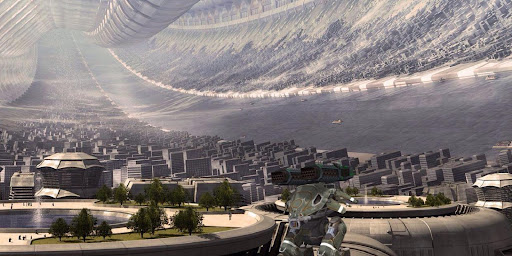 Fig: 2 - Lower orbit space settlement concept (Credits-National space society)
WHERE ARE WE
While space exploration today is largely driven by scientific research, as we move towards a more democratic, intergalactic population, there will come a time when there is a pressing need for habitation that functions even outside the realm of research. There will be a need for habitats that support inhabitants who can act in various roles to support human lives. There will be a need for a more neutral space neighbourhood.
Today space cities are imagined in 3 primary models- The terraforming of a near-earth object; expanding in the lower earth orbit and a completely independent form that can float through space.
Each of these visions is not without its challenges but given the currently available data, scientists believe that a settlement in the lower earth orbit is a promising near future endeavour. This settlement would have both the benefit of being a middle interface between earth and the space futures we imagine, as well as offering humans the first step to a life in space.
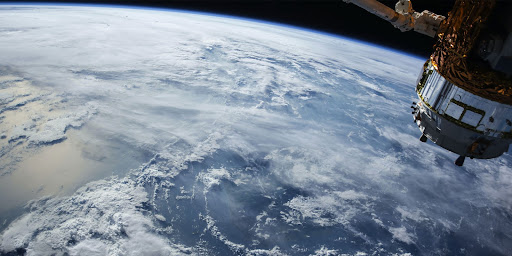 Fig: 3 -How will your lower space habitat look like?
DESIGN AN EARTH-BOUND NEIGHBOURHOOD
In 1970 Princeton physicist Gerald K O’Neill envisioned 100,000-person colonies in our lunar orbit. Anthropologist John Moore, however, indicated that populations the size of a small village i.e. about 160 individuals could maintain between 8-10 generations of a stable population. As we gradually move to a more democratic space future, these envisioned colonies would be composed of various individuals in everyday human roles. Furthermore, they would seek more diverse habitat solutions, that are not limited to solely scientific research, much like the neighbourhoods we inhabit on earth.
Brief: The Challenge is to understand earth-bound neighbourhoods and imagine one such neighbourhood module for a population of 160 in the lower earth orbit.
The design must take into consideration the extreme conditions of space and the challenges to habitation they pose.
OBJECTIVES
- Planning: Understanding and defining a plan for a future space habitat
- Organisation: Programming and defining different habitat opportunities available to habitants
- Form: How is Habitat optimised for the native residents' survival in space conditions.
- Replicable: The designed module should be replicable and work as part of a system that cohesively would make a space colony.
PROGRAMMATIC OUTLINE
The challenge is to create a neighbourhood for everyday life in the Lower Earth Orbit. The design should be replicable and work in tandem with other lower earth colonies. One unit/station that houses up to 160 individuals should be no more than 3200sqm. The design should include:
- Adequate housing solutions for 160 habitants
- At least 1 mixed-use recreational space
- Space for research
- Adequate essential services such as sanitation, healthcare, power and transport infrastructure (this may be a shared service between multiple neighbourhoods).
For the purpose of this project, it is assumed that this neighbourhood will be part of a larger system of settlements that would cater to a variety of human needs. However, you may include any other service that you feel is essential to your neighbourhood as long as each unit does not exceed 3200sqm. Participants are urged to show the working of the space neighbourhood on a conceptual level.
Similar Competitions
Discover competitions you might be interested in




The Global Benchmark for Graduation Excellence


The Global Benchmark for Architecture Dissertation Awards
