

Tedzukuri
Design competition to revive traditional Japanese crafts
Overview
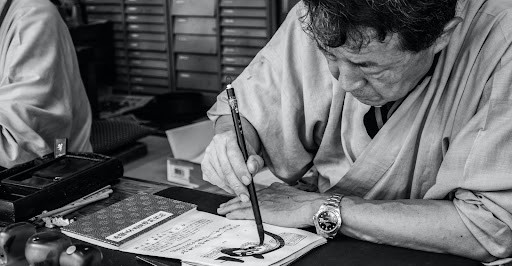 Fig: 1 - Art is part of the intangible heritage that is varying in every region but celebrated by all.
CULTURAL ART HERITAGE
Many cultures around the world have a deep-rooted craft and manual arts heritage that is an integral part of the inherited social and cultural identity of the community. They often reflect the culture, its principles, its aesthetics and even the socio-political nature of the people it represents.
Unfortunately with the boom of technology these traditional handicrafts are slowly being forgotten.
Their dependency on skill and practice with often little economic recognition means that many among the younger generations choose to not continue in their family’s handicraft history.
This distancing from traditional craft cultures is further fueled as people move to urban spaces where traditional heritage is often replaced with rapid modernisation
Thus, in order to preserve these cultural crafts and with it a cultural identity there is an urgent need to repopularise and revive these traditional practices.
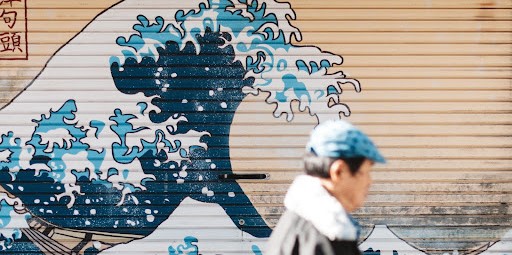 Fig: 2 - Japanese art has evolved with influences from world cultures and adapted them to suit their own aesthetic preferences.
JAPANESE ARTS AND CRAFT
Japan has an awe-inspiring span of handicrafts that make its cultural history. Recognised the world over, Japan is known for its artistic prowess that includes the fields of calligraphy, flower arrangement, origami, pottery, poetry, an exhaustive list of fabric related arts and even glassware production.
Unfortunately, owing to a concoction of technology, low birth rates and low demands there are fewer and fewer Japanese craftsmen practising and teaching the traditional arts each passing year.
Yet, Japanese art is not just restricted to creating artefacts, it is in fact a way of life and meditation. Practitioners spend years mastering their art and in the process attempt to achieve the Zen way of life. They are deliberately slow and purposeful processes that reflect cultural identity.
H3: Can we in any way help promote and increase awareness of Japanese cultural arts?
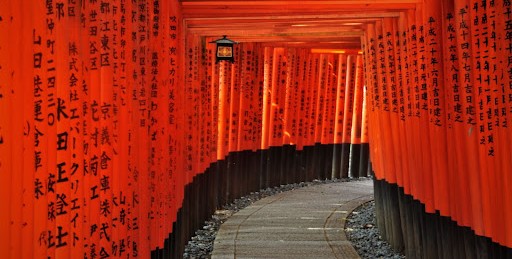 Fig: 3 - The cultural skills and artistry of Japan is being modified to suit the contemporary lifestyle of people today.
JAPANESE CULTURE SHOWCASE
If this rich craft culture that is intrinsic to Japanese culture and way of life is to sustain itself in the future there is a need to create spaces that help bring these arts to notice. There is a need for spaces where interested individuals can learn and engage with these processes and carry them into the future.
Brief: The challenge here is to design and create a crafts center for traditional Japanese arts.’
The center should be able to showcase the plethora of crafts that are native to the nation and celebrate their cultural history. The space should also allow individuals who may seek to learn the crafts to inhabit the space and learn from the craftsmen.
You may choose one or many of the crafts that you would like your design outcome to focus on. Remember that Japanese art is a slow and meditative process that requires serious engagement.
OBJECTIVES
Function: How does the outcome function for various stakeholders in the chosen context
Public: How does the space allow for opportunities for the public to engage with these crafts for both short and long periods of time
Design: How does the design reflect upon the cultural history that the design aims to revitalise.
Educate: How does the space create opportunities to learn about Japan’s cultural crafts history.
SITE
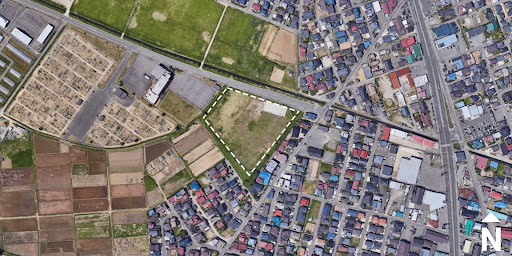
The site for this project is located in Akita, Japan. Akita is home to 4 traditional handicrafts practices as designated by the Ministry of Economy, Trade and Industry: Kabazaiku, Kawatsura lacquer, Odate Magewappa, and Akita Cedar Casks (in your design outcome you need not limit yourself to these crafts alone). The site is located close to a residential area on one side and farmland on the other side.
Site Area: 11,398 sqm
Height Restriction: 10 meters
Ground Coverage: 50%
Maximum FAR: 1
Coordinates: Akita Japan
PROGRAMME OUTLINE
The following area programme is the beginning point of your design. The participants are free to modify or add to the activity list as needed.
- Artist stay facility: 10-20 rooms of 25 sq.m each
- Auditorium: stage and seating, mechanical room, green room, storeroom, loading/unloading dock, lounge, counter, etc. ~ 1000 sq.m
- Exhibition space/art gallery ~ 300 sq.m
- Workshops/Craft Bazar ~ 400-500 sq.m
- Library ~ 200 sq.m
- Food court: seating, storage, kitchen ~ 600 sq.m
- Amphitheatre ~ 800 sq.m
- Souvenir shop ~ 60 sq.m
- Visitor centre: ticket booth/office, visitor’s lounge and reception, information kiosk ~ 60-100 sq.m
- Administration: director’s chamber, conference room, curator’s office, storeroom, pantry etc. ~ 200 sq.m
- Circulation (30% of built area), Services and Parking
- Landscape areas like a terrace garden, green roof, gardens, and so on.
Similar Competitions
Discover competitions you might be interested in




Bring back Drive In's


Challenge to design an urban locus of culture and heritage


The Global Benchmark for Graduation Excellence


The Global Benchmark for Architecture Dissertation Awards
