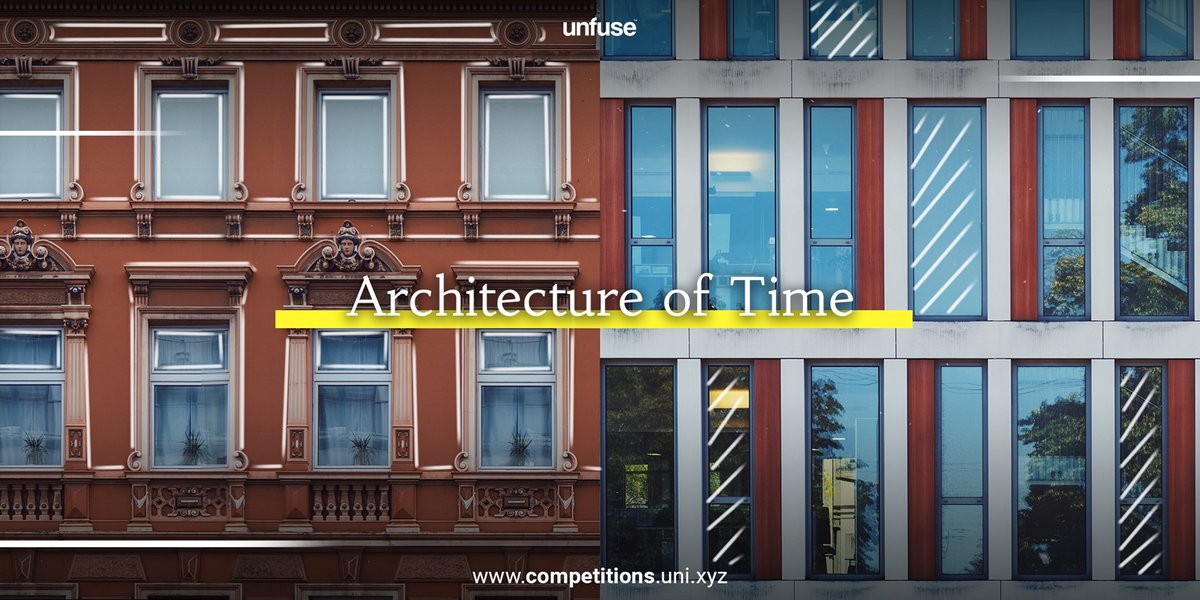
The Architecture of Time 2020
Architecture that adapts to the needs of time.
Overview
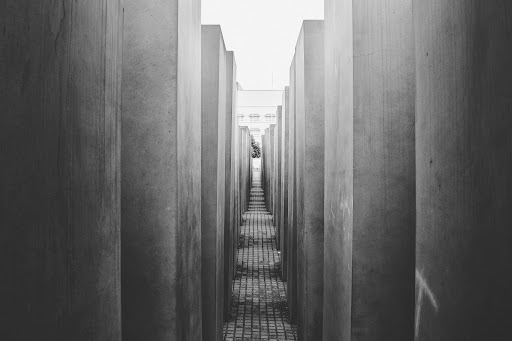
Img 1: Image indicative of the intent of permanence and the the role of architecture in history.
Artefacts in history
Only a few man-made artefacts/ forms/ organisations survive several decades or even millennia. Most of these are not built with the intent of longevity but are mostly accidents of time and history.
Often defined by constant change, buildings thrive for expansive spans of time, contents within them evolving and adapting to the needs of the time, playing a key role in the community until it can no longer turn over to serve a purpose. Eventually leading to its dysfunction.
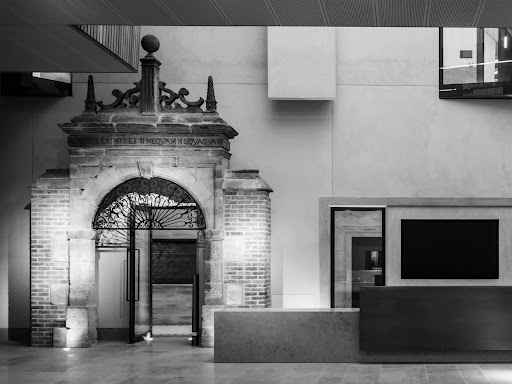
Img 2: Wilkinson Eyre inserts contemporary details into Giles Gilbert Scott's Oxford University library. Source : Dezeen
Survival of built forms in time
But why do we rely on accidents to evade the long drawn out decay of built forms? What crucial factors are we missing in order to be able to make this decision ourselves? What elements are we ignoring that would act as a catalyst to extend the lifeline of a building?
Are all elements that contribute to successful design entirely tangible? Consider ‘time’. Society always functions in flux. Consider constantly evolving ‘user needs. Think about how all three of these interact to define built forms. Look into how programmes are designed and outlined.
Why is it that we focus so much on the now, that we do not stop to maybe think that even the tiniest user function or need might change?
Why do we scrimp on even the least bit of space to change?
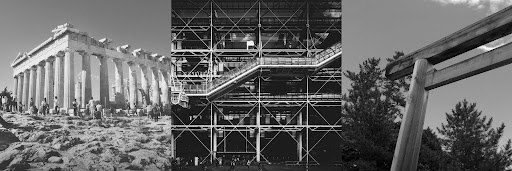
Img 3: The Parthenon The Centre Pompidou, and the Ise Grand Shrine of Japan (left to right).
Examples over the world
Serving as one of the oldest examples, the Parthenon was originally built to be a temple, but over the course of its 2500 year history, has assumed the role of a treasury, a church, a cathedral and a mosque, in addition to serving as a army barrack and a storehouse for ammunition before it became the tourist attraction it is today.
In context is another great icon of the 20th Century. Designed as an ‘evolving spatial diagram’, the Centre Pompidou, is heralded for its ability to free up indoor space, with each of its seven 500 m2 floor being entirely uninterrupted by load bearing structures, and its ability to be divided up and reorganised at will, ensuring maximum flexibility.
Another example is the Ise Grand Shrine of Japan, estimated to be around 2,000 years old, it is rebuilt every 20 years, upholding the Shinto belief of the death and renewal of nature and the impermanence of all things. The shrine itself has evolved over the years, all the while managing to keep its essence including traditional construction techniques.
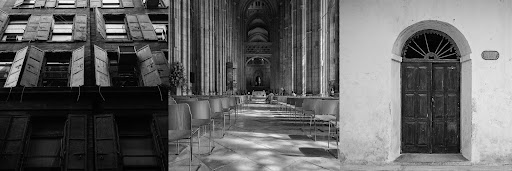
Img 4: Images indicative of the changes of time on architecture and space.
Brief of the competition
Understanding how multiple factors contribute to the longevity of a built form, and how not all of them might be tangible, change and time come into focus.
Hiding in plain sight, time and change doesn't come one without the other. Slow to begin and then all at once, change shifts and transforms, clear only in ways that only a time-lapse spanning a decade could unfold.
Simultaneously navigating the grasp of time and change are constantly evolving societies, user needs and functions.
Like change and time, the act of learning is something that remains constant.
Design Challenge: To develop an architectural concept that encapsulates the existence of a building as a process - in a case example of a skills development centre.
Programme Outline
As the world becomes a smaller place, how do we foster continued and constant leaning? How do we bridge the gap between rapidly emerging skills of the 21st Century and the common man?
Can we, as a community of designers, ensure that our built spaces also evolve at an equally fast paced run to accommodate the quick morphing of user needs and behaviours?
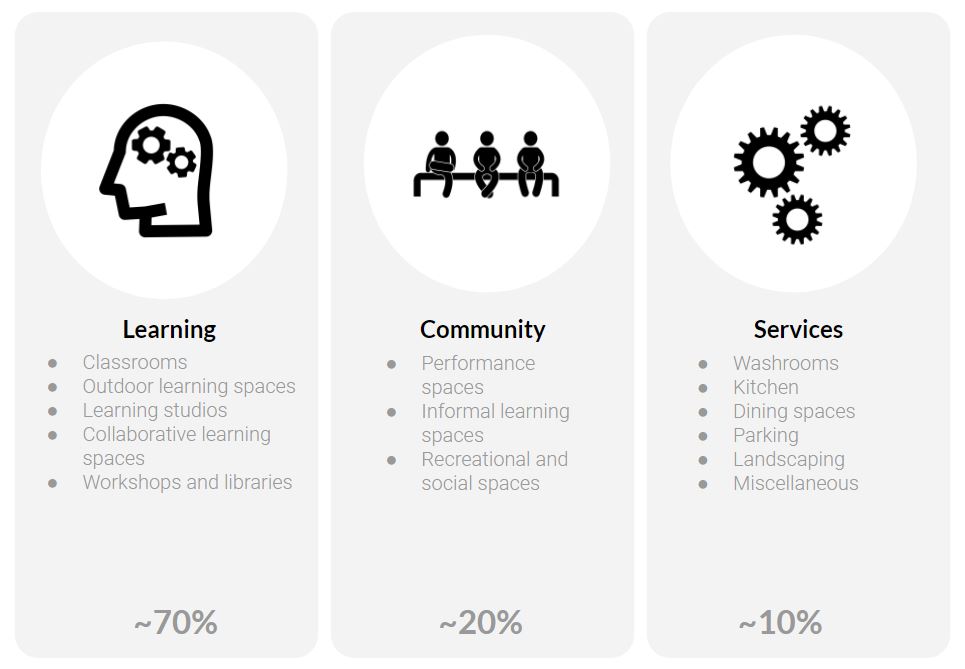
The programme of the Skill Development Centre must include the above mandatorily. However, the participants are free to add other programmatic facilities depending on their design.
Objectives of the challenge
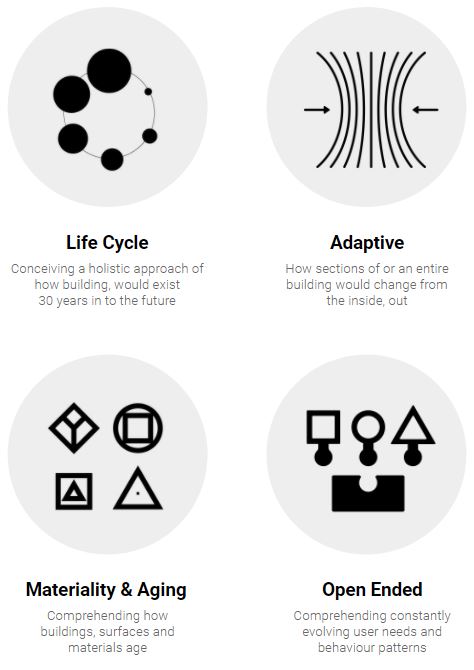
The following objectives can be a point of beginning to conceive this design. Participants can assume their own contexts and users before initiating their design process.
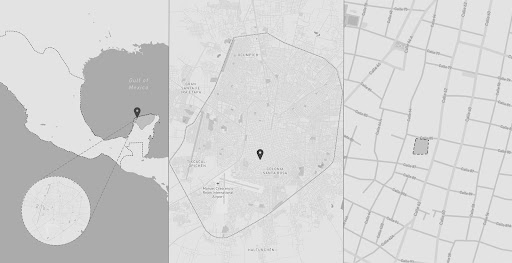
Img 6: Image indicative of the context of the proposed site.
Mérida, Yucatan, Mexico
The State Capital of the Yucatan Peninsula, Merida is a prime location for economic growth and investment (seen by the Yucatan state economy growing at three times the national average). However the rapid influx of population into the city due to the increase in economic activity has led to unplanned and unchecked development. Urban poverty and an uneven distribution of resources and services can be seen can be seen in certain pockets of the city.
Traditionally having been isolated from the rest of the country by geography, creating a culture unique to the region, today Merida also the Cultural Capital, an active hub of cultural centers, museums, art galleries, restaurants, movie theatres, shopping malls, and leisure facilities.
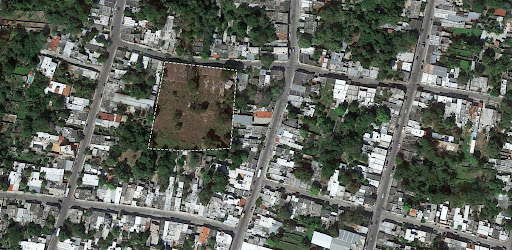
Img 6: Image indicative of the boundaries of the site.
5. 4 Km from the International Airport (Aeropuerto Internacional de Mérida Manuel Crescencio Rejón), the site is in the heart of Merida - the Centenario, one of the most expansive historical centres in the Americas.
The neighbourhoods of Mérida, much like the rest of the region has managed to retain its Mayan, Spanish, French, British, Lebanese roots and is home to highest percentage of indigenous population within any large city in Mexico.
- Site area : 8892 sqm
- Height restriction: 3m
- Site coordinates: 20°57'07.4"N 89°37'42.4"W
Judging Criteria
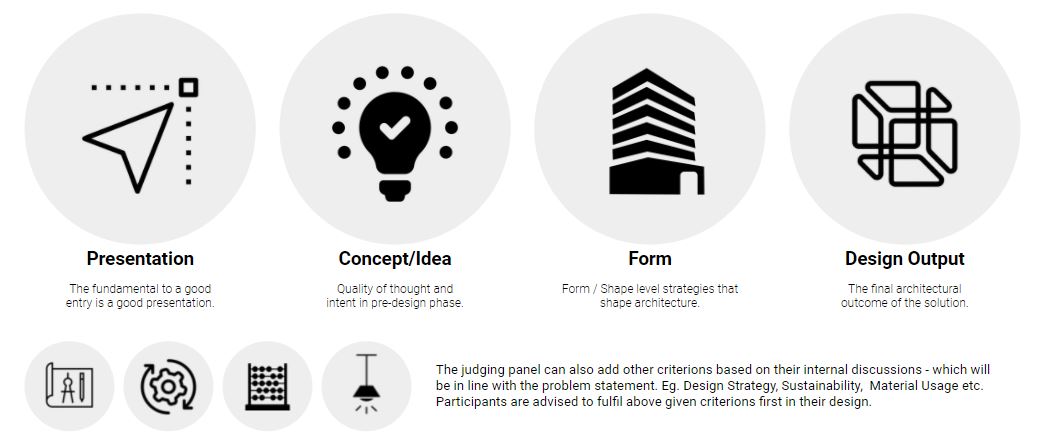
The entries will be judged by an international jury of the competition on the following criterions:
About Unfuse
Unfuse serves as a unit for Uni in the field of Architecture. It intends to break the fusion of traditional design barriers and methodologies by making it a platform for experimentation and conceptual exchange of ideas in architecture, urbanism, society, culture and ecology. It is a research initiative dedicated to providing opportunities for designers from all domains to explore ideas that go beyond the boundaries of architectural discipline and enrich our built environment; thereby opening up possibilities for promotion of architectural thought at a global level.
Queries: support@uni.xyz
Discover other competitions: https://uni.xyz/competitions
Facebook: https://www.facebook.com/unixyzglobal/
Instagram: https://www.instagram.com/uni.xyz/
Discover FAQ’s about this competition on our help forum here: http://help.uni.xyz/