
The Third Space
Challenge to visualize a collision of the future and past
Overview
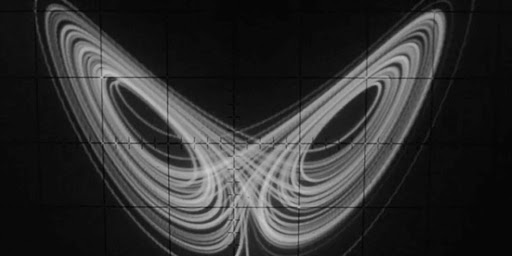 Fig: 1 – The chaos theory-The butterfly effect suggesting that the smallest actions can lead to drastic reactions/changes (Credits-ripplemarkg.com)
PREMISE
Free will is the gift to us to choose between different possible courses of action unhindered. What you are now is so far a result of the choices you have made.
The same goes for mankind, the society as a whole exists as it is right now due to the specific choices either groups or even individuals have made. While time can’t be reversed in the world we live in, we have to live with the choices we make, especially as a society. The invention of weapons, nuclear bombs or certain devastating technologies is an example of living with those decisions and also learning from them.
In the world of science fiction, the multiverse theory provides comfort in the form of alternate realities/different worlds of each choice we were to make.
The third space is one of those realities, where our world is completely different due to the early discovery of technology. It is a near utopia with our history, and cultural landscapes intact.
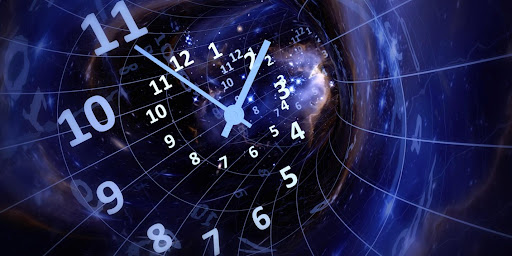 Fig: 2 – Travelling through time (Credits-Shutterstock)
IDENTITIES
In this time of globalization when we see our public squares and communal spaces, the notion of cultural identity among them feels left out. The uniqueness and diversity of regions in cities around the world seem to have become the same. While the past can’t be brought to the present, we can always hope for better futures.
The idea of this challenge is to shake our perception of the public environments through imagined futures merged with the cultural fabric of civilizations that have existed in the past.
The question: What if you had a time machine to move across alternate realities and you stumble upon a space where our past choices as communities have altered the present we know and have accelerated technological advancement in the 15th century itself.
What could our urban spaces in the context of future advancements but with the backdrop of a Gothic church look like?
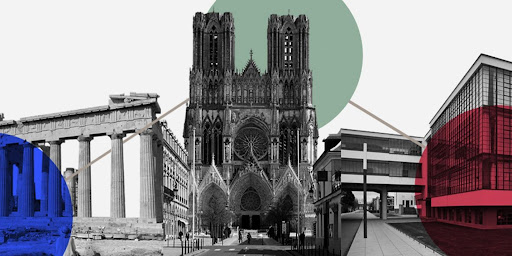 Fig: 3 – Architecture through time existing at one place (Credits-Rethinking The Future )
BRIEF OF THE COMPETITION
Let’s take some of the common structures and topics we see today and place them in the olden context. What would advancement in science look like in the 15th-16th century? What would the step-wells, forts and temples look/work like with the advent of technology?
Such questions tend to make our thoughts run wild and also bring up some important questions like where we lost most of our culture and why weren't integrated/changed/transformed with evolving time?
The challenge here is to visualize what some public spaces would have looked like if they were built in the same old architectural styles but in; An alternative reality, where we can also travel at the speed of sound.
The design brief is to visually recreate a Public Square in a cross-over between Renaissance, Mughal architecture and the futuristic scape of 2050.
Recreate illustrations of what different elements of a public square would’ve looked like in the times of the renaissance/15th-16th century with materials, aesthetics, and social norms back then. Merge it with technology that you feel will become a part of our lives in the next three decades.
The aim is to make it relatable to upcoming technology but in a different period.
OBJECTIVES
The challenge is visual-oriented hence, your imagination can soar. The idea is to reimagine the features, experiences, activities, people, technology and lifestyle trade and in a light based on the past as if civilization never vanishes but becomes advanced and futuristic.
You can submit two large views with small details cropped out and explain for a clearer understanding. Include process level sketches as well.
- Awareness: Primary aim is to inform and spread information about this theme in an interesting way.
- Expression: The graphic should effectively communicate its intent and idea to the viewer.
- Lucidity: Clarity in composition and intent to communicate the idea better.
- Visual Delivery/Aesthetics: A distinct visual language to help the graphic stand out for better communication.
The objectives can be a point of beginning to conceive this design. Participants can free to form their programmatic outline according to the user group.
DELIVERABLES
You have to deliver a visualization outcome in the form of an architectural illustration. Where the outcome represents the given aim. Three visuals need to be submitted. The images should be of the size of [2800px × 3200px] in portrait or landscape digital format (JPEG only)
The visualizations are to be entirely rendered and digitally created. The usage of photographs, stylised/credited or otherwise, directly is strictly not allowed.
The use of lassoed graphics lifted from an existing image is limited to half of the total graphic content. (The guidelines are indicative and are placed only to reduce plagiarized artworks - any infringement detected or reported will be notified, and may be removed from competition if found guilty)
The list of deliverables are:
- Title
- Subtitle
- Views x 2
- Detailed views x 3
- A few process images
- A statement in about 100 words supporting the idea - you can attach this as an additional image below the visuals.

