
Under the light
Challenge to design spaces under public lighting
Overview
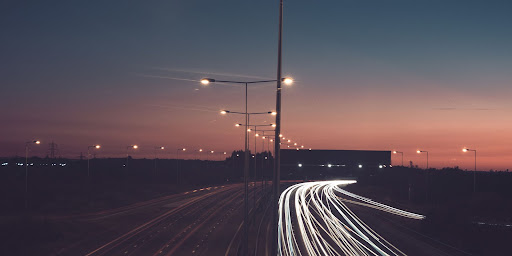 Fig: 1 - Streetlights enlighten the urban experience
POTENTIAL OF SIMPLE LIGHTING
A streetlight is a simple proposition–typically a pole and a light- yet it's an important and often unappreciated feature of our urban experience.
Good lighting, while unnoticed, dramatically affects our experience of spaces. In the public world, it not only contributes to safety and illumination, but it also draws people, encouraging lingering that further boosts economic activity and community interaction.
Streetlights need very little to be successful. They need not be glaringly bright or be magnificent sculptural spectacles, though that sometimes may add identity. They simply need to effectively light a place. Yet its omnipresence in our lives can’t help but make one wonder whether this neutral resource may allow additional functions that enhance the community experiences.
Can we attempt to think of ways to maximise the potential of these simple lighting elements?
 lighting design, architecture design, rural design, urban design, rurban, light, design, lighting, infrastructure, culture,
RURAL LIGHTING
India has an exceptional culture of ‘jugaad.’ Nearly every part of Indian lives are characterised by these piecemeal attempts to appropriate and personalise various different commodities- uses and meanings not always designed for.
This plurality allows India’s vastly diverse economic population to make the most of its available resources. This culture of plurality develops new dimensions of relevance in rural environments.
The vast economic disparity of India means that most rural environments lack appropriate infrastructure and access to technology. As a result, public commodities become ever more pertinent.
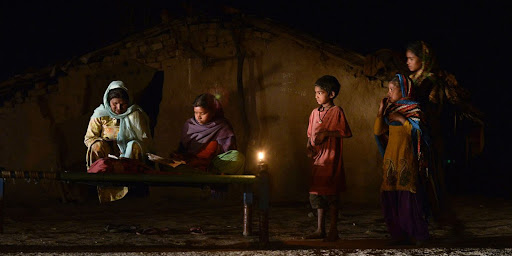
One example of this comes to us from the world of lighting. As the government incrementally introduces lighting infrastructure to rural environments, these simple fixtures gain new public relevance to the rural community.
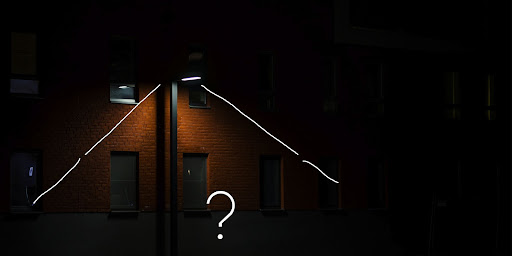 Fig: 3 - How can we enhance the available rural infrastructure creatively?
BRIEF OF THE COMPETITION
In a culture of jugaad it is often difficult to anticipate how the user makes meaning of the product in front of them.
In rural India, lighting is of little use for transportation, which is often rare and few in numbers. Instead, lighting becomes important public spaces, landmarks, shrines and even spaces for students to study. If one can make meaning of a simple streetlight in such ways, what if the streetlight actually created affordances for these uses?
The challenge here is to design the streetlight and spaces under its streetlights to accommodate the various needs the community develops in these spaces.
The aim of this challenge is to help participants understand how rural public spaces under street lights function and design multifunctional prototypes that create affordances for existing use while allowing the culture of Jugaad to expand its imaginations. The function/activities of the community under the light can be assumed by the participants as per the Indian rural context.
OBJECTIVES
- Functionality: How does the designed solution cater to the various functions tied to public lighting in rural India?
- Modularity: How does the design change and adapt to the needs of the users
- Materiality: The designed solution must be low-cost and durable as well as easily fabricated.
- Robust: The design outcome must be able to resist vandalism
CONSTRAINTS
SIZE:
While the height of a lighting fixture is determined by the street type, for the purpose of this project you must assume that the light pole is no taller than 7m.
While the design can be made of deconstructable components ensure that when assimilated the design measures no more than 2mx1mx1m (lxbxh). When expanded the design should take no more area than 2sqm.
The design must also not hinder any transportation and must adhere to safety guidelines for these often road adjacent public spaces.
USER:
This project is intended to be located in a rural setting in India. As a consequence, the main user group is intended to be rural communities and individuals. For this project, the hypothetical community is assumed to be economically limited and thus access to technology and infrastructure is hindered.

