
Underwater Web
Architecture Competition - Biomimicry in underwater tourism
Overview
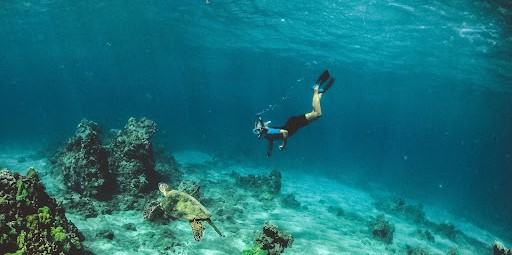 Fig: 1 - Diving gives people a unique opportunity to witness the marvels of marine life in their natural habitat.
DIVING DEEP UNDERWATER
Humans are intrinsically biophilic. That is to say that we are often drawn towards nature and its spectacles. A common manifestation of this need to connect with nature emerges in water-related activities. In the past few decades, this has led to unprecedented growth in the Scuba diving Industry.
In 2016, it was estimated that Scuba diving was globally generating about a billion dollars with a steadily rising rate of certification that was estimated to stand at 23 million.
However, scuba diving is not without its fair share of challenges including slowly declining audiences due to the global economic downturn and the negative environmental impact divers cause, both directly and indirectly, to sensitive marine ecosystems.
Therefore, it becomes important for this massive tourism market upon which many livelihoods depend to substantially and responsibly reinvent themselves to sustain in the future.
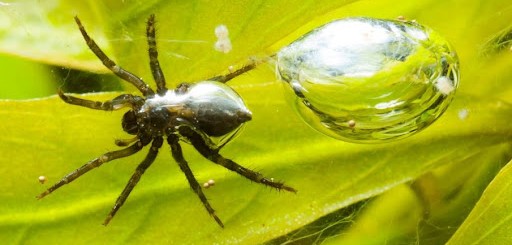 Fig: 2 - Among many species, the spider is one that shows unique aquatic behavior. (Credits: Stefan K. Hertz)
MIMICKING NATURE IN DESIGN
Intriguingly, solutions to a lot of human problems are often present in our natural environment and need only to be understood and adapted.
This project intends to explore the opportunities that one can learn from the Diving Bell spider. These subsurface arachnids spend most of their lives underwater with the help of ingeniously crafted webs that resemble diving bells.
These small aquatic webs essentially act as gills for the spider to breathe from underwater. As the spider breathes in the oxygen the web membrane draws oxygen from the water surrounding it and dissipates the carbon dioxide within.
Unfortunately, these webs shrink with time due to nitrogen diffusion and therefore, the spider can not dwell permanently underwater.
As architects and designers, how can we adapt these little 8 legged creatures' ingenious technologies to create novel and sustainable experiences for human divers?
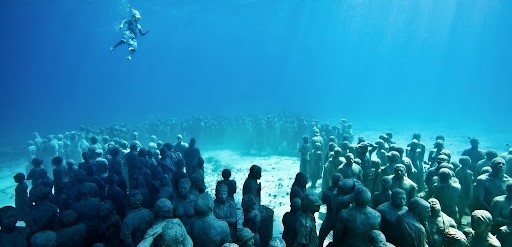 Fig: 3 - Biomimicry is a concept that can help connect all marine enthusiasts to the habitat. (Credits: Travel Away)
DIVING GALLERY FOR UNDERWATER TOURISM
Brief: The architecture competition brief calls to explore and imagine the opportunities we can learn from the diving bell spider and adapt them to create an underwater viewing gallery for divers.
The gallery is intended to be a submerged space for divers to enter and observe the natural marine ecosystem from a safe distance that does not disturb the organisms.
The design exploration must attempt to first understand and explore the natural phenomenon that is the diving bell spider’s home. Strive to understand how it works and how it supports the spider's lifestyle. Subsequently, you must attempt to employ your findings in creating a space that is valuable to scuba divers and therefore, helps boost the tourism economy that is linked to diving.
The aim of the competition is to come up with unique design solutions that are conscious and sustainable and not limit, hinder or harm the existing natural marine ecosystem.
OBJECTIVES
Form: The design must employ insights and inspiration from the diving bell spider in its form and functioning.
Sustainable: The design must employ sustainable practices in its design, materiality and processes.
Scalable: The design should be easily replicable so that it can be scaled in various parts of the world.
Working: Illustrate the functioning of the design outcome and how it borrows from the working of a diving bell spider's nest.
SCALE
The underwater gallery is essentially intended as a space that can be entered by divers to enjoy marine life without disturbing it. While you may choose to construct your design outcome with multiple galleries that may or may not be connected, a single gallery unit must not be any larger than 9 sqm and be no taller than 3 meters in height.
The site for this project is intended to be Cancun, a city in Mexico that has already attempted to implement alternate diving sites to protect and regenerate its natural reefs. There is no specific site for this project but it may be helpful to begin your project by looking at the existing diving sites in Cancun.
How it works: Much like a viewing deck in a wildlife park allows enthusiasts to inhabit the space and observe the natural organisms without disturbing them, the Underwater web is intended to support the same goal but underwater. The viewing gallery is intended to be underwater where visitors can enter and spend time observing the undisturbed natural ecosystem.




