
Untainted
Challenge to design a kindergarten inspired by Brutalism
Overview
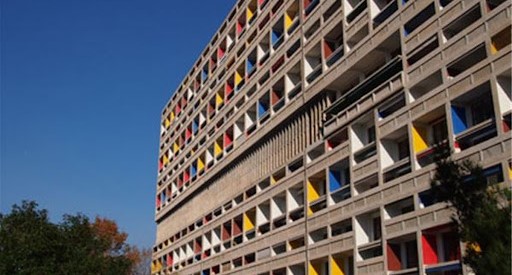 Fig: 1 - Brutalist architecture is marked by uniformity and modular building units that reflect a level of consistency. (Credits: Rethinking The Future)
PREMISE
Brutalism – this 20th-century architectural style, sure stirs up a lot of controversial debates. Despite the diverging opinions of people on this style, portraying simplicity and honesty in its use of concrete was its main motive.
During its short-lived popularity, it was preferred since the economics of a brutalist construction were cheap, and its stark look was perfect for authoritarian buildings and landmarks. But soon after, these imposing structures were started to be seen as gloomy, intimidating and outdated.
But like all things in time, brutalism as a style has reawakened, and people are vouching for its continuance and survival. In the 21st century, they are able to see past its heavy look, into its inherent sculptural quality. Its sleek design is capable of playing with light and shadows creating interest and a contrasting dynamism in spatial design.
Is brutalism ready for a comeback?
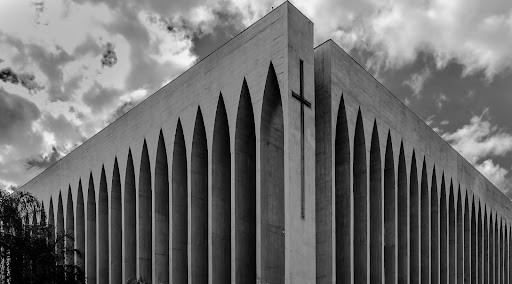 Fig: 2 - The style is characterised by raw and heavy-looking materials, unfinished surfaces, unusual shapes and straight lines.
SETTING
The renewal of brutalism has emerged to only protect the existing marvels of its era. The raw expression in these structures is better appreciated, especially in a time where we are focusing on creating an unadulterated way of life for ourselves.
Brutalism, in architectural practice now, could not survive in the present climate, but its core principles and essence are timeless. Use of any material in its pure form, free of ornamentation requires skill and ingenuity. Seeing brutalism as an objective style, it can be conferred that this style is motivated with clarity, its essence is a representation of ethics.
This movement has always encouraged public interaction and harmony and this quality can be put to good use, even today. With time, many styles get left behind, but the only way to revive is to merge them with styles and technology of the new age.
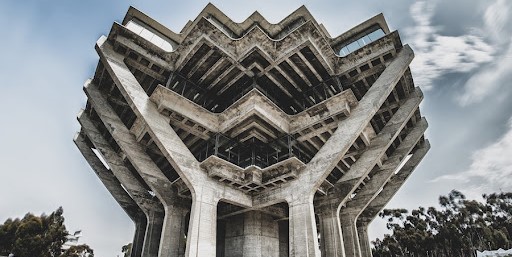 Fig: 3 - The style now allows for design modifications that make bold yet relatable statements. (Credits: Rethinking The Future)
BRIEF OF THE COMPETITION
The challenge is to design a kindergarten and daycare center for children (3-6 years old) that is inspired by the Brutalism architecture style.
The manifestation of brutalism in this centre design must be done keeping in mind the functionality of the spaces. Privacy and interaction must be guided in the layout as per the nature of the activity.
The balance between aesthetics and functionality, as well as open, semi-open and closed learning spaces. The centre is to be built for kids so special considerations must be taken to ensure a safe and secure environment is created.
The aim of the design is to learn more about the Brutalism style and how much of an impact a powerful aesthetic can have on its surroundings. Pairing it with a distinct activity like a kids area as opposed to institutional buildings is done deliberately, so that the participants are free from the external influences of brutalism but are instead able to focus on extracting its essence into the design, with appropriate adjustments.
OBJECTIVES
- Concept: The representation of the theme in the design must be adequate. The center will create a world of its own through its concept and narrative.
- Aesthetic: The form taken by the structure must do justice to both the challenge theme and the user group. The structure must be attractive and inviting.
- Material: Any sustainable alternative of concrete can be used as the material. (Ex: Hemp concrete etc.) The material palette must be kept to a minimum and variations achieved through its form.
- Convenient: The layout of the design must be accessible and efficient for children to navigate through on their own. Safety is a major design consideration.
- Context: The design must respond to the (existing) site conditions. The wider socio-cultural, economic and environmental settings are to be considered in the design approach.
SITE
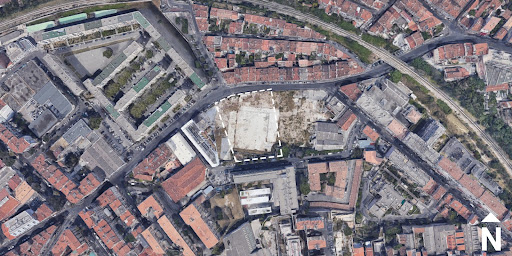
Marseille is one of the oldest cities of France. It is a port city with cosmopolitan culture. The city has many ancient buildings and is a famous tourist spot. Various architectural styles have influenced the architectural heritage of the city like Romanesque, Baroque and so on.
The Unité d’Habitation represents the birth of brutalism and this building is located in the city. Built by Le Corbusier, it is now a UNESCO world heritage site. This movement gained traction in the city and all over France.
The site is located in the neighbourhood of Saint-Mauront, accessed from the Rue Loubon Road. It is surrounded by a child care agency and residential settlements, which would present an ideal location for this typology to flourish.
- Coordinates = 43°18'43.5"N 5°22'49.1"E
- Site area = 4385.50 sq.m
- Height restriction = 6 metres
- Maximum FAR = 1
- Ground coverage = 30%
Setbacks (as per CAD plan)
Ground Coverage refers to the ratio of maximum allowed solid/permanent footprint on the site to balance the built and unbuilt spaces. You can utilize the other 60% of the site for any temporary intervention/recreation.
PROGRAMMATIC OUTLINE
- Spaces to learn 45%
Classrooms, Play rooms, Media rooms
- Spaces to play 30%
Playground, Courtyards, gardens
- Services 25%
Administration, Offices, Dining and kitchen, Child care room
Similar Competitions
Discover competitions you might be interested in




Challenge to design public laboratory


The Global Benchmark for Architecture Dissertation Awards
