
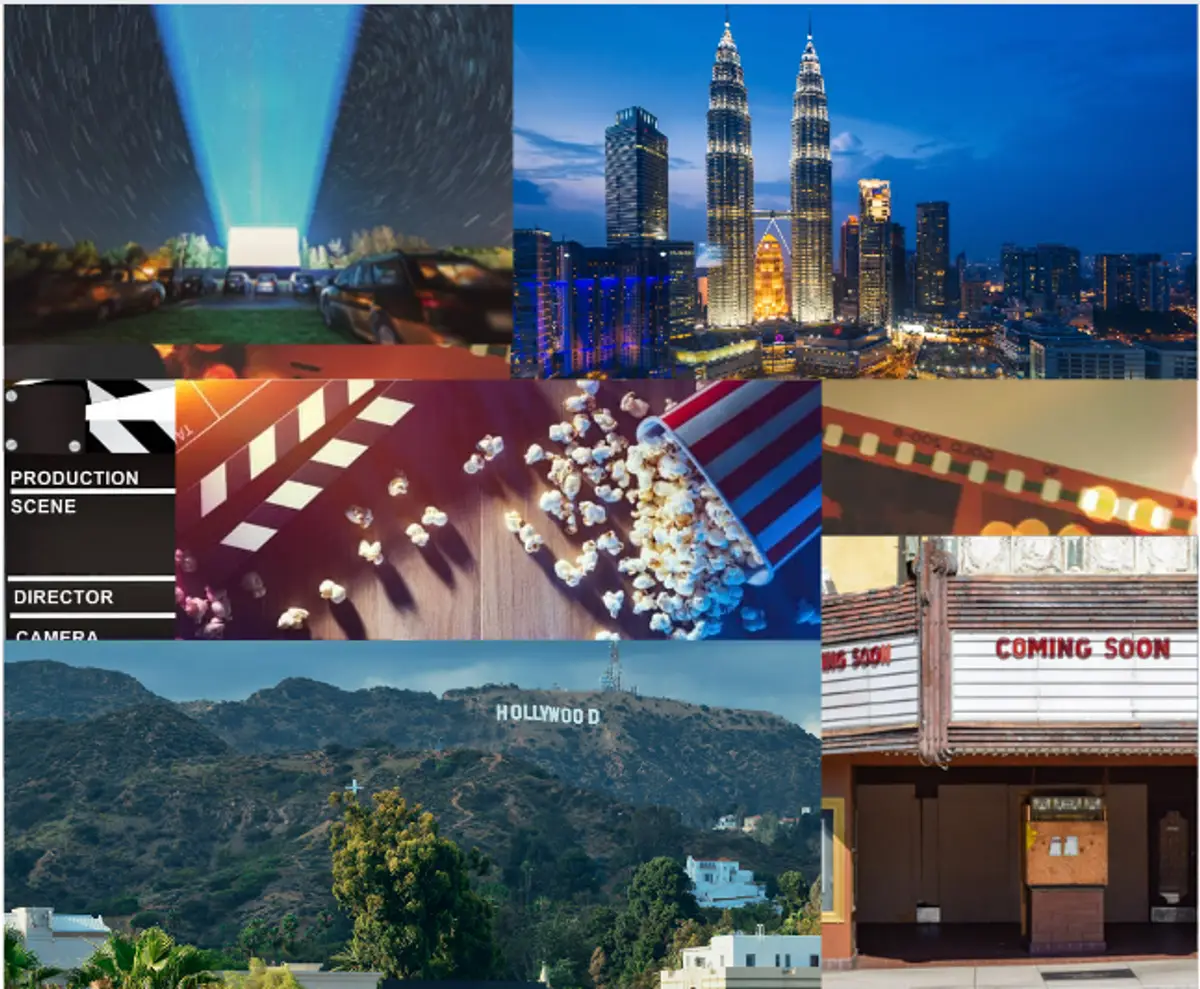
Architecture elicits feelings in the films
The marriage between architecture and cinema is a captivating and dynamic relationship that has been evolving since the inception of the motion picture industry.

Architecture has the ability to create physical space and express emotions while maintaining clarity in the film world. In this article we explore the many ways in which architecture and film interact, influencing the storytelling, beauty, and emotional resonance that evokes the cinematic experience. Architecture, as they say, provides filmmakers with a tapestry on which to paint their narrative.
Over the years, designs, built environments, and actual movies have evolved under the influence of changes and advances in technology. From lighting and miniatures to digital CGI landscapes and the integration of new technologies like AR and VR, filmmakers are constantly creating and explaining the environment and pushing the boundaries of storytelling. The 1950s and 1960s saw the creation of new and organized construction. Advances in materials and technology have led to the creation of complex, visually beautiful systems. Movies like "Ben-Hur" (1959) used a lot of action, while science fiction movies like "2001: A Space Odyssey" (1968) used traditional models to create the futuristic setting. The 1980s marked the beginning of a significant advancement in video. Matte painting and compositing techniques allow filmmakers to create huge, otherworldly environments while shooting on small practical sets or even in front of a green screen. This period saw the emergence of visual films such as Star Wars: Episode IV - A New Hope (1977). In the 1990s, CGI allowed filmmakers to create digital worlds, characters, and scenes, as seen in films such as "Jurassic Park" (1993) and "Avatar" (2009). From the golden age of Hollywood to reality and virtual reality, we've seen increased attention to detail. Architecture and acting are not the only factors that affect the film; They are also in the background of the movie. They are an important part of the story. These patterns help establish the time, mood, and context of the film and strengthen the audience's connection to the narrative and characters. The filmmakers chose a design that followed the message of the story; but whether horror comes from the gothic style, adds glamor to film noir through art deco, or futurism from modernism, architectural styles all help and support telling the story. storytelling process. In Psycho (1960), the sinister Gothic building of the Bates Motel becomes an important symbol and causes tension in the narrative. The Gothic cathedral in Whitby, Yorkshire, was the filming location for "Dracula" and created an atmosphere of horror that haunted the audience. The stylish, stylized interiors and exteriors of Art Deco buildings add charm and sophistication to the brand. Films such as The Maltese Falcon (1941) and Double Indemnity (1944) used Art Deco-style settings to create atmosphere and develop themes of crime, deception, and morality. In "Lost in Translation" (2003), the minimalist design of the Park Hyatt Hotel in Tokyo references the characters' understanding of strife and conflict in a foreign city. Postmodern architecture often combines elements of various architectural styles, resulting in an impressive and eclectic style. Self-referential approach. This style can be used to increase customer satisfaction, excess, or social value. American Psycho (2000) uses postmodern interiors and environments to criticize the shallow and materialistic nature of the protagonist's world, adding depth to the narrative. Architectural symbolism is often used to emphasize this difference. In Kabhi Khushi Kabhie Gham (2001), the grand mansion of the Raichand family contrasts with the modest surroundings of the protagonist Rahul. This combination of buildings informs the film's exploration of social and family hierarchies, as well as the characters' emotional responses. Film, as a visual and descriptive tool, has influenced architects' perception of space, design, and the world - architecture. The interaction between the two disciplines took place through the exchange of ideas, and the film's support for architects also contributed to the narrative of the film. Consider how the haunted house in The Haunting of Hill House (2018) becomes a character whose design expresses fear and discontent. In "Li Yin's House", not only the house but also the landscape, the tree from which he hanged himself by the lake has a great impact on the whole scene. While India is going through a process of rapid development and innovation, Bollywood reflects these changes in its art architecture. In Wake Up Sid (2009), the Mumbai metropolis and its architectural skyline now reflect cultural change, the actor's journey from youth to adulthood. It was implemented in major cities in India. Works such as Grand Budapest Hotel (2014) have inspired architects to introduce historical architectural styles, materials, and construction techniques to achieve originality and originality in their work. Therefore, the cinematic canvas is still a valuable source of inspiration for architects, making them creative and contributing to the evolving world of architecture and stories. Bollywood movies often deal with themes related to identity and culture. The architectural theme becomes a powerful symbol of cultural pride and power. In Padmaavat (2018), the majestic Chittorgarh Fort is the symbol of Rajput valor and tradition. The film revolves around defending the castle and preserving cultural identity in the face of external threats. Today, cinema combines advanced technology and techniques that exceed the dimensions of the real design field. These innovations allow filmmakers to create beautiful and meaningful worlds that captivate audiences and expand the cinematic story. Films such as Avatar (2009) and the Lord of the Rings trilogy (2001-2003) exemplify the use of CGI to transport viewers to other worlds. (2010) and The Matrix trilogy (1999-2003) use matte painting to change and expand the dimensions of real space. The film Interstellar (2014) uses time dilation to explore the distortion of space-time near black holes. The film generally offers architects a rich visual world and imagination. They offer architectural designs ranging from iconic to avant-garde. Architects take inspiration from designs to add innovation and creativity to their projects. Filmmakers put a lot of effort into creating architectural details to transport viewers to another time and place.Architects, when working on preservation or restoration projects, benefit from the meticulous research and attention to historical context seen in movies. Movies sometimes showcase futuristic materials and construction techniques that challenge architects to explore new possibilities in design and sustainability. For instance, the use of unconventional materials and sustainable building practices in films can spark architects' interest in eco-friendly and innovative solutions. Inspired by Jules Verne's classic novel "20,000 Leagues Under the Sea" and its subsequent film adaptations, the Nautilus House in Mexico City is a whimsical and nautical-themed residence. Architect Javier Senosiain designed the house to resemble a giant seashell, creating a unique and imaginative living space reminiscent of Captain Nemo's underwater vessel. The Minack Theatre,(Porthcurno, England) carved into a rocky hillside overlooking the Atlantic Ocean, was inspired by Shakespearean films and plays. Its founder, Rowena Cade, designed the open-air theater with a backdrop of rugged cliffs, resembling the dramatic landscapes often seen in film adaptations of Shakespearean works.
In conclusion, buildings reflect a different aspect of cinematic inspiration, from whimsical adaptations of fictional worlds to the translation of visual aesthetics and themes from the silver screen to the realm of architecture. The interplay between architecture and cinema continues to evolve, offering filmmakers a rich palette of visual and narrative possibilities to explore.

Popular Articles
Popular articles from the community


Cube Design Draws an Ecological Corridor Between Two Shenzhen Hills with the Nankai Building
Beside Shenzhen's container docks, the Nankai Building pairs stacked balconies with a climbing green screen to connect two hillsides across its height.


Aquadapt: An Underwater Habitat That Rewrites Its Rooms by the Hour
Curved modules ring the seabed while one shell shifts from breakfast room to cinema, farm and football pitch as residents' needs change.

ETEH Reworks the Shared Spaces of São Domingos School in Brazil Around Timber, Color and Hanging Plants
At São Domingos School in Brazil, 436 m² of hall, refectory and library are recast with timber joinery, a yellow and blue code and trailing greenery.

The Amber Palace Opera: A Geological Fiction Surfaces on Tallinn's Baltic Waterfront
Pierre Brillard reimagines a Baltic legend as a public landscape, opera house, and waterfront promenade rooted in Tallinn's coastal identity.

Similar Reads
You might also enjoy these articles

Juan García Correa, John González and Claudia Rueda Sink a Circular Amphitheater into a Manizales Engineering Building
On the La Nubia campus in Manizales, Colombia, the S1 Building folds labs and offices into a hillside of ramped lawns that double as a campus route.

Arealis Brasil Wraps a São Paulo Office for Everis's Creative Arm Around a Glowing Curved Counter
In Brooklin Paulista, a 300 m² office for the creative agency Chazz uses timber, metal mesh and ribbed green glass to blur workspace and pub.

LT2A and OPEN Architectes Thread a Brick and Glass High School Through a Wooded Belgian Campus
In Braine-l'Alleud, a 3,000 m² wing for Collège Cardinal Mercier pairs pale brick with a glazed colonnade, deferring to a small chapel and a dense wood.

Atelier Diving Bell Stitches a Hangzhou Food Court Together with a Louvered Steel Canopy
In Hangzhou's Liangzhu Culture Village, a 1,400 m² food court renewal uses canopies, tree benches and props to turn a passage into a place.

Comments (0)
Please login or sign up to add comments
No comments yet. Be the first to comment!