
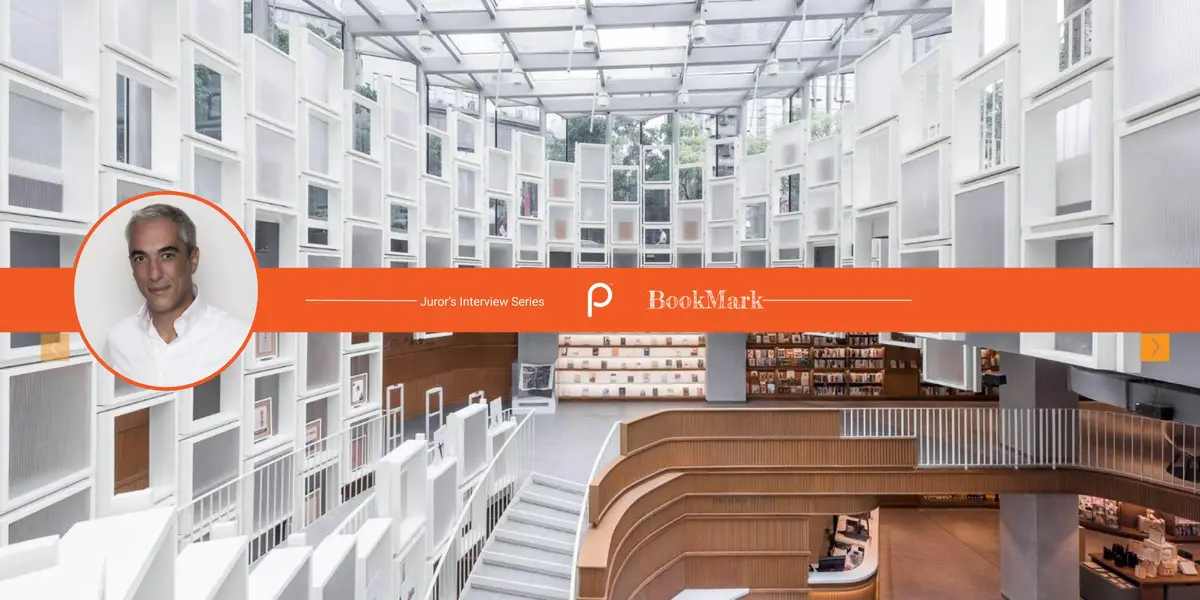
Filippo Gabianni on Role and Function of Libraries.
Uni's first interview series


At Uni we are constantly looking for new ideas to enhance the creative community, through our network of architecture enthusiasts all over the world. We aim to provide a platform to share an endless pool of knowledge. With this vision, we have started a new series of “Jury Interview Transcripts” based on our ongoing design challenges.
Our first guest for this series is Filippo Gabbiani who is a juror for our ongoing design challenge Bookmark. Born in Venice, Italy, from a famous family of artists and glassmakers, he developed a multidisciplinary interest in art and design from an early age. He completed his studies at the University of Architecture of Venice. Following his instinctive curiosity for different disciplines and other cultures, he worked in several European countries and in the U.S.A. interior and industrial design prior to the founding of Kokaistudios. It is an award-winning architecture and interior design firm founded in 2000 in Venice by Filippo Gabbiani & Andrea Destefanis, headquartered in Shanghai.
Our pursuit through this interview is to explore the role and function of libraries and how they have evolved over decades.
Uni: What is the role and function of libraries currently?
Filippo Gabbiani: I don’t think they are becoming obsolete, instead they are becoming a piece of new interest. In the past libraries were a place to go deep into things, but today libraries are a place to exchange information and inspiration as well. They are becoming much more social and public. In the digital arena, when people are getting information through new devices – the libraries are now booming. This is manifesting itself in various new libraries in China and some bookstores as well.
From an academic point of view, libraries are extremely important. But it takes a totally different model from how they used to be in universities. They were spaces that were entirely closed in themselves. People used to enter libraries with a prenotion, to learn information about history and culture, or to go deep into the culture and they had to isolate themselves from the outer world to do so.
Today libraries are not like that, because information can be dug through electronic instruments. However, a library then becomes a place to exchange information and the exchange of information happens through meeting points. So, the libraries now become the core of universities. Earlier they existed like side features in the universities, but now they are the centre of interaction and harbouring points for students.
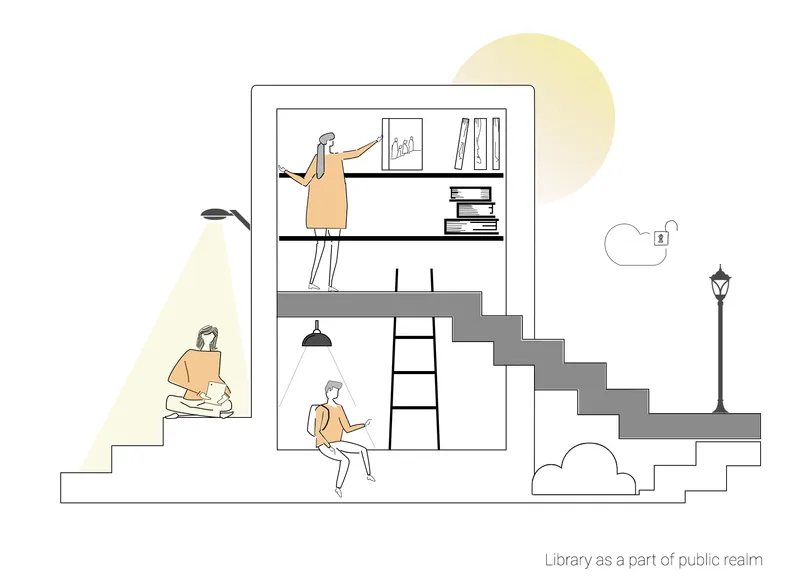
However, a fundamental change that libraries need to bring, is to become a place that is open for everyone and not just students of universities or for specialized users seeking specific information so that they become an integral part of the city. In China, city development plans are never thought of without public infrastructure like libraries. They are moreover becoming squares of public intersection and opening as a place of social interaction within the city.
Uni: Have libraries succeeded in evolving with the future?
Filippo Gabbiani: They are evolving slowly, however, there is still an academic point of view to this, where people who administer academic institutions are not so focused on trying to innovate so much. Hence, you need to have a very strong vision for the future.
The new libraries which are being built are embracing new visions and are not traditional anymore. The buildings of the past were very fixed in their functions like shops were shops, bookstores were only bookstores, and places like shopping malls were a few sets of shops connected together. This in a way made buildings contain specialized functionality. We at Kokaistudios have the vision to blur the boundaries between functionalities and create a lifestyle destination.
Digitalization enforces isolation and people do not need to gather to exchange ideas, however, we as architects have a mission to bring out people back to socialize. Libraries hence are incredibly powerful instruments in achieving this. However, design hence should be a mix of functions and not a specialized place. They should host quiet places, noisy places, meeting places, commercial spaces, retail spaces. They need to become more life harbouring. Most developers create specialized functions for selling only, but to run a place like this you need a very strong vision. Vision to build, manage, market and sell. Developers make places without content. So it’s a very strong mission.
Uni: What are the innovative outcomes?
Filippo Gabbiani: They need to design open libraries, unlike before, where they were designed as completely closed structures. This would have been because of books, which were stacked next to each other closely and the only way to go through them was a list. Today books are seen differently – not by their spine but their covers with their own graphical identity.
One needs to conceive of libraries as a social project, and not like a specialized or elite project. We need to design a new system of circulation inside the libraries. Books are not hidden gems anymore for which people have to search. People go to bookstores or libraries to walk through them and gain inspiration. Hence, the way to present these is more like retail. Now opening an entirely new avenue, to escape from devices to embrace a wider vision to useful information. People do not have to restrain themselves to 30% of vision on their devices. But embrace the usefulness of 120 degrees of vision to make use of this information. It’s a revolutionary way to conceive projects and libraries in this modern world.
Uni: How does a new age library look to you?
Filippo Gabbiani: I have designed a lot of libraries and bookstores recently. They are actually lifestyle projects such that only when you enter do you realize that you are in a library. However, within two seconds that perception shifts to the fact that you are in a normal place, and not in a silent and quiet place. They become noisy and interactive.
The way we believe to conceive libraries and bookstores is not through enclosed functions but to create loops. Loops which people keep on walking around discovering things. We apply our learnings to revolutionize commercial projects. We are one of the first few design firms that have attempted to create lifestyle commercial destinations, fighting the concept of enclosed shopping malls.
Uni: What would be your opinion on how these commercial retail spaces are designed today?
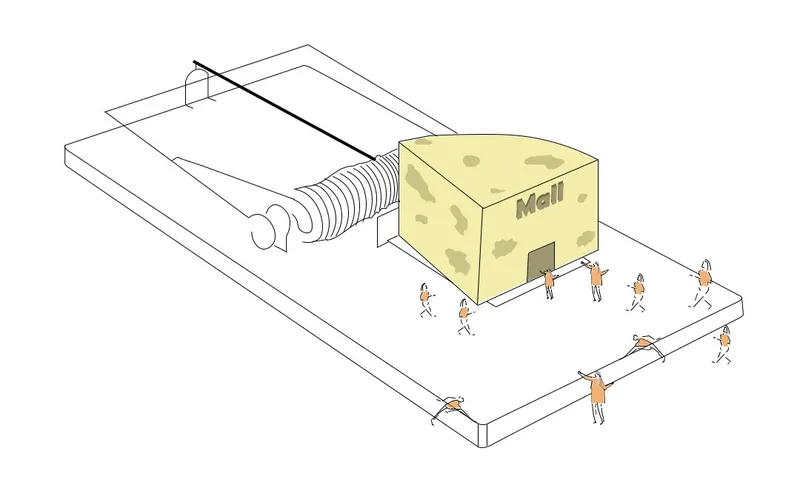
Filippo Gabbiani: Commercialized projects like shopping malls are designed like mouse traps, where people know how to get in but don’t know how to get out. They are deliberately made to walk through this tiring path inside so that they pass through all the stores. This is my personal opinion must be despised, as this refrains people from expressing their own freedom, desires and specialities. So we at KOKAI Studios are creating a completely open setup that is seen as a place where people keep on floating inside through compression and dilation of space.
I come from Venice, which is a city that was designed spontaneously in the past. The city was designed for human beings. The space was interesting, in a way that people did not understand it completely because there was a succession of events. This brought you closer to exploring the next. We are now designing our projects in a similar manner.

Uni: How has this ideology reflected on the design of libraries?
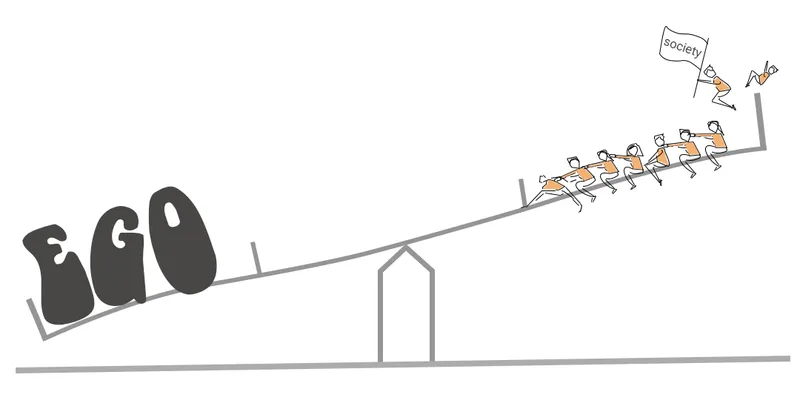
Filippo Gabbiani: We design for humans, we see design libraries as iconic or monumental buildings, but not self-referential buildings. They represent the ego of the institutions who built them or the ego of the architect who designed it. They should be designed as buildings for society. A human space, designed for their needs and their scale. To understand the needs of humans and interaction and to understand the fast development of technologies and relationships between people. That in a way directs us to make designs that are not rigid. But we cannot predict how things would be in the future of let's say 50 years. We as architects suffer as a significant point of view for the future. We need to make designs that adjust according to the evolving needs of the people and give them tools to change it themselves. Keeping our heads very low, humble, and keeping our visions very honest to make things that can be touched and adjusted by the people in the future.
Uni: Which project are you working on? What were the challenges that you faced while working on them?
Filippo Gabbiani: We can't share the details of the projects since we are in an agreement of non-disclosure of details. We are working on a lot of projects worldwide out of which two projects are very large scale and commercial, in the city that we are based in Shanghai. We are trying to build a design that gives back to the city, as I myself live in Shanghai with my family, it is difficult to get a high-quality lifestyle. There was an explosion of commercial centres and shopping malls in China, we wanted to break the norms of these “Billboard buildings” into a cluster of structures that is permeable and connected to the city. We want to emphasize creating buildings that are more human in scale and are not enclosed castles.
The second project is based on one of the famous commercial builders of Shanghai. We have conceived it as a park with landscaping where under this there is a cultural and commercial destination. It is a green escape for the city and at the same time contributes to their revenue. We are trying to increase the quality of life through design and architecture, which is our motto. We wish to inspire other designers for the same.


Popular Articles
Popular articles from the community


Play: Fragments of Their World
Familiar architecture becomes modular playground design, creating safe spaces where displaced children can learn, connect, imagine and play.

The Musturak Paradise: Senior Living Architecture for a Connected Future in Temara, Morocco
The Musturak Paradise reimagines senior living architecture in Temara via private homes, social spaces, culture, community, and shared care.

Lunar Spiral: Space Architecture Shaped by the Mathematics of the Universe
Lunar Spiral reimagines space architecture through Fibonacci geometry, lunar regolith, levitating habitats, and self-sustaining Moon living.

The Ocean Hive: Sustainable Architecture for a Self-Sufficient Civilization at Sea
The Ocean Hive imagines sustainable architecture at sea, where modular habitats, algae, wave power and ocean waste sustain a growing colony.

Similar Reads
You might also enjoy these articles
SCENTLAND: Animal Shelter Design Guided by Scent, Landscape, and Movement
Scentland reimagines animal shelter design through scent, landscape, and movement to create humane spaces for animals and people to connect.

BUBHUB: Underwater Architecture for a Symbiotic Human and Marine Habitat
BUBHUB imagines underwater architecture as a network of bubble-like habitats where human life and marine ecosystems grow together.
The Sub-MarinaTube: Sustainable Architecture for a Plastic-Recycling Underwater City
The Sub-MarinaTube imagines sustainable underwater architecture that turns Pacific plastic waste into energy, research, and community.
Urban Retrofit: A Building Retrofit Strategy for Collective and Individual Living
Urban Retrofit reimagines social housing with modular balconies that give residents space, identity, services and control over shared living

Comments (0)
Please login or sign up to add comments
No comments yet. Be the first to comment!