
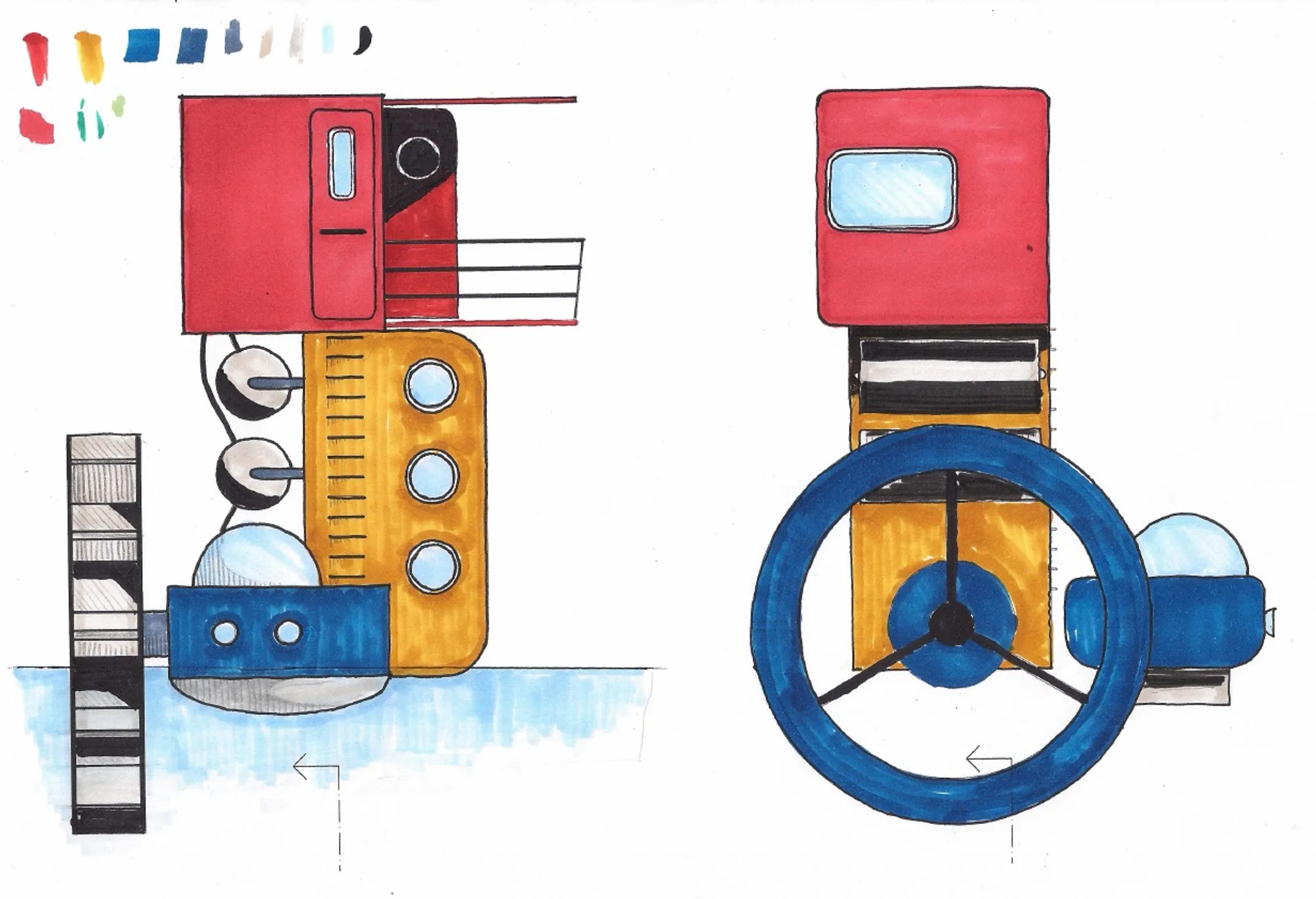
Post-Scarce Carriage MAKING OF
Post-scarce carriage is a nomadic modular habitat based on principles of communal living that transcend the urban-rural distinction. It is conceived in a hope-punk frame of reference and proposes an alternative to the typical sci-fi dystopian imagery on technology and its implications.

Our proposal for a nomadic habitat, the Post-scarce carriage, evolved into its final form after a series of iterations and experimental design work which took place over three months. Both of the designers have already in the past wrestled somewhat with the idea of a house which is also a means of transportation; however we hadn’t gotten into its design up until the competition. We had in turn spent time theorising and writing about the idea of nomadic life and nomadic forms of community, as well as designing micro-homes and so the brief of the competition resonated with our interests.
Concept
The original concept behind the post-scarce carriage was derived from insects such as the junk bug (or aphid lion) and the caddis fly, which form protective shells from debris, corpses and remains of other insects and carry them around on their back. Both of these insects embody a kind of organic design which was crucial to shaping our views and imagery. The junk bug and the caddis fly, provide a blueprint for an alternative, transformative utilisation of waste and trash that does not depend on yet another gigantic, energy consuming, waste producing, selective, counter-productive industrially modelled system as contemporary recycling industry. The idea was to be able to use junk as ready-at-hand (rather than present-at-hand) raw materials or tools following Heidegger’s behandigkeit principle. Rather than having heaps of junk waiting to be handled, we preferred a more direct approach which salvages what can be used as and re-fashions what needs to be altered. The design was originally conceived as a floating habitat that could traverse urban fabric claimed by rising sea levels due to ongoing environmental deterioration and global warming. We picked a post-apocalyptic scenario in the near future rather than full-on technological utopia, in order to be able to ground our abstract ideas on a more concrete basis. Also, we specifically aimed for a hope-punk approach to the apocalypse scenario rather than the prevalent grimdark narratives such as Mad Max, Snowpiercer and so on.
Design
The design reached its final form over three distinct iterations. Following our conceptual basis, on the first iteration we sketched keeping organic forms and spatial organisations in mind. The idea of a bulbous interior drawn around by some kind of vehicle, much like an insect trailer dominated our first attempts. Furthermore, another key element in our initial steps was the way the micro-structures could be deployed and attached to existing urban environment and its core features, namely multi-storey residential buildings. The organic shapes were quickly abandoned as the competition brief was too restricting for such forms to be practical. Even so, the makeshift shell was retained conceptually and survived after several adjustments to the final proposal. The structure as a parasitic system that can latch itself onto bigger structures also made it to the final proposal. On the second iteration we adopted a form inspired by real-life scavenging and arbitrary building communities such as Rio de Janeiro favela and rural Greece Romani shantytowns. We tried to maintain some kind of organic construction elements, on the main body of the house which was conceived as a straw and mud mesh on a metal frame. Most of the spaces worked and remained largely unchanged on the final iteration, but the organic construction was eventually abandoned as well, since the architectural form could not convey either the conceptual premises or the dynamic of the mechanism’s function. On the third and final iteration, after a brief bout with fully functional trailer-like vehicles, we chose to follow a pop-utopian aesthetic encountered in paper architecture of the 60’ such as in Archigram or Superstudio projects. Through these references we felt that the final proposal had a good balance between experimental and familiar, sci-fi and realistic, post-apocalyptic and feel-good.
Solution
The post-scarce carriage is composed of a house and a transportation mechanism. The house extends on two prime levels, the living cabin on top and the sleeping tower below. The living cabin measuring 5,6 m2 has a small kitchen, shower-bathroom and a trapdoor leading to the sleeping tower. Its space increases by 5 m2 when the post-scarce carriage is deployed, divided over two balconies. The sleeping tower measuring 4,4 m2 is at the same time a bedroom and a private area for work, study or simply relaxation. Each bed is a separate level in a three decker bunk and is foldable and can change into a sofa in order to make more seating space. The double bed at the bottom has storage space beneath and is reserved for the parents. The cockpit along with the two tanks for water and fuel and the prime transportation mechanism (paddle wheel, caterpillar track, ice skate, hovercraft) is detachable and allows both multiple terrain travel and semi-permanent deployment atop another already existing structure in case of removal. Both the living cabin and the sleeping tower are fashioned out of scavenged construction materials such as water-resistant drywall, metal sheets, aluminum windows and insulation surfaces. The post-scarce carriage is designed to facilitate an autonomous roving lifestyle and at the same time be able to accommodate a temporary or semi-permanent community formed because of a scavenging site, a large water supply or simply a festival or social occasions such as childbirth or funerals.
Evolution
The post-scarce carriage can easily be further evolved, both conceptually and design-wise. If one were to leave the competition’s brief aside, larger habitats that still fit the category of micro-homes or smaller ones for one or two people could be thought of. This variety could allow the formulation of an extensive typology of the deployed structures and the semi-permanent settlements they could fashion. Moreover, one could dive deeper into the materiality of the structures as well as sophisticate the technological infrastructure more. Finally, more ‘’realistic’’ solutions could also be devised in order to fit a contemporary objective rather than an imaginary scenario.


Popular Articles
Popular articles from the community


Play: Fragments of Their World
Familiar architecture becomes modular playground design, creating safe spaces where displaced children can learn, connect, imagine and play.

The Ocean Hive: Sustainable Architecture for a Self-Sufficient Civilization at Sea
The Ocean Hive imagines sustainable architecture at sea, where modular habitats, algae, wave power and ocean waste sustain a growing colony.

Riyadh For All: Intergenerational Urban Design for Active Aging in Rabat
Riyadh For All reimagines urban design in Rabat with intergenerational co-living, adaptive courtyards, and Moroccan cultural exchange today.

Co-Life: Senior Housing Design That Reconnects Older Adults With the City
Co-Life reimagines senior housing design through healing gardens, shared streets, workshops, and a sustainable community across generations.
Similar Reads
You might also enjoy these articles
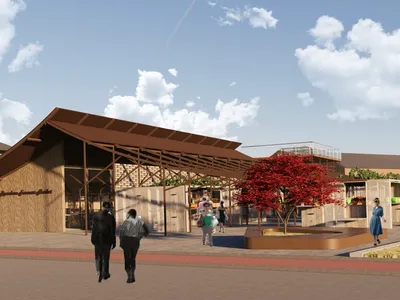
The Rhythm of Seasons
A Farmers' Market Connecting Nature and the City
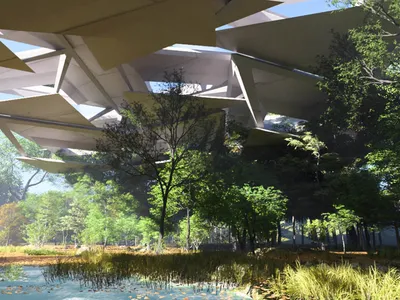

More Than a Building-Designing a Living System
More Than a Building-Designing a Living System
Base Beyond
DESERT COMPOUND ARID: TOURISM OF ABSENCE AND ABUNDANCE

Comments (0)
Please login or sign up to add comments
No comments yet. Be the first to comment!