
Al Maqar: Bridging Time Through Architecture – The Museum Suspended Between Eras
An immersive journey into ancient Arabia, uniting past and present in a suspended architectural marvel.


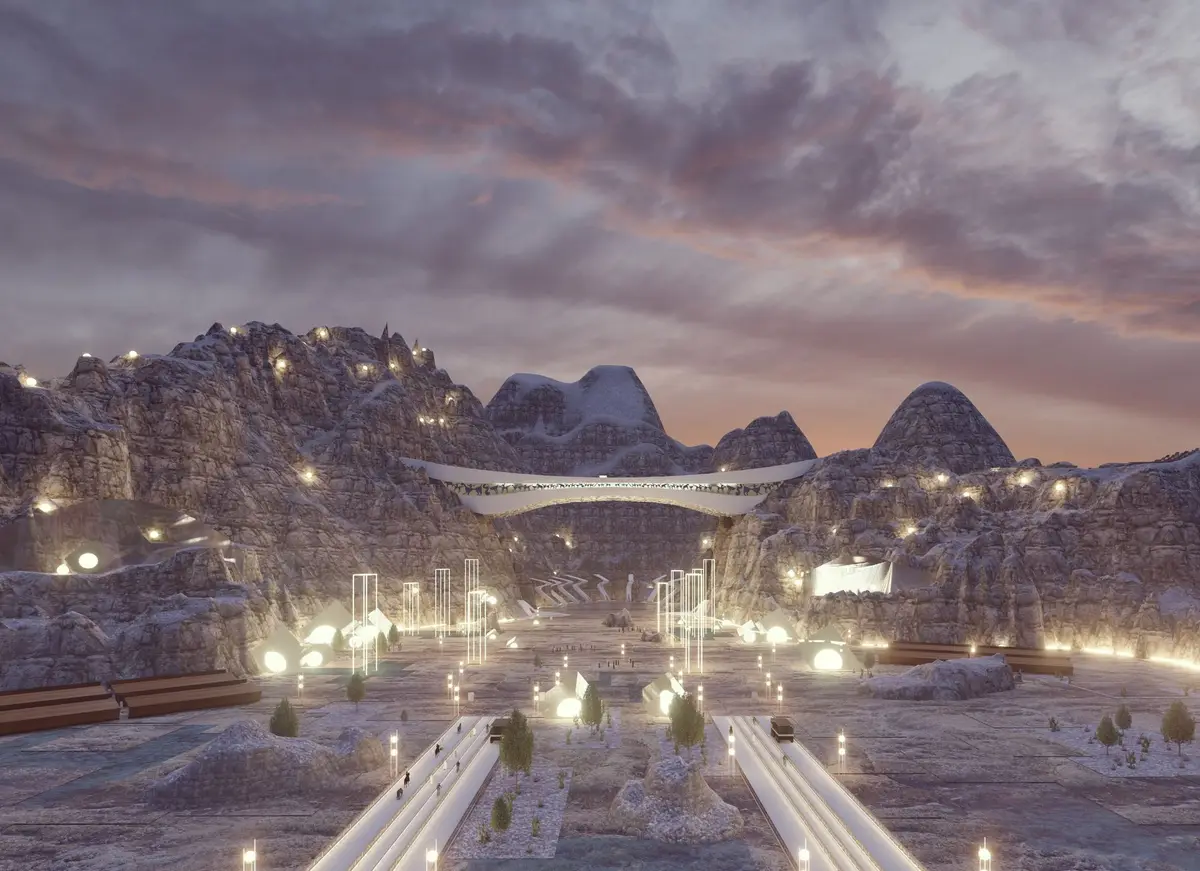
The AlMaqar Museum project, titled "Between Two Upbringings" by Latifah Alaskar, Winner entry of UnIATA '24, is a visionary architectural endeavor designed to honor the ancient Al-Maqar civilization in Saudi Arabia. Dating back 9,000 years, Al-Maqar is known as one of the earliest centers of animal domestication, particularly horses, which holds significant cultural importance. This innovative project not only showcases the history and artifacts of Al-Maqar but also integrates the museum seamlessly into the natural landscape, using advanced construction methods and sustainable design principles to preserve the archaeological integrity of the site.

Concept and Inspiration
The core concept behind this museum is to bridge the past and present by symbolically "suspending" the museum between two mountains. This spatial arrangement evokes the connection between ancient and modern cultures, celebrating the architectural progress within Saudi Arabia while respecting its deep historical roots. By placing the museum above ground, supported between mountain structures, the design minimizes physical impact on archaeological sites, preserving the ancient landscape.
The layout is inspired by the journey visitors will take, moving through different zones that narrate the story of Al-Maqar. The museum’s suspension structure reflects harmony with nature, reducing disruption to the land below and emphasizing the importance of protecting cultural heritage.
Site Overview and Visitor Journey
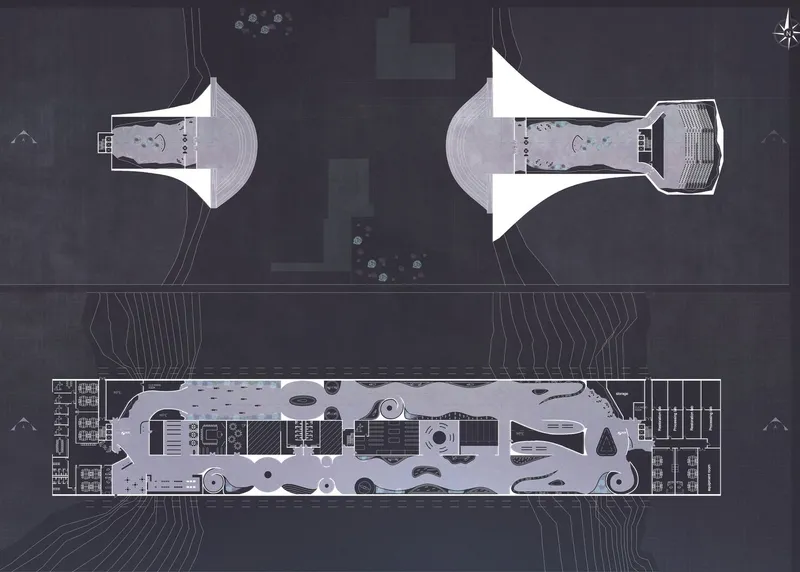
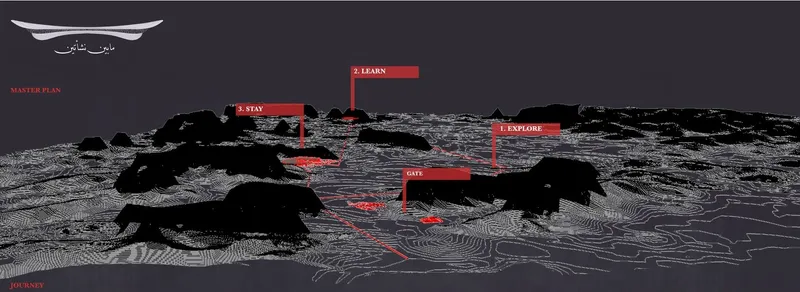
The journey begins in Al Qefari Village, where visitors enter through a “Gate” nestled between black mountains. This symbolic gate transitions visitors from the present into the ancient world of Al-Maqar. The visitor path comprises four key stages:
Explore - Visitors first encounter a 9,000-year-old stone wall and explore engraved stones, believed to be among the oldest maps in the region. This initial phase of the journey sets the tone for an exploration rooted in deep historical significance.
Learn - At the museum, a collection of artifacts related to the Al-Maqar civilization is displayed, allowing visitors to engage with ancient relics and learn about the civilization’s achievements in agriculture, domestication, and craftsmanship.
Stay - In this phase, visitors pass through spaces designed for relaxation and cultural immersion, including the Khasim Theater, where they experience the desert ambiance and the narrative of the site.
End of Journey - Visitors conclude their journey in an elevated area that provides panoramic views of the site, enabling them to reflect on the civilization’s story within its natural context.

Architectural Design and Structure
The design incorporates a series of engineering steps to ensure minimal environmental impact:
Suspension: The museum is set between two mountains, which reduces the need for ground excavation, thereby preserving underlying archaeological layers. The structure’s layered design follows the natural contours of the mountain..
Arch Bridge Structure: To support the museum’s layout, the design uses an arched bridge form, which not only harmonizes visually with the mountainous backdrop but also provides structural stability.
Energy-Efficient Glazing and Cladding: Solar control and thermal insulation measures are implemented through specialized glazing systems. This feature controls direct sunlight, enhances natural light distribution, and helps maintain energy efficiency.
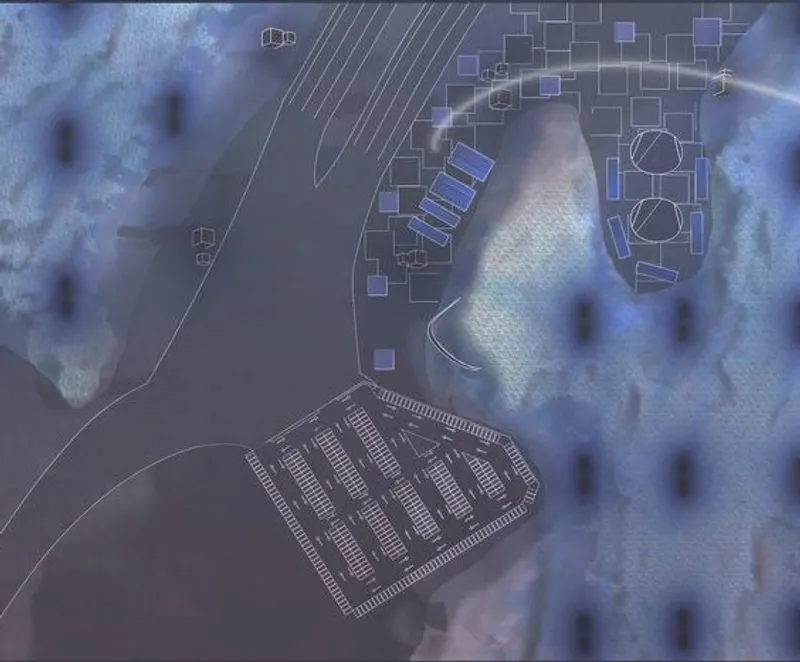
Rainwater Harvesting: In-ground tanks collect rainwater for reuse in outdoor facilities, which aligns with the project’s sustainability objectives.
Environmental and Sustainability Considerations
A significant aspect of the AlMaqar project is its commitment to sustainability. The design incorporates multiple eco-friendly measures to reduce environmental impact:
Natural Lighting: Strategic use of energy-efficient glazing optimizes natural lighting, reducing the need for artificial light and lowering energy consumption.
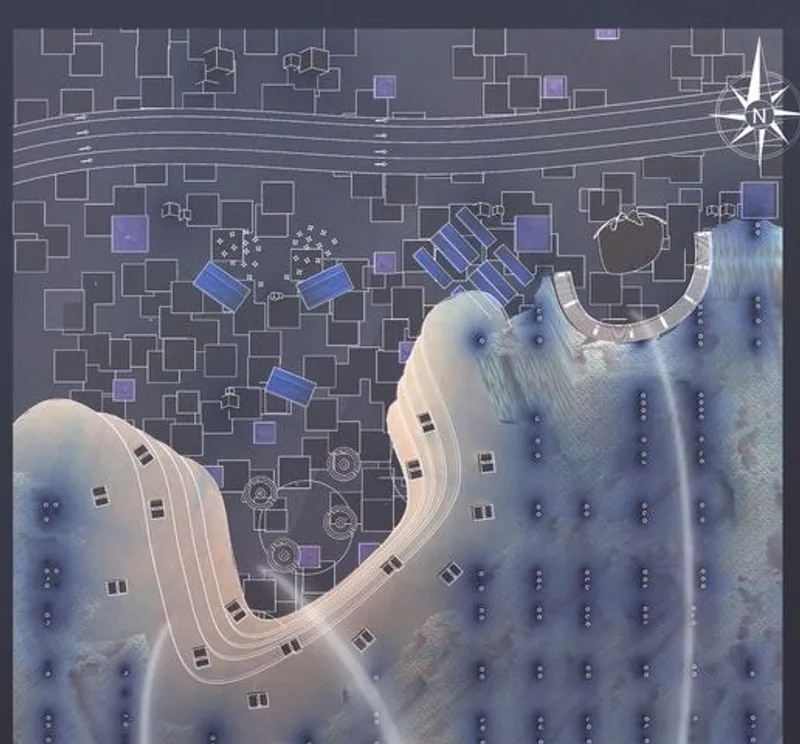
Renewable Energy: Solar panels installed on-site provide energy to outdoor facilities, enhancing the museum’s self-sufficiency and minimizing reliance on external power sources.
Retaining Walls: Rigid retaining walls are employed to stabilize soil, allowing the structure to adapt to the mountainous terrain without disturbing the slope. This not only supports the building’s foundations but also maintains the site’s natural landscape.
Importance of the Al-Maqar Civilization
The Al-Maqar civilization, one of the earliest known Arabian civilizations, represents a period when humans first domesticated animals, including horses—a milestone that holds significant cultural and historical value. Excavations at the Al-Maqar site have revealed artifacts such as tools, carved stones, and statues, including one of the earliest-known representations of the Arabian horse. These discoveries underscore the civilization’s advanced knowledge of animal husbandry, tool-making, and agriculture, marking it as a pivotal center in ancient Arabian history.
The museum’s display will feature detailed replicas of these artifacts, including life-sized statues of Arabian horses, weapons, and tools. The exhibitions are designed with an educational focus, incorporating holograms, interactive displays, and AI technology to provide a fully immersive experience. Visitors will be able to engage with the history of Al-Maqar through virtual simulations and reconstructions of daily life in the Neolithic period.
Challenges and Solutions
The project addresses several critical issues related to accessibility, preservation, and sustainability:
Accessibility: The museum is designed to be inclusive, with features for individuals with limited mobility and options for digital access, such as online exhibits.
Preservation: To avoid disturbing the archaeological site, the museum’s suspension design ensures that excavation is minimized. The elevated positioning protects sensitive ground layers, allowing future archaeological work to continue unhindered.
Climate Adaptation: The project accounts for the local climate with structural adaptations that ensure durability and comfort. For example, the museum's shape and materials are chosen to withstand extreme temperatures and seasonal weather patterns typical to the Riyadh province.

Program and Usage
The AlMaqar Museum is designed to cater to a diverse audience, including scientists, archaeologists, tourists, and locals. The program layout within the museum comprises several thematic galleries, each highlighting different aspects of Al-Maqar culture:
Main Lobby: Designed to evoke a sense of entering a new world, the lobby uses concrete horse sculptures partially buried in the ground, symbolizing the deep-rooted history of the site.
Armory Gallery: Displays historical weapons, including arrows suspended innovatively from the ceiling, representing the military might of the civilization.
Hunting Exhibition: This section features representations of falcons and greyhounds used in hunting, giving insight into the lifestyle of Al-Maqar inhabitants.
Textile Exhibition: Here, visitors experience holograms of traditional clothing, using AI to recreate a realistic view of Neolithic fashion and craft.
This project embodies Saudi Arabia's commitment to preserving its cultural heritage and promoting its significance on a global scale. As the museum nears completion, it promises to offer visitors an unparalleled journey into the ancient world of Al-Maqar, inviting them to witness the origins of Arabian civilization while embracing cutting-edge architectural design and sustainable practices.


Popular Articles
Popular articles from the community


Manzana Morphosis: Stretching Barcelona's Grid into a Living Landscape for 2050
A radical reworking of the Eixample manzana turns density into a tool for generous public space, vertical ecology, and environmental performance.

The Amber Palace Opera: A Geological Fiction Surfaces on Tallinn's Baltic Waterfront
Pierre Brillard reimagines a Baltic legend as a public landscape, opera house, and waterfront promenade rooted in Tallinn's coastal identity.
Faces of the Soviet Avant-Garde: Turning Moscow's Street Names into an Open-Air Museum
A network of sculptural installations across a Moscow residential district transforms forgotten architect names into spatial encounters with cultural memor

Singing Woman: An Opera House That Performs Before the Curtain Rises
Ovidiu Cristian Pavel's conceptual opera house translates Estonia's choral identity into a sculpted waterfront landmark facing the Baltic Sea.

Similar Reads
You might also enjoy these articles

Shakur's House: Exposed Brick as an Interior Organiser in a 168 m² Mashhad Residence
Brick moves indoors in this Mashhad residence, where masonry walls, glass partitions and teal planes sequence a compact home without closing it off.

Day and Night Park: A Time-Based Urban Newsstand in Beijing
A temporary urban newsstand in Beijing blending travel, light, and reading through poetic colors, compact form, and community-focused design.

Modernist Patio Renovation in El Masnou, Barcelona by Oliver Segura Arquitectura + Cebrià Arquitectura
Modernist patio renovation blending tradition and innovation with a movable pool, leveled floors, and Catalan materials in El Masnou.

Alto Residencial Coop: Cooperative Housing Development in Santiago de Compostela by Carbajo Barrios Arquitectos
A linear cooperative housing complex blending white volumes and perforated metal façades, enhancing community living, natural light, privacy, and urban integration.


Comments (0)
Please login or sign up to add comments
No comments yet. Be the first to comment!