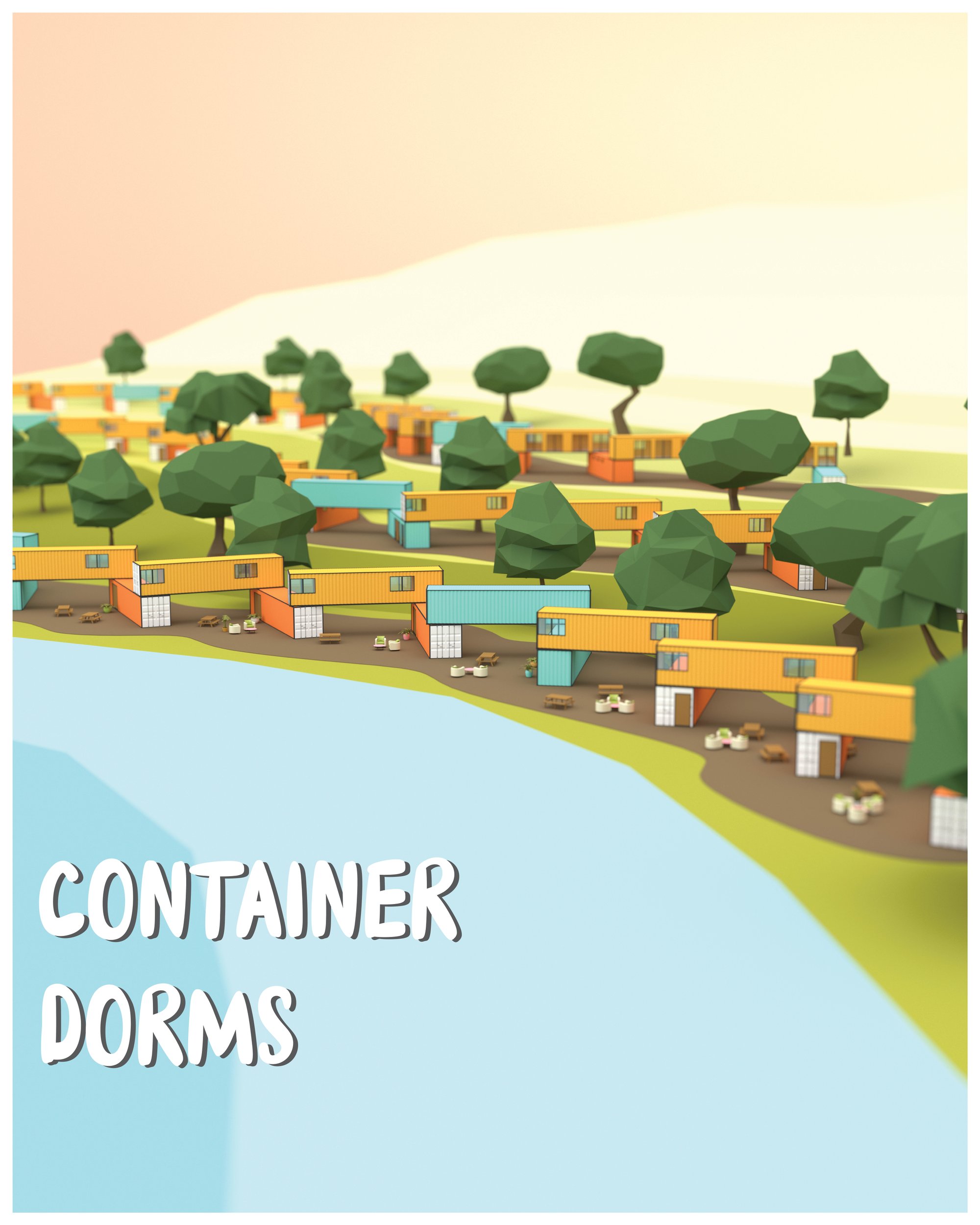
Container Dorms
Student housing out of shipping containers

Shipping containers are typically thrown away and left for trash after their life span. This brought about the idea of placing these dorms in the unused and leftover areas within out urban fabric, rather than finding new areas to build in our already dense cities.
Examples of such areas can include,
1. Unplanned urban voids like gaps between buildings, edges of parking lots, small yards, alleys no longer in use
2. Functional voids that have lost their purpose in the city over time, like an underused park
3. Geographical voids born from geographical features such as rivers, hills, valleys etc
Building in such areas can breathe life back into portions of the city that may have been neglected.
Insensitive development erases the memory, identity and the existing surrounding community, rather than elevating the present nature of the site. Gehl (1987) talks about activities that people carry out in public spaces when the environment is conducive for it to happen and categorizes it in three types, namely necessary activities, optional activities and social activities. Bently et al. (1985) mentions the importance of activities and uses as experiences in which variety of experience implies places with varied forms, uses and meanings. This variety in uses open up to another level of variety which include attracting a variety of users for varied reasons at varied times because different types of activity, forms and people provide a rich perceptual mix, different users interpret the place in different ways. The importance of activities in spaces planned or unplanned contribute dearly to surveillance, safety, social interactions and meanings. In the setting of higher education institutions like universities, it is essential to create an environment that fosters ideas of the future
This proposal aims to create a porous and flexible student housing. There are 3 modules, bedroom, communal and sanitation, each made from a 40' x 8' x 8'6" container that are stacked and can be rotated at the ends. A bedroom block would be on the second floor and would be connected to a sanitation block on the first floor, with communal modules containing study rooms or pantries interspersed throughout at intervals. Staircases are located at the end of the blocks, which functions as 'hinges' to the chain of modules. The proposal demonstrates a chain of blocks at right angles, but the chain can be flexed at varying angles to fit in the site and create pockets of space in between.
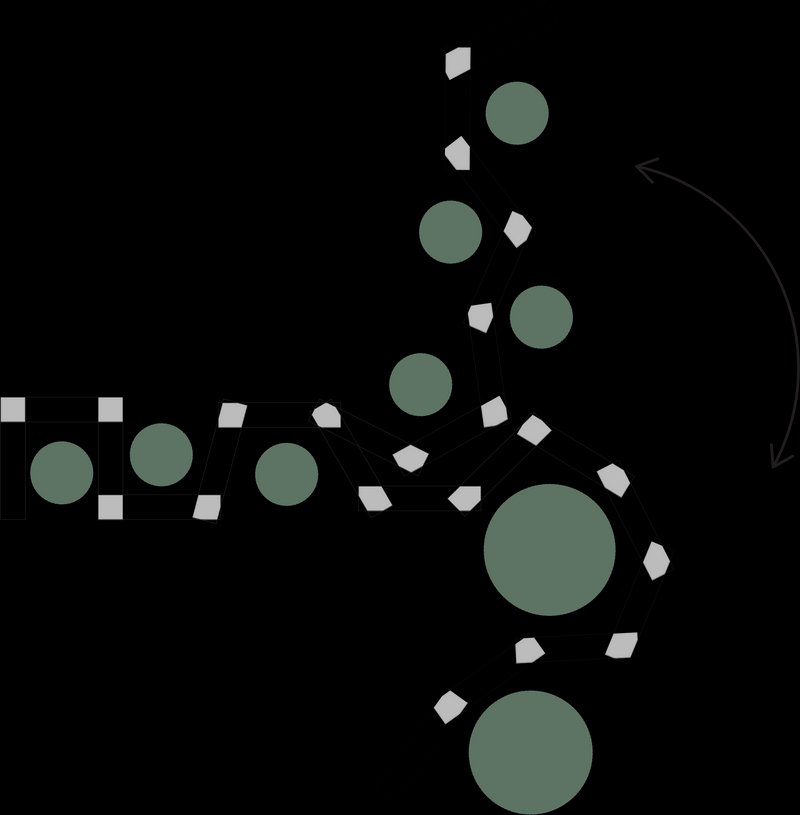
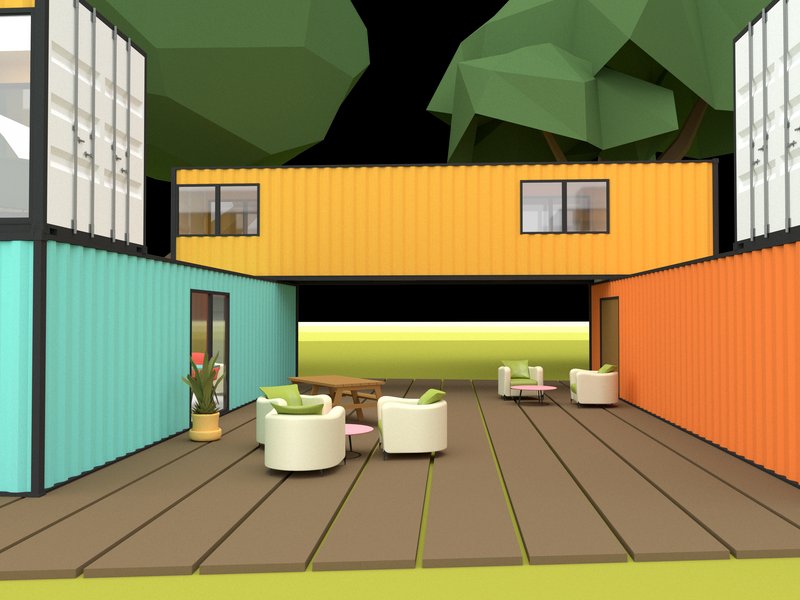
The bedrooms and communal areas have been planned such that there is visual connectivity maintained between the containers and the pockets of spaces created by the hinging of the containers. Bedrooms on the second floor overlook the deck and the communal areas on the first floor open up to the deck for seamless flow of activity. The way the containers are stacked also allows for a smooth flow of people throughout the site, where you can walk through one chain of containers to get to the next. This stacking logic also makes it easy to adapted to any level changes in the site. This porosity and ease of circulation is essential to cultivate community spirit within university housing.
Each bedroom houses 2 students, with a desk and wardrobe for each student and a common storage space. Communal areas include study areas, pantries, lounges for students to spend times outside of their rooms. Sanitation blocks have the toilets as well as laundry facilities. Both bedrooms and common areas are designed to overlook the outdoor deck. The colour scheme of the containers shown in the proposal are a visual representation of the function of the container ie, bedroom block, communal block, sanitation block
The main challenge was to work within the width and height of a single container. This motivated the linear arrangement of the bedroom. Rather than placing the beds parallel or stacking them to make bunk beds, they were placed at 2 ends, with the desks and wardrobes in between to provide a level of privacy between the beds. Space constraints also led to the decision to have stairs only at one end of the containers rather than both. This brought about the logic of connecting each bedroom block to a sanitation block. The communal area blocks would be interspersed in between every few bedroom-sanitation block combination.