Ecological Salvation: Reviving Oil Rigs through Adaptive Reuse Architecture
Transforming abandoned oil rigs through adaptive reuse architecture into immersive ecological sanctuaries for a sustainable future.


In the Mediterranean Sea, Italy has installed nearly 200 oil rigs since 1959. Today, only a small number have been dismantled, while the rest, especially those in the Upper Adriatic, linger as decaying industrial relics. Due to the high costs of demolition, these platforms remain, haunting the seascape as permanent reminders of humanity's past environmental exploitation. Without action, these industrial scars risk being forgotten, along with the vital lessons they symbolize.
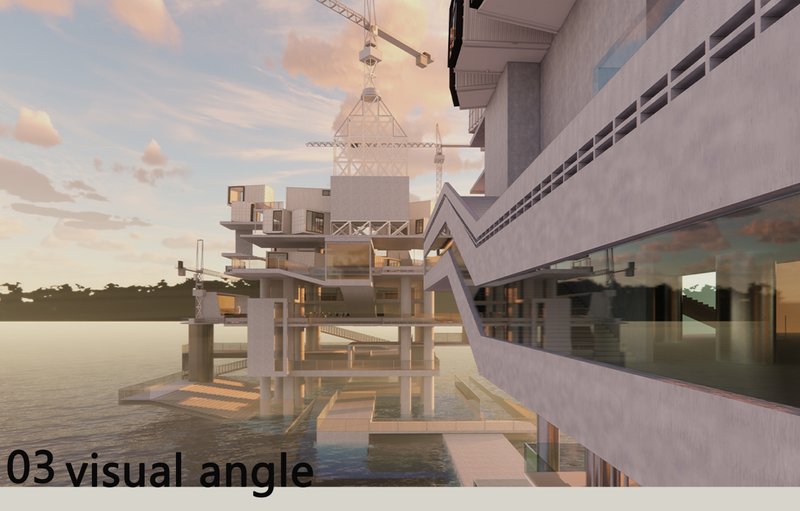
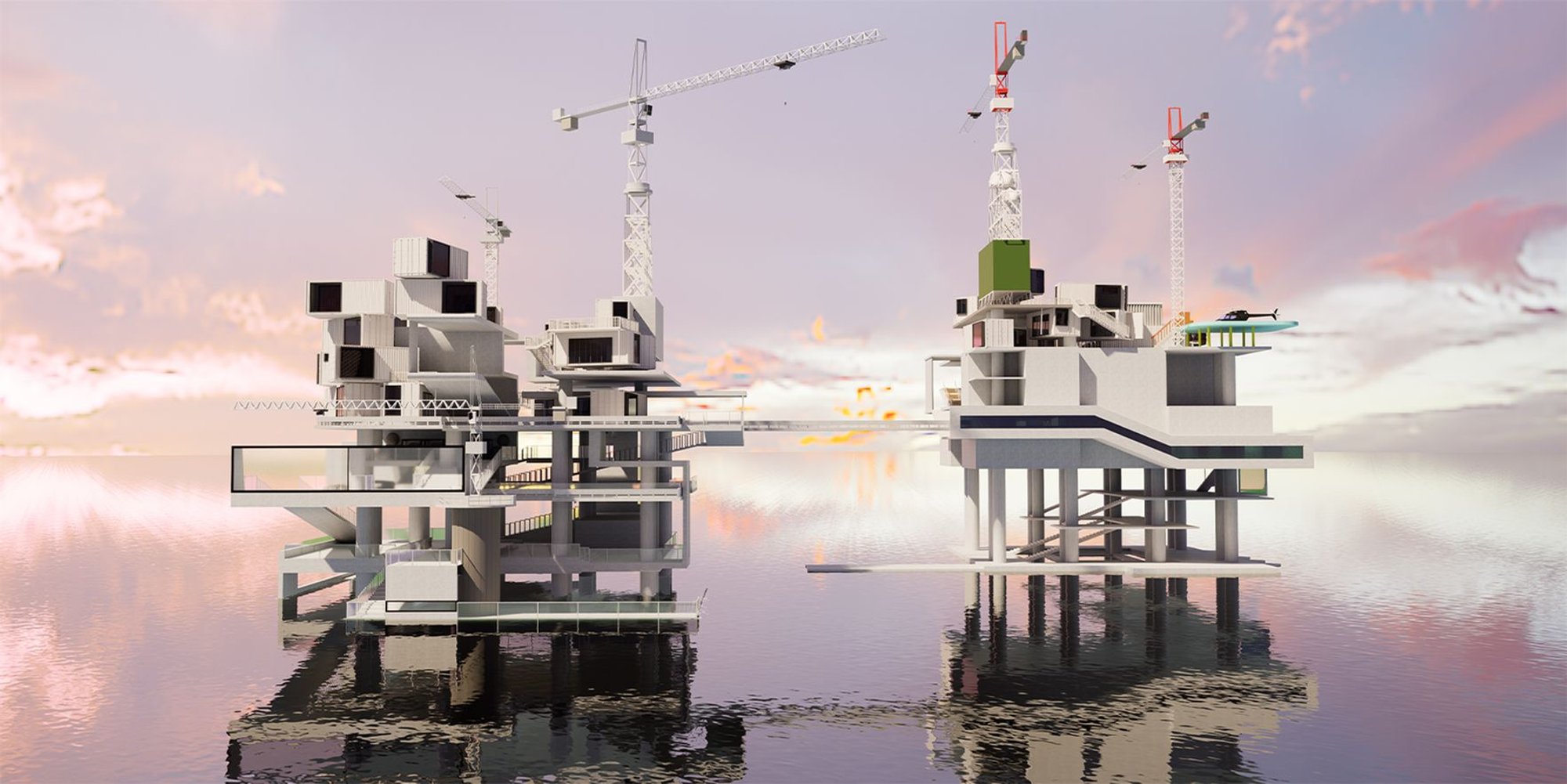
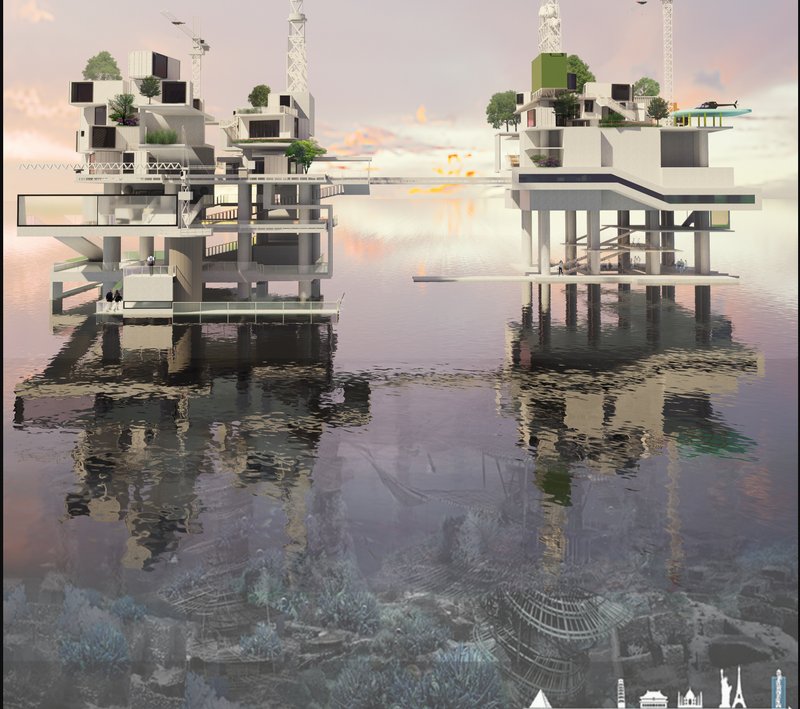
"Ecological Salvation," a People's Choice Award entry at Proximity Island by Zhiwei Chen, Hui Liu, Wanqing Li, and Su Yue, offers an inspiring vision. It proposes utilizing adaptive reuse architecture to transform abandoned oil rigs into dynamic ecological museums and living habitats. Rather than erasing the past, this project reimagines these industrial remnants as catalysts for environmental awareness and education, creating immersive, sustainable experiences that bridge history and hope.
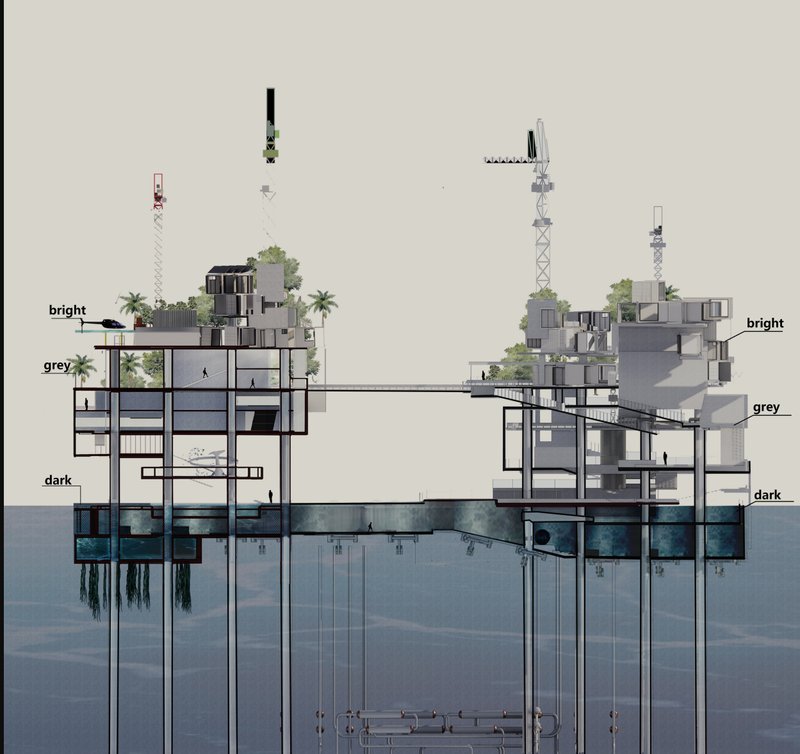
The project crafts a powerful ecological narrative using a three-color metaphor:
- White represents the distant, untouched natural environments.
- Gray symbolizes the Mediterranean zones where human activity reshaped the landscape.
- Black marks the Adriatic's zones of intense pollution and environmental degradation.
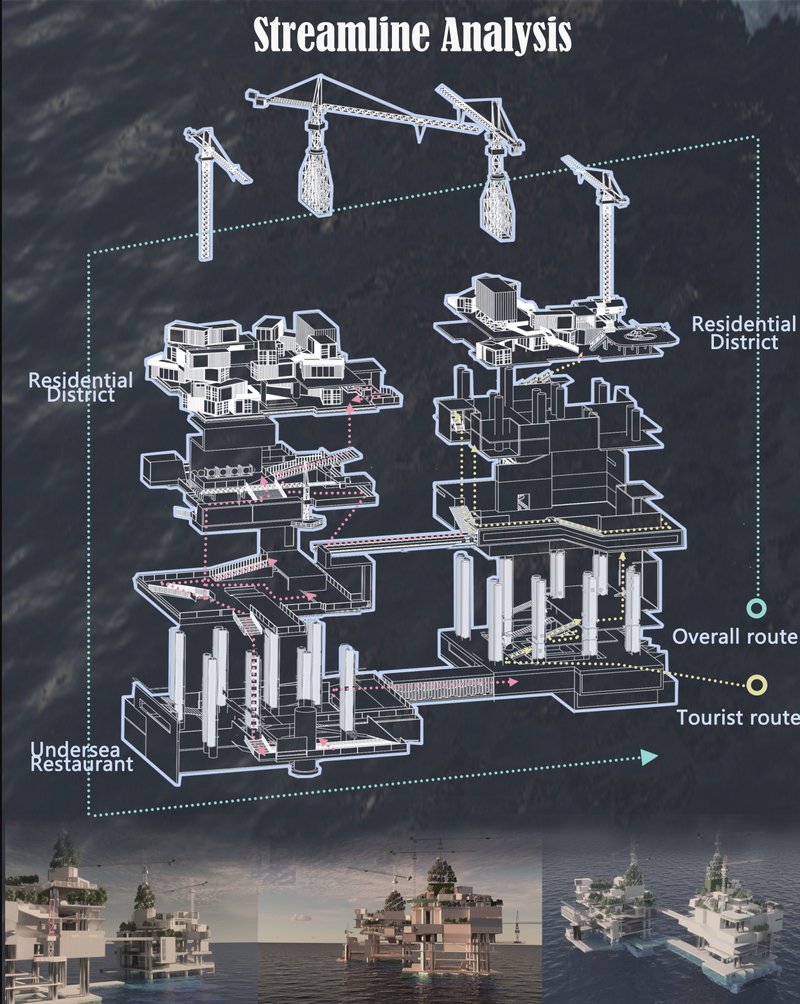
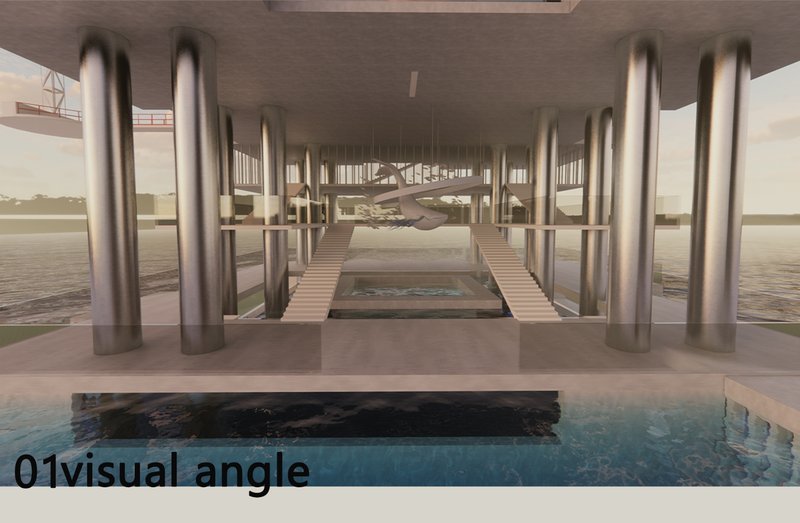
Visitors traverse a carefully orchestrated spatial journey—from the light of pristine nature, through the gloom of pollution, and back toward a renewed ecological awareness. The circulation design blurs the boundaries between vertical walls and horizontal floors, creating continuous, flowing experiences. Twisted architectural elements seamlessly integrate circulation paths, serving as staircases, galleries, and exhibition spaces that embody the project's deeper narrative.
Design Highlights:
- Preservation of Industrial Heritage: Rather than demolish the oil rigs, the design preserves their structural integrity, adapting them into new, sustainable uses. Industrial relics such as drilling structures and platforms are retained to honor the site's historical memory.
- Sustainable Energy Systems: The project pioneers an integrated, multi-source energy recycling system combining solar, wind, tidal, biomass, and geothermal energies. It creates a closed-loop ecological habitat, with systems for marine farming, waste recycling, and sustainable food production.
- Underwater and Overwater Ecosystems: The architectural composition contrasts underwater spaces—tight, somber, and reflective—with the abundant, vibrant marine life above. This juxtaposition emphasizes the fragility of marine ecosystems and the importance of conservation.
- Emotional and Intellectual Engagement: Every twist, every interplay between darkness and light, is designed to provoke reflection on humanity's relationship with nature. Visitors are encouraged to recognize the consequences of industrialization and the urgent need for ecological preservation.
- Technological Innovation: The design introduces advanced solutions to optimize thermal energy from ocean currents, using solar energy as an auxiliary heat source. A novel combined cooling-electricity generation cycle maximizes the use of ocean thermal energy, enhancing sustainability.
At its core, "Ecological Salvation" is more than an architectural project; it is a call to action. It reminds us that the relics of industrial ambition can be repurposed into symbols of ecological hope. The space fosters emotional connections, educates visitors about environmental challenges, and inspires collective efforts toward a sustainable future.
In this visionary approach to adaptive reuse architecture, oil rigs once condemned to obsolescence find new life as beacons of ecological consciousness—encouraging humanity to reflect, reconnect, and rebuild a harmonious relationship with the natural world.