

EDUCATIONS MISSING LINK
A gap of education disparity progressive and evident
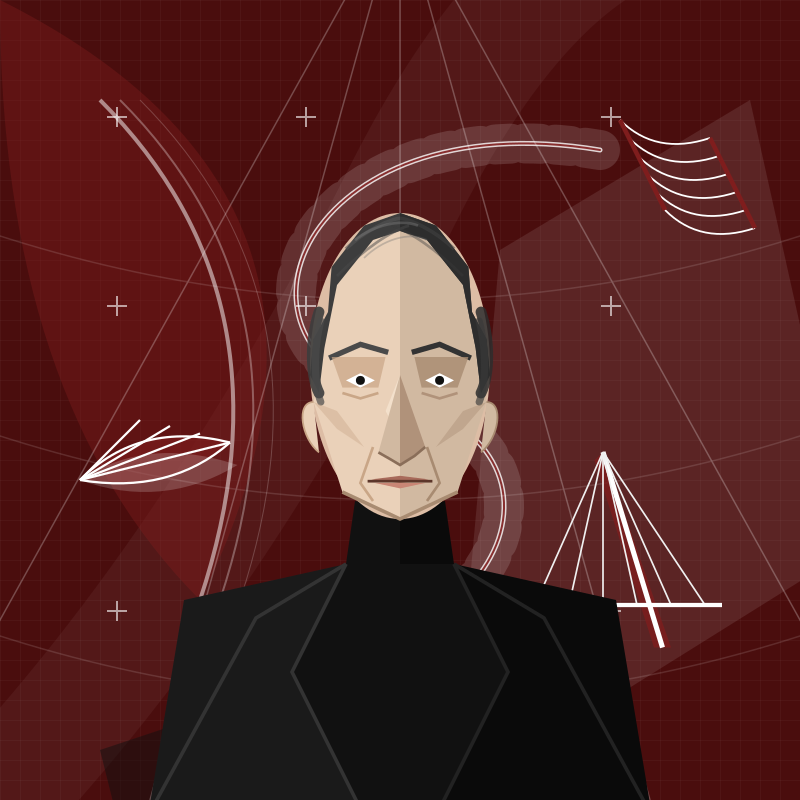
The Universal School is a design based attempt aimed at diminishing the boundaries of learning through universal learning hotspots.
Numerous students find themselves restricted by the confines of their designated educational institutions, hindering their ability to fully explore and develop their potential. Access to prestigious colleges is not universal, and many individuals encounter obstacles such as inadequate support, limited resources, and a lack of exposure during their crucial developmental stages. Moreover, the prevalent issues within educational institutions, characterized by outdated systems and unaddressed internal challenges, aggravate these limitations
Working as a missing link in the gap is a proposal that focuses on establishing a network of colleges for sharing expertise and providing exposure to students. Reputed larger institutions would serve as central hubs, facilitating seamless connectivity within the network through both offline and online channels and offer expertise-sharing opportunities to students from smaller colleges and students from remote villages.
Focusing on the architecture from inside to curate an envelope that houses various functions and activities at various layers all visually and physically connected thus forming an intangible link between the users.Creating atriums between the proposed and existing infrastructure as checkpoints to house interactions and celebrations.Elementary staircase within the courtyard is envisioned to be vibrant and dynamic, with focus on fostering student interactions , conversations and thriving creativity.By incorporating elements such as telescopic seating systems, the layout allows for flexible utilization of space, transforming into expansive interactive zones.Flexible spaces also makes way for use during emergency situations to work as shelters.
Glass is utilized to promote visual porosity and augment natural light within the space. Different types of glass, featuring characteristics such as maximum heat reflection, eco-friendly visual ranges to ensure bird safety, and suitability for media projections, are strategically employed across various locations.Use of salvaged wood , recycled steel,reusable-durable materials and materials with maximum recylability are primarily used. Strategic placement facilitates natural ventilation, ensuring optimal wind flow and cross ventilation. Passive cooling is achieved through tree shading and water bodies, leveraging the stack effect. Solar energy is harnessed, and waste is managed via composting plants to enhance programmatic sustainability along with learn and earn opportunity for students.
Through this innovative approach, we aim to break down barriers and create inclusive learning environments where students can thrive, regardless of their institutional affiliations or geographic locations. By leveraging the collective expertise and resources within the network, we can empower students to broaden their horizons, unlock their potential, and pave the way for a more collaborative and interconnected educational landscape
Media-centric interventions offer a transformative approach to fostering multidirectional learning experiences within educational institutions. A central spine, characterized by a vibrant red unified path, serves as a dynamic conduit that activates nodes of existing buildings. This spine not only connects physical spaces but also facilitates a myriad of activities, including demonstrations, performances, courtyard teachings, and spaces for discussions and debates.
By integrating media elements such as screens, interactive displays, and digital signage along the spine, students are immersed in a multimedia environment that enhances engagement and promotes active learning. Furthermore, the central spine serves as a focal point for collaborative projects, where students can come together to explore ideas, exchange knowledge, and co-create content across disciplines.
Leveraging cutting-edge technological advancements such as Augmented Reality (AR), Virtual Reality (VR), glass projections, and holograms, we aim to revolutionize student connectivity with the remote world. A state-of-the-art dedicated server room acts as the nerve center, meticulously monitoring student data across the network to identify shared ideologies and research interests, thereby fostering collaboration and eliminating redundancy. Students seeking guidance or expertise in any field can seamlessly access resources from faculty or peers, both online and offline, through designated host centers.
The highlight of this technological ecosystem is the digital learning center, featuring immersive psychedelic artistic space designed to captivate and engage students. Furthermore, the central spine, reimagined as a vast linear space, facilitates the circulation of large crowds during periodic exhibitions aimed at inspiring younger generations and showcasing the collective achievements of the network.

Popular Articles
Popular articles from the community


Singing Woman: An Opera House That Performs Before the Curtain Rises
Ovidiu Cristian Pavel's conceptual opera house translates Estonia's choral identity into a sculpted waterfront landmark facing the Baltic Sea.

Extended Shell: Retrofitting Kolkata's Balconies as Living Urban Thresholds
A modular retrofit system recovers the social and environmental intelligence of Kolkata's historic verandas for contemporary Park Street residents.

The Amber Palace Opera: A Geological Fiction Surfaces on Tallinn's Baltic Waterfront
Pierre Brillard reimagines a Baltic legend as a public landscape, opera house, and waterfront promenade rooted in Tallinn's coastal identity.

Cloaked Colonization: A Mobile Underwater Habitat That Moves Like a Fish
Micah Abaya's shortlisted EHC Pacific entry reimagines ocean settlement as a dispersed network of self-sustaining architectural organisms.

Similar Reads
You might also enjoy these articles
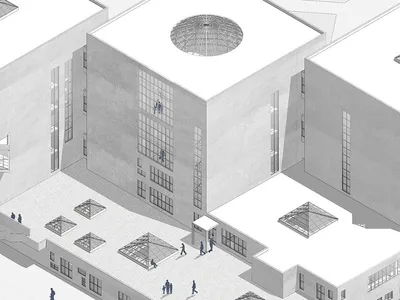
Yenisei Monitoring Center: A Sun-and-Moon Sphere Anchors a Research Campus on Siberia's Great River
In Krasnoyarsk, shifting square blocks, a glazed central sphere and descending window rhythms turn river science into a public spectacle on the Yenisei.
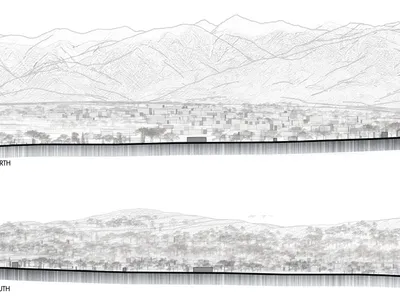
Andretta Artist's Village: A Node-Based Masterplan That Lets the Hills Write the Plan
A cultural landscape strategy for Palampur's artist colony threads studios, residences and stages along a porous spine shaped by the Dhauladhar terrain.
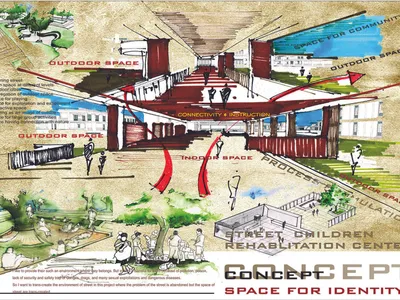
Street Children Rehabilitation Center: A Brick Campus That Eases Children From Street to Safety
A low-rise courtyard campus where learning streets, uthans and shaded verandahs stage a gradual passage from street into protective, family-scale life.
The NEON Culture: A Field of Pavilions Built for the 24-Hour City
Smaran Alva spreads galleries, stages, clubs and markets across a varied site, treating light, sound and ramped movement as the real building materials.

Comments (0)
Please login or sign up to add comments
No comments yet. Be the first to comment!