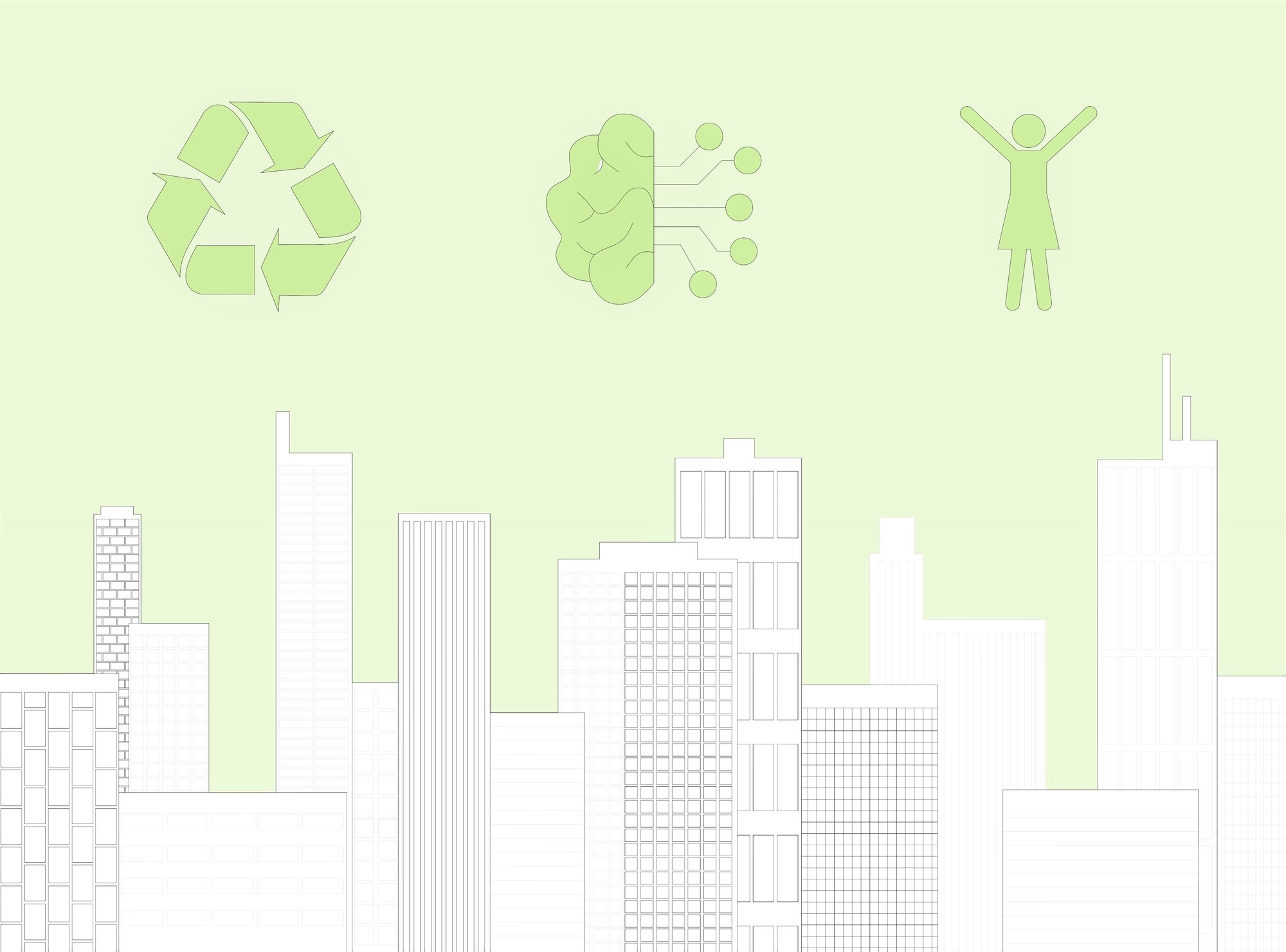
Future of Cities.
The creation of ecology, technology and accessibility.


For centuries, people have been trying to figure out what the world will look like in the future. We know from history that all the changes we have encountered in previous centuries have been truly significant, but more interestingly, some of them were anticipated long before they came. Therefore, in the coming decades, we foresee great changes taking place that seem unimaginable to us today. But are we able to predict anything more?
Presumably, the most influential changes will concern the cities. The most important reason for that is that the number of people who live in the cities is growing and it is forecasted to still grow in the foreseeable future. More and more people are moving into the bigger cities, therefore these centers of civilization are obliged to meet challenges, coming from urban growth, and to find a balance to sustain cities, more precisely megacities. Which would provide an access to housing, transport as a service and infrastructure, but also to find a balance in productivity and health.
Certainly one of the most significant factors is, sustainability. Due to climate changes and rise in pollution, our population must take steps to counteract these problems. The most evident moves will be seen in the megacities, which are mainly responsible with this issue.
One of the issues that the future cities will try to address is to establish a balance between urban and rural areas. Coexistence with nature would be promoted by public parks extensions and appropriate green planning. This is an important point, not only for recreational and aesthetical factors, but also due to the fact that it will lower temperatures in the streets of the cities.
Another case is taking care of the ecosystem and spreading knowledge about its necessity to the world. For that reason, they need to find out ways to optimize energy consumption and to have a lower carbon footprint by using renewable energy sources in general. Apart from the ecological point of view, the return on investment would be monumental in the future. The issue of waste should be also considered. Local and national government should invest in recycling waste on a large scale and also address the problem of sewage and water treatment of the cities, so as to save water, be it, from springs and rainwater, by developing reuse of this resource.
Furthermore, the new-designed buildings should be built in order to be energy-efficient and cost-effective by using insulation, effective lighting and heating systems. In the future, architects and urbanists, must find solutions to renovate buildings or reuse them for another function like turning office space into housing, for example.
The use of technology and artificial intelligence will be greatly used in the development of our future cities by for example, regulating humidity levels, managing air, light and noise pollution. The tech and AI will help our cities to be more comfortable, healthier and safer places to live in. By redesigning rundown areas thus enticing new citizens to that area and making life better for the underprivileged that lived in that area before.
Psychologists and sociologists are worried about the dweller of megacities. When we focus on architecture and urban planning, we must take into account that it must be accessible to all groups of people, particularly for the disabled, children and seniors. We must take into consideration that the population is getting older. This is where the concept of the 15-minute city could be implemented. The concept being that everything that you need or use should be withing 15-minute walk of your residence. This idea was developed in the 20th century and it is an ideal way to design suburbs.
In today’s society many people are single and have difficulties in finding living space and ways to socialize. Others do not know their neighbors, it is imperative to find a way the city dweller becomes an upwardly social person, not a recluse. By creating spaces for social activities, thus creating a community feeling.
Cities during next decades will probably not have much in common with our futuristic visions stuffed with technology, which most of us have in our minds. We will try to implement as much greenery as we can, replacing concrete, steel and glass with more naturally resourced materials, rather than creating parking spaces for flying cars. However, undoubtedly advance in technology will be significant while challenging the development of the new centers of civilization. Unfortunately there will be many difficulties and problems which will have to be solved in future cities. Will we manage to create good living space in the cities of the future?