GENERATIVE house
Future home

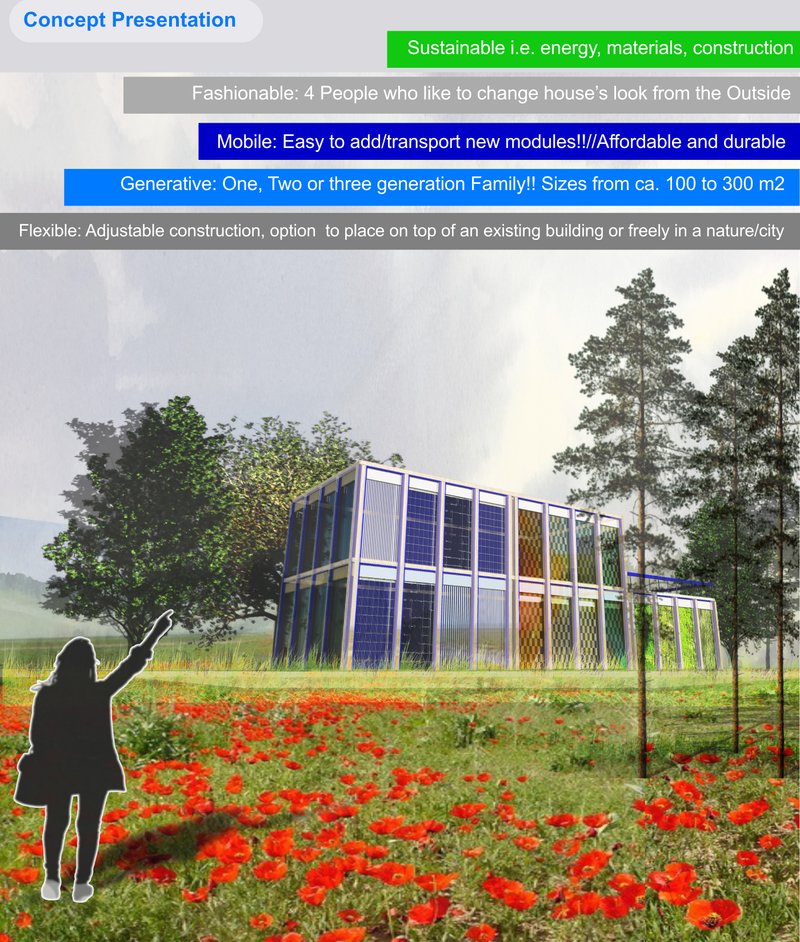
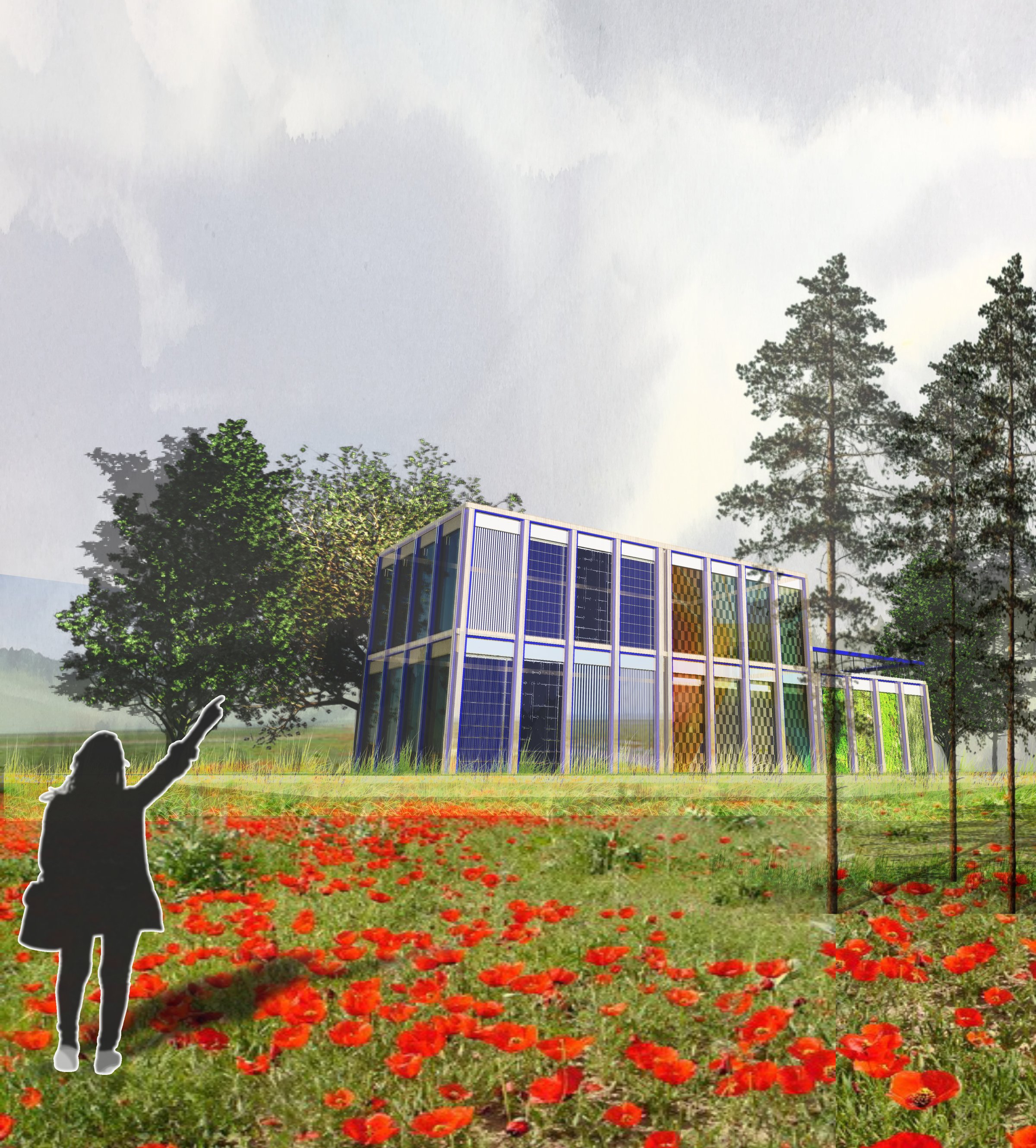
Far, far, far away in the time, in a not so distant future the world looks unexpectedly predictable. We see many robots, flying vehicles and virtual shops, there are also buildings presenting the future way of living. Taking as a step the success of brand virtual shops, building sector begins to modify. The future brings new tendencies in all branches implementing mobile, electric, magnetic and adaptive product lines, design solutions and technologies. People start looking only for fashionable, smart and generative houses. The market changes and the tendencies are to always design a new house as a prototype or a matrix. In other words to build a base for the new generation product line. Learning the historical mistakes people are afraid to repeat the assembly-line productions, so every matrix have to be GENERATIVE, easy to modify, mix and create unique combinations. Generative as every plant in the field of beautiful flowers.
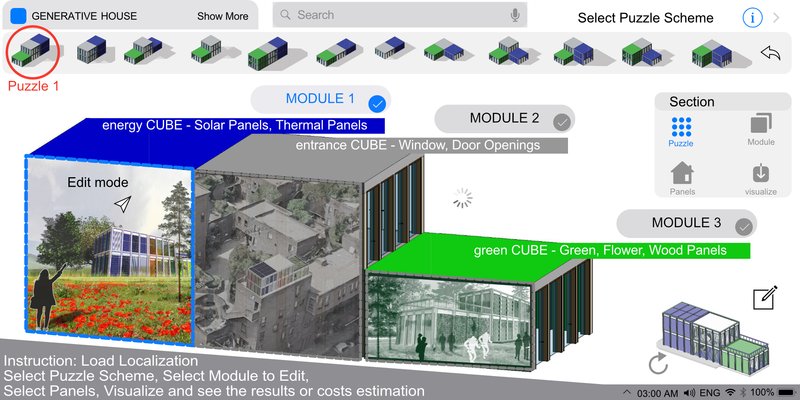
Fig. 1 Concept
I. Methods and design process
This is where the concept of home begins to diffuse with location, architecture and surroundings.
“Home is where my family lives” and GENERATIVE future home brought a great achievement into this quote. Understanding that every family is different sometimes single, sometimes it grows, shrinks or detaches... so the same should do a house. “MOBILE” in a single word. Therefore the GENERATIVE house works like a „Puzzles”.

Fig. 2 Puzzle iterations
Puzzles present various iterations achievable with the matrix concept of GENERATIVE house. Once built can still change like the chameleon. Moreover the same happens with the location it is still possible to de-montage and modify or even transport into the other site.
To achieve the final visual outcome many areas were put under investigation i.e. abstract art, nature, clothes brand shops, IT sector, literature. The final result is smart, fashionable and colourful and generative.

Fig. 3 Inspirations
II. Design and the programme
1. Multiplicity vs. Simplicity
One, Two or three generation Family? The future house should allow to personalize sizes from ca. 100 to 300 m2!
Simplicity is created with smart division into three modules/cubes. Multiplicity is achieved with the amount of final houses variations.
2. Generative puzzles vs. Space arrangement
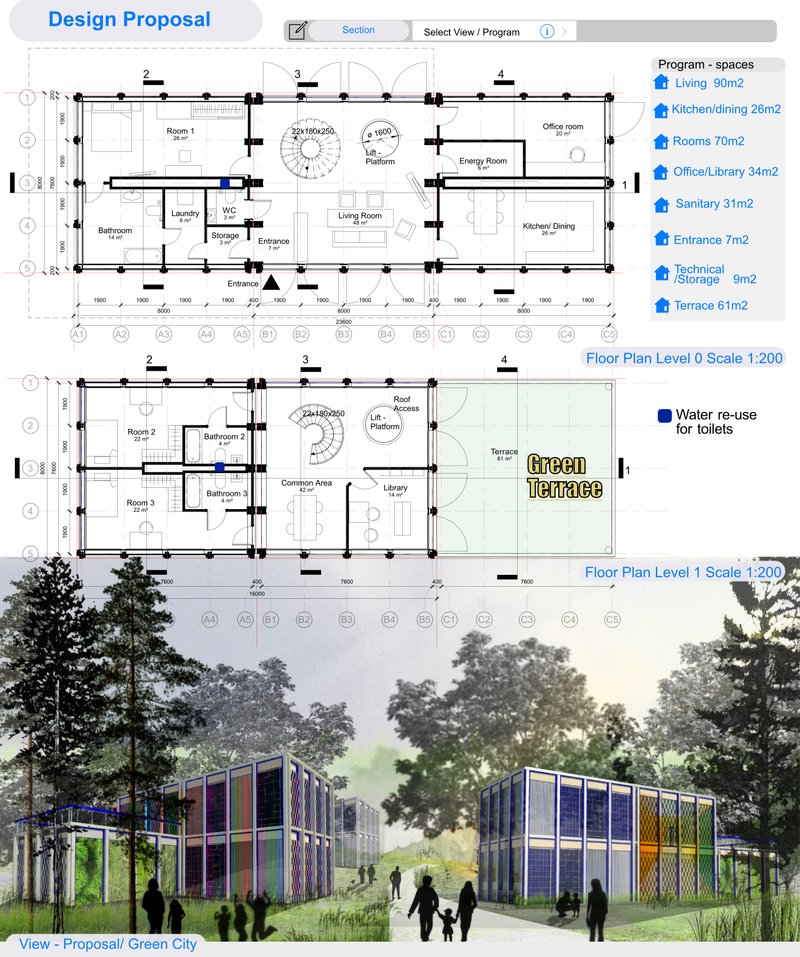
These smart homes can also freely arrange the spaces inside. The first Energy Cube is not only the technical source of energy but also a living engine with the rooms and Sanitary zone for Users regeneration. In the centre of the module is a shaft wall to combine all installations.
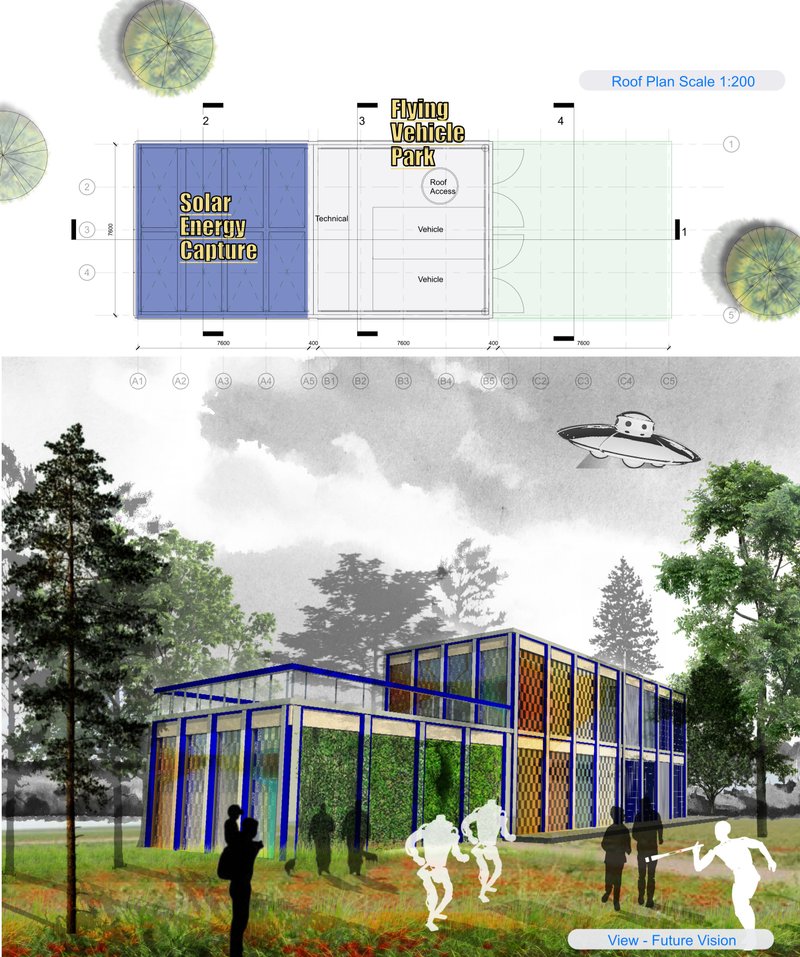
Second Entrance Cube works as daily living zone, programme will vary with the house sizes i.e. entrance, circulation, living rooms, stairs, lifts, ladders. On top of this unit we can park our futuristic flying vehicles or use it only as a technical zone.
Third Green Cube is the additional space inside the house but we can find there kitchens, offices, library/ game room/ or a gym. It is designed also as a greenery zone with the garden, terraces and vertical plants.
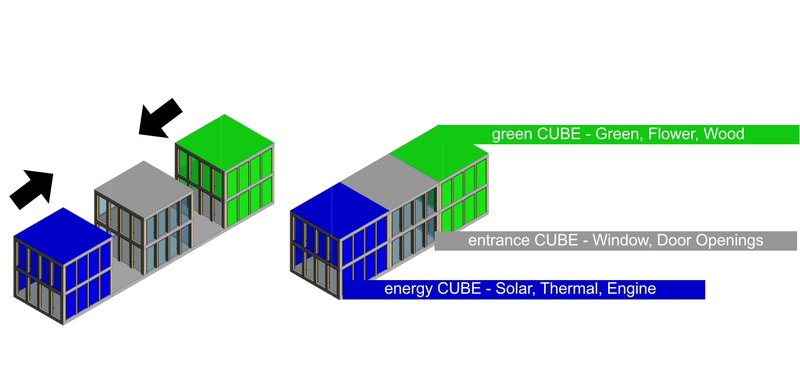
Fig. 4 Module types
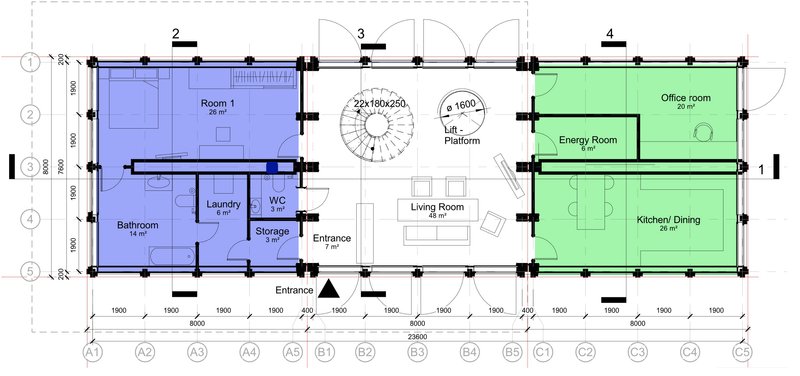
Fig. 5 Space arrangement
3. Materials and architecture. Sustainability vs. Maintenance
Energy Cube works for the energy efficiency, thermal insulation and water re-use cycle. Solar, thermal panels allow to save and accumulate energy and heat or cool home during the year.
Entrance Cube – Designed with the door, window or full panels. Glass panels are double glass with the void inside for electric curtains with colour diffusion system and self-cleaning glass. This system is a combination of house access with the anti-theft solutions and wireless control.
Green Cube – Recreation, Plant, greenery, flower or wood zone on both roof and building walls easy for maintenance with rain water only.
Generative-houses help also to reduce costs, raise affordability and build a good-neighbourhood system.
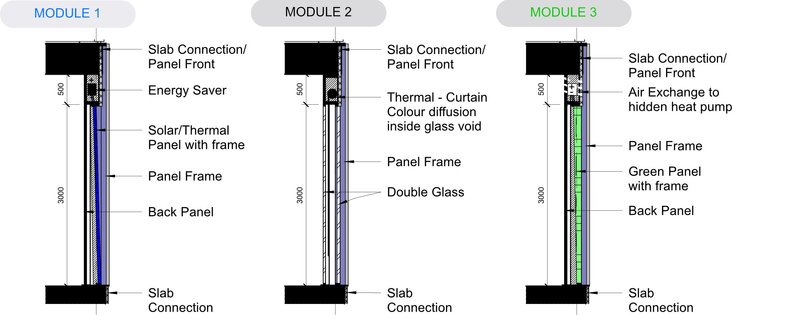
Fig. 6 Panels design concepts
4. Luxury vs. Affordability
Smart technologies and new materials will sustain a part of the luxury and sustainable development.
Panels are 100% replaceable. People can simply play with the house to create individual look. Interior walls made of phases change materials are used as a thermal storage. The balance between luxury and affordability is achieved with smart technologies for selected location and grant financial plans.
5. Construction. Mobility vs. Durability
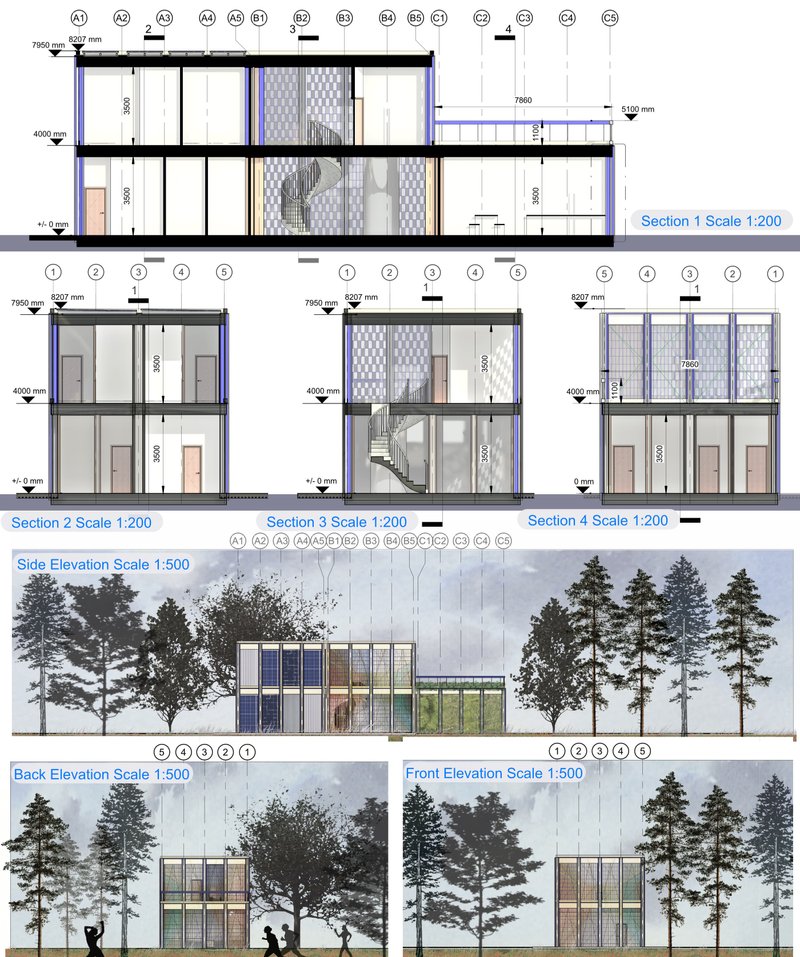
Selecting a place to live is always a point of discussion. The structure is possible to montage „elsewhere”, transport or exchange with other family - is durable. The system is a combination of beams and columns, steel or timber. The grids base on the typical solar panel sizes. Modules in overall dimensions ca. 8x8m, panels frame ca. 2x 4m. Bottom slab allows montage on top of the existing building.
III. In the future…
...the plan is to create green cities with the good neighbourhood. Therefore GENERATIVE house as a matrix-prototype will control the surrounding visual aspect. Green cities with low dense urban schemes will be a dream. On the other hand the city plays with the different rules. Sometimes modules will be used as the capsules for a single micro-houses or combined into great tower structures.
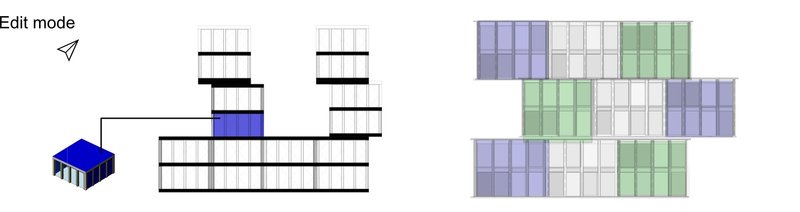
Fig. 7 and 8 Design proposals, Capsules and the tower
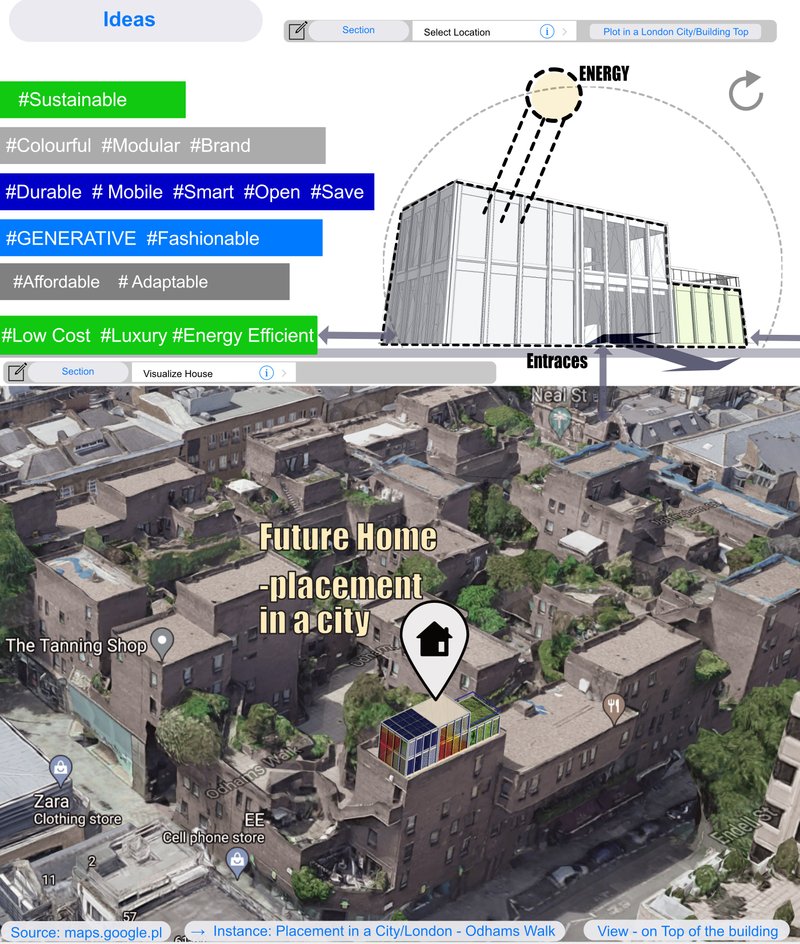
In the future tendency of mounting GENERATIVE house on top of the building will increase, assuming that the existing dwelling will be additionally renovated.
Possible futuristic combinations will improve certainly to create new energy, water, mobility or heat concepts to create more and more self-sufficient and smart dwellings.
Additional Schemes: