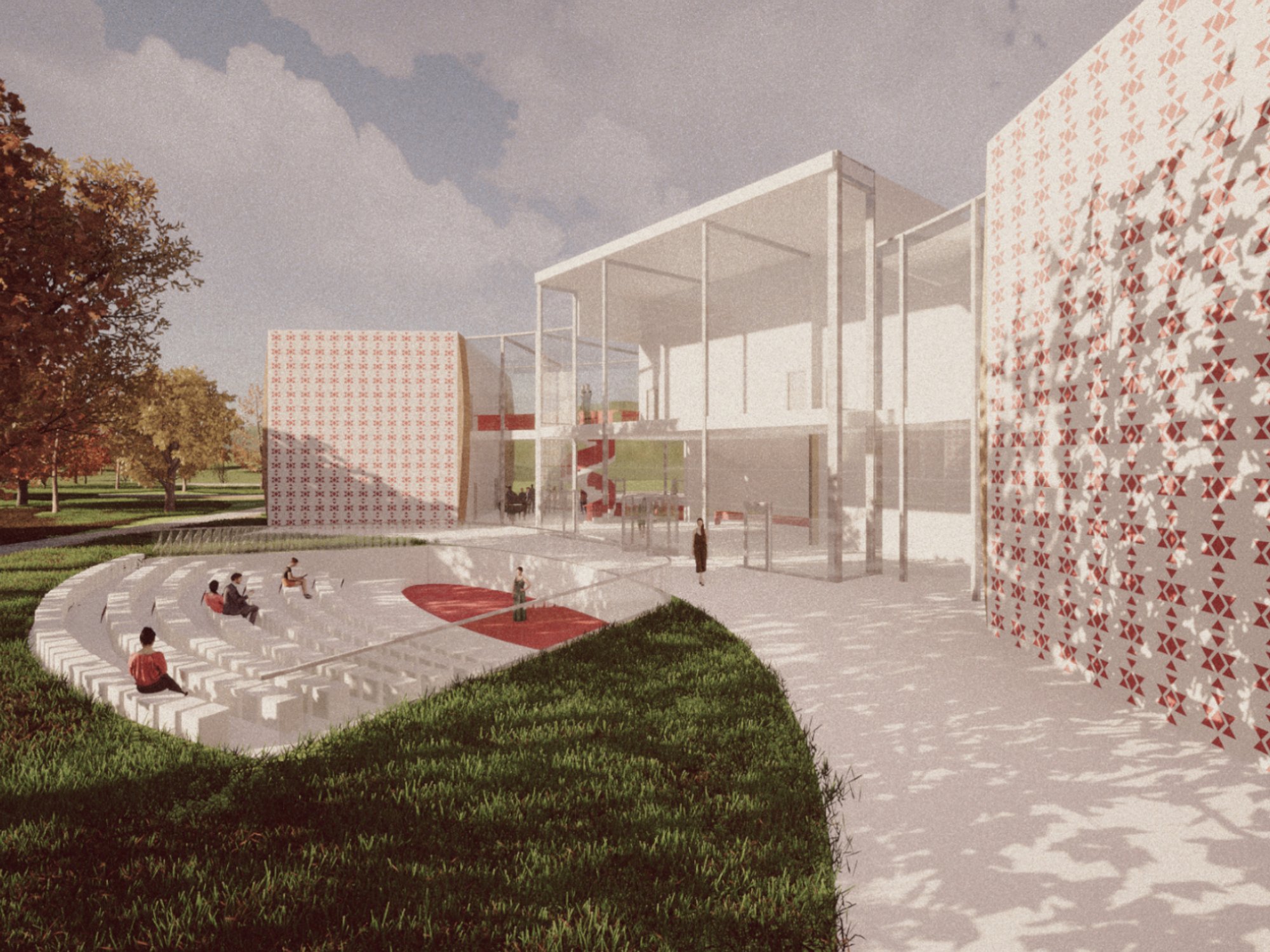
Kanatitsa - local folk center
Finding architecture in bulgarian folk music
1. Main premise
The main project goal is to provide the city of Sofia with a new folk cultural center both integrating local inhabitants and at the same time giving the given a sense of landmark and a space with a super-local character. Therefore the main function of the designed building is a gathering point, a place that brings people together, it is a reference and a flexible stage that invites citizens to interact with each other and exchange cultural values. Therefore, the functional program includes not only areas included in the premises of the competition, but also a representative multifunctional entrance plaza and underground backstage zone working both for the concert hall and outdoor auditorium. One of the main project assumptions was to create a clear division between the front and back of the house while still providing access, control and use flexibility. Additionally, the foyer and museum zones located on the ground and 1st floor will offer 120ª views in the direction of the Vitosha mountain massif. Aesthetically, the designed multifunctional complex creates a distinct symbol taken from the Bulgarian folk embroidery to draw on and make reference to tradition, but ultimately to be that tradition’s contemporary reinterpretation.
2. Conducting an analysis
The following analyses were conducted:
- Existing building analysis (including height),
- Photographic analysis,
- Zoning plan analysis,
- Weather analysis,
- Flora analysis,
- Function analysis,
- Analysis of objects similar in scale and function,
- Analysis of competiton requirements.
3. Design goals
- Characteristic elements of landscape: the structure will be a characteristic element of landscape that takes the role of becoming city’s cultural center,
- Balance: the aesthetic, social and functional aspects must be included in same proportions,
- Layout: accessibility and zoning of the place must be made taking into consideration the levels of privacy of space,
- Society: values and culture of the society must be reflected in the design,
- Context: the design must correspond to the existing surroundings.
4. Searching for a concept
The main focus was put on experimental and functional research. Three models exploring drastically various outcomes were made and two were chosen for further examination.
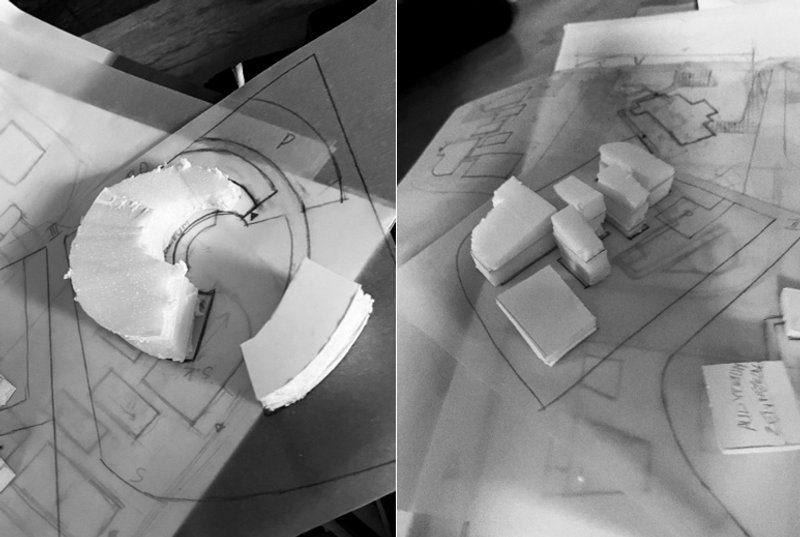
Fig. 1. Physical models of the two main concepts.
During the designing process, two main concepts were explored. First was spreading the area program among the site in a more individual approach and connecting spread buildings with communication that would also take the function of a museum. The second concept was focusing on a more compact form and creating a border with the building between the road adjacent to the north part of the site. By doing so, a closed internal zone for the outdoor performance area was created. Both concepts were taking into consideration the mountain massif of Vitosha to be the main landscape component of the area.
The chosen concept was the one with a more compact form because of the ecological impact of that type of form – it is far more energetically efficient.
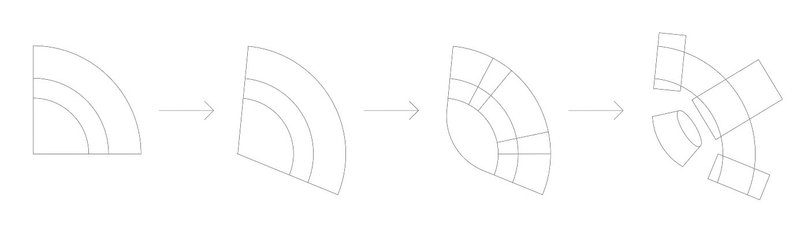
Fig. 2. Searching for the final version of the form.
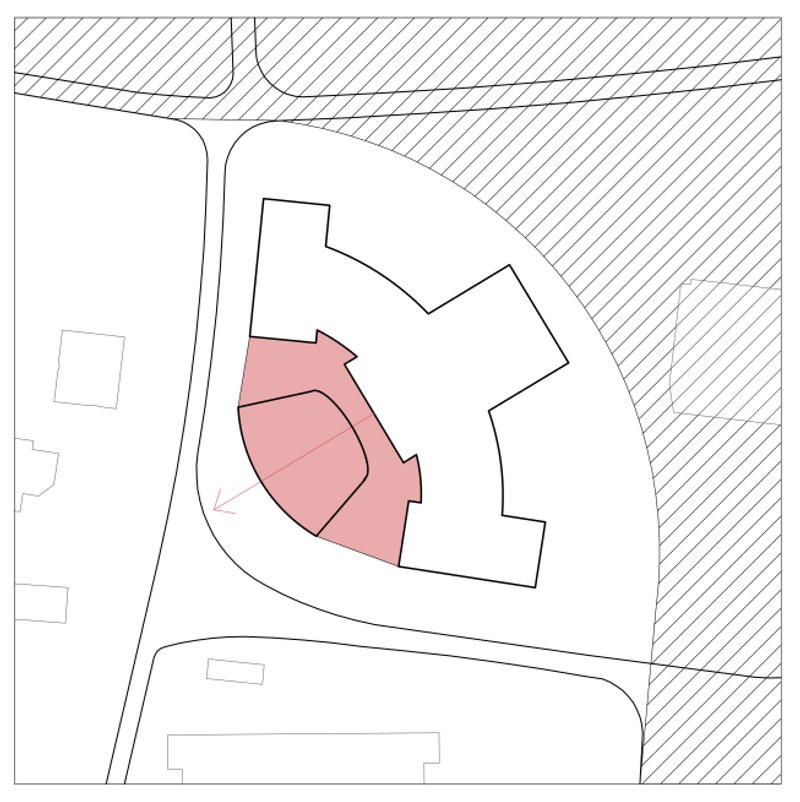
Fig. 3. Scheme of urban interior with main viewing axis. The building separates interior part from hectic surroundings.
5. Functional program and zoning
The building is composed of three main rectangular elements connected by communication with a foyer and museum that take a rounded form. On the second floor, along the interior facade, there is an elevated foyer in a shape of a balcony that connects all parts of the building. From the balcony, there is a 120ª view in the direction of the Vitosha mountain massif view of the exterior auditorium and the mountain massif.
In the west part of the building on the ground floor, there are two recording studios for local artists. When designing the studios, the width to length ratio for optimal acoustics was taken into consideration – approximately 1:1,6 On the second floor, there is administration with the head of the cultural center office, the secretary’s office, and offices for the rest of the workers.
Both floors of the easternmost part of the building consist of music rooms for learning and for practicing for solo artists and groups.
The central part of the building was designed solely for the concert hall. Next to the concert hall, there are toilets, walk-in closets, and practice rooms exclusively for the performing artists. The concert hall has 132 sitting places, and the scene (width: 5; length: 9,9 m.) is available from the exterior corridor designated only for artists. The concert hall has two entrances for the audience accessible from the balcony. Artists have an independent entrance from the exterior corridor.
There are two main entrances to the building. One is mainly designated for the people that want to attend an event in the concert hall or go to the folk museum. The other one is primarily destined to be used by artists. Locating it as the connecting part between the concert hall and the music rooms for learning and practicing separates people that come there to work and practice from people going there for recreational purposes.
Within the inner courtyard hidden and acoustically protected by the complex volumes from the most busy streets surrounding the plot there is an outdoor auditorium that attracts people to use it for multiple events like theatres, concerts, cinema, talks, etc.
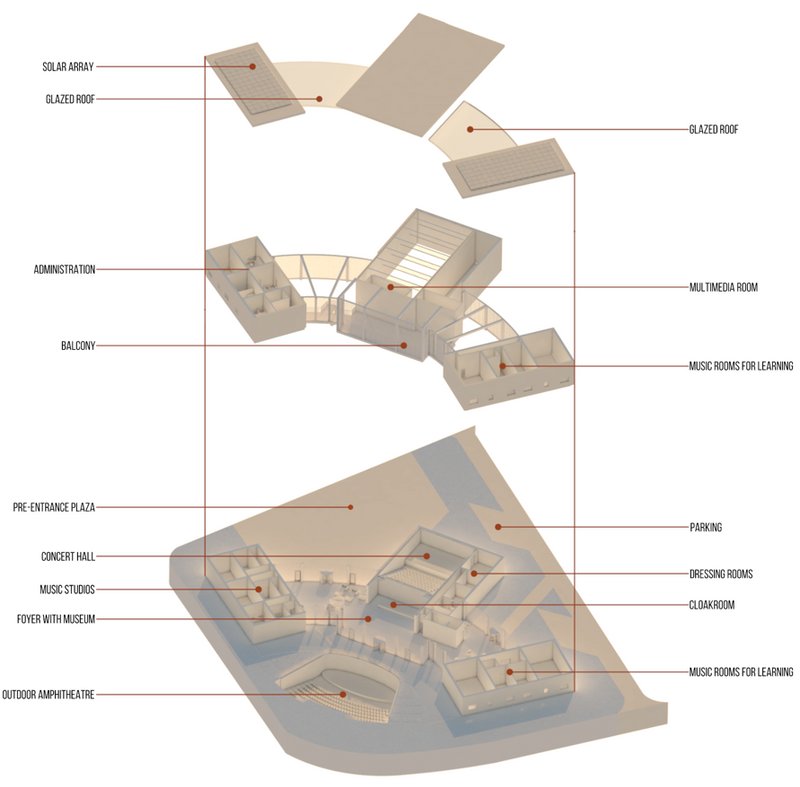
Fig. 4. Axonometric functional diagram.
Thanks to the structure of the building it can be used at all times. Within the music area, rooms might function as a music school. Music studios, concert halls, and music rooms for learning are all independent of one another. 3 separate structures are connected by a large space.
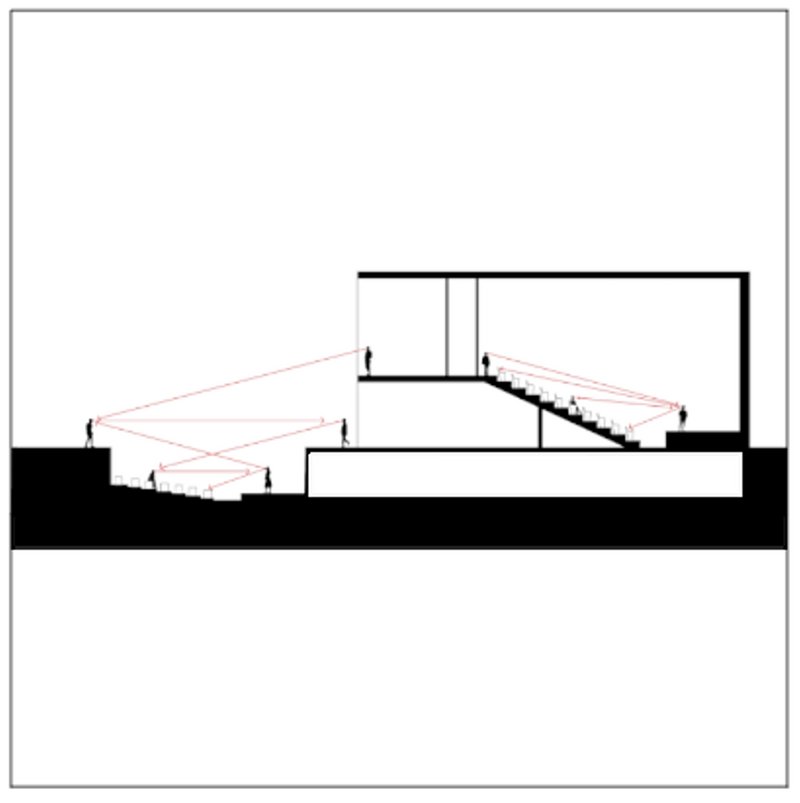
Fig. 5. Section diagram.
Both performance areas are situated on different levels to create various views. Exterior space is multipurpose, plunged into the ground with a gentle slope angle. The form that separates the interior area from the external world will hugely impact the social life of the community. It can not only be used as a performance area, but also as a space for people to integrate and create community. By placing the building in a very specific way the closed and warm urban interior is created, making a perfect place for social bonding.
6. Site summary information
|
Name |
Surface area [m^2] |
% |
|
Area of development |
3896,98 |
100 |
|
Green area |
1351,003 |
34,9 |
|
Parking space |
93,023 |
2,4 |
|
Building area |
1026,24 |
26,1 |
|
Paved road |
294,57 |
7,7 |
|
Amphitheatre |
225,27 |
5,9 |
|
Paved plaza |
906,98 |
23,1 |
7. Used materials
The look of the materials was specifically chosen to create a warming ambiance and association with Bulgarian folk, enhancing the citizens connect with their own culture. The premise was also to make the building modern and representative. The main parts of the facade are white walls covered with small red concrete plates in the shape of the Bulgarian symbol Kanatitsa, creating a façade pattern. For the remaining parts of the façade, the synthetic wood-like panels were chosen to create a background for the loud pattern and to soften the color palette. The wooden panels were also used in the foyer, connecting the interior and exterior.
The flooring of the pre-entrance plaza has a similar pattern to the façade. A different version of the symbol was utilized, also connecting the interior and exterior of the building. This solution is supposed to draw the user inside.

Fig. 6. Kanatitsa symbol used on the exterior façade.
Kanatitsa symbol is used on the exterior façade. It symbolizes the masculine and feminine beginnings, the eternal circle of life. It was chosen to implement a symbol connected with the culture of Bulgaria to show the inclusivity of the world of music. In that way the designed complex draws on and makes reference to tradition, but ultimately to be that tradition’s contemporary reinterpretation.
8. Future development
As for now, the main focus shall be put on creating a cultural center by developing the plot of land north of the site. Currently, there are no buildings there, and as was said before it is designated for public services. This creates a perfect opportunity for further development. If the focus were to be on the music aspect I would advocate that the space be used as land for the construction of a music school as well as smaller gastronomic services.
The site can greatly benefit from being used as a ground for a cultural center. Even though the urban plan for that area is designated for multi-housing, in my opinion, it would be a waste of potential. Creating a commercial space would bring people to come to the area, making more job opportunities and above all educating the young generation on their culture.
9. Meeting the requirements
The competiton requirements were met in following ways:
Ground coverage = 30% - building area is 26,1%,
Maximum height = 12 m. – the highest, middle segment of the building is 12 m., the two side segments are 9,8 m. each,
Maximum FAR = 1 – the FAR in the project is approximately 0,4
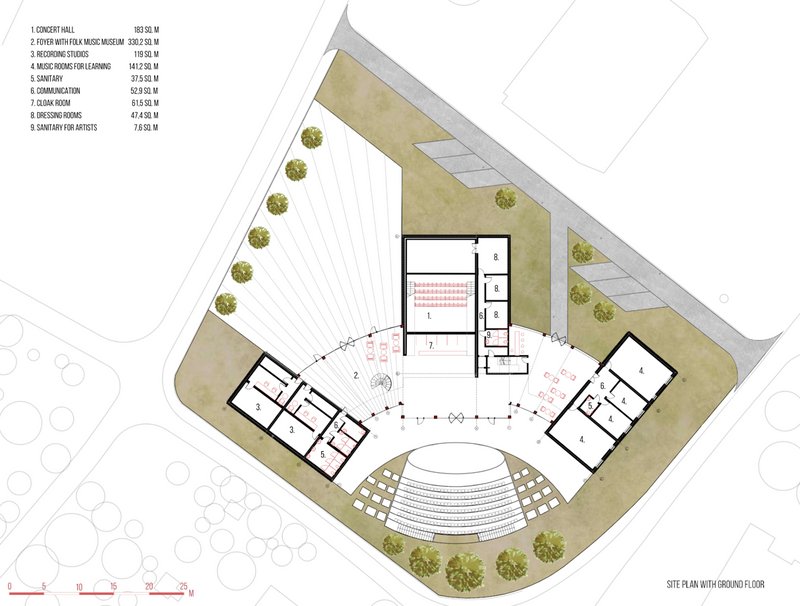
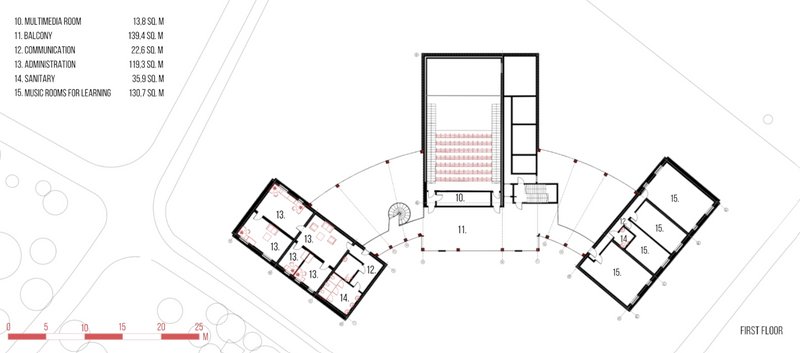
Fig. 7. Site plan with ground floor plan. 1st floor plan.