

Linden
The design process-explained

The first thing was the location. It was on the terrace of an architecture university in Bucharest. The specifics were an expanse of no shade in the summer and a place where people join for a smoke or a chat. Also, unfortunately, it has no arrangement of that space.
It needed a shape, something useful (and thus sun shading) and to offer a nucleus for people to hang around. A peaceful environment - such as a linden flanked alley in the same city. The small seed of this tree has a very interesting shape that served as inspiration.
However, a project should not only have form, but also a logic behind it (besides the logic of its construction). So how can a pavilion be useful, besides what was said before? Being in a university, there are always people willing to experiment. Using materials that are experimental and making workshops of the actual assembly can help teach and develop new ideas. The construction in itself becomes learning material.
Those materials are papercrete and steel. While the former is known, the first is not so well known. It consists of a mixture of recycled paper (found aplenty after years of students delivering their projects and assignments on high quality paper), cement (also a common material), water and additives to make it water resistant when hardened.
The steel chosen for the project is in the shape of rectangular pipes, thick steel sheets, both of which are commonly available. Their method of processing can be either industrial- like in a workshop with special equipment, or on site using more rudimentary methods.
It is a structure made for the students, by the students (under supervision) and if maintained it can become a starting point for the landscaping of that terrace.


Popular Articles
Popular articles from the community


Opera by the Sea Estonia: Three Shells Dissolving Architecture into Tallinn's Coastline
A winning opera house proposal replaces monumental form with interconnected shells that blur the boundary between building, park and Baltic Sea.

Opera on the Sea: Driftwood Logic Shapes a Timber Opera House on Estonia's Coast
Trevor Orgill's opera house translates the entangled drift of floating timber into a civic building where wood, water, and music converge.
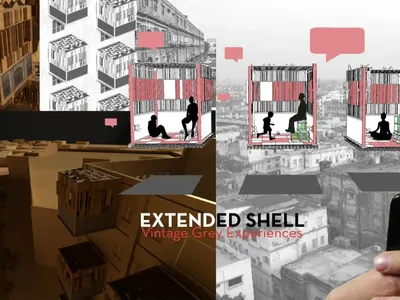
Extended Shell: Retrofitting Kolkata's Balconies as Living Urban Thresholds
A modular retrofit system recovers the social and environmental intelligence of Kolkata's historic verandas for contemporary Park Street residents.

Temporary Home for Dogs: A Reversed Zoo Rethinks Animal Shelter Architecture
In Bucharest, a sinuous corridor and freed landscape flip the logic of containment, designing a shelter that works to make itself unnecessary.

Similar Reads
You might also enjoy these articles

Day and Night Park: A Time-Based Urban Newsstand in Beijing
A temporary urban newsstand in Beijing blending travel, light, and reading through poetic colors, compact form, and community-focused design.

Modernist Patio Renovation in El Masnou, Barcelona by Oliver Segura Arquitectura + Cebrià Arquitectura
Modernist patio renovation blending tradition and innovation with a movable pool, leveled floors, and Catalan materials in El Masnou.

Alto Residencial Coop: Cooperative Housing Development in Santiago de Compostela by Carbajo Barrios Arquitectos
A linear cooperative housing complex blending white volumes and perforated metal façades, enhancing community living, natural light, privacy, and urban integration.
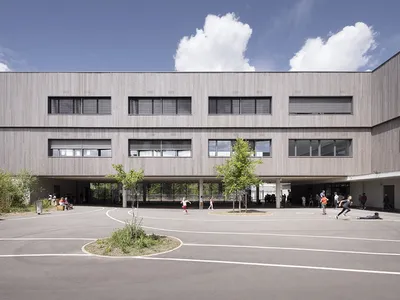
Vil Genis School by BPA ARCHITECTURE – Massy, France
Vil Genis School in Massy, France, features sustainable design, south-facing classrooms, community integration, accessible spaces, and modern educational architecture.


Comments (0)
Please login or sign up to add comments
No comments yet. Be the first to comment!